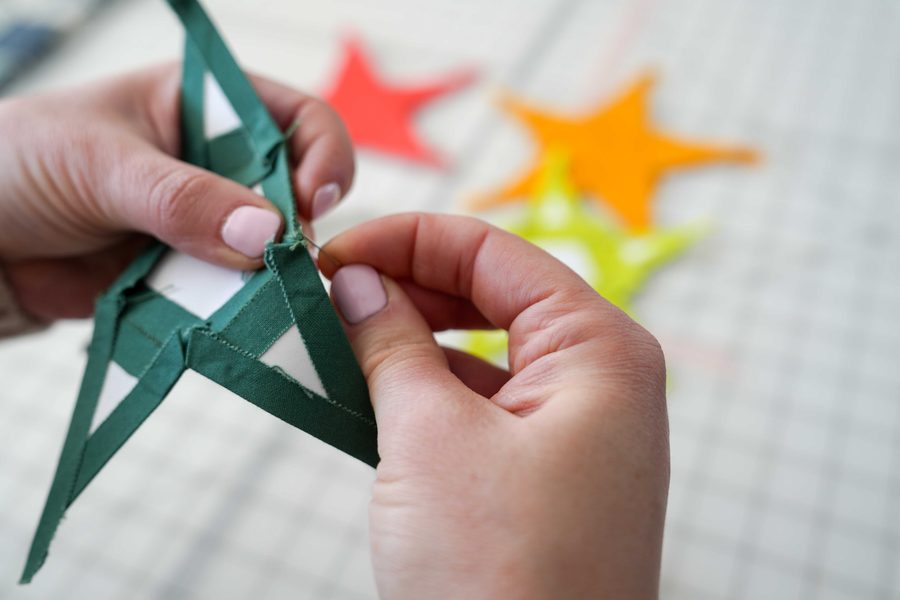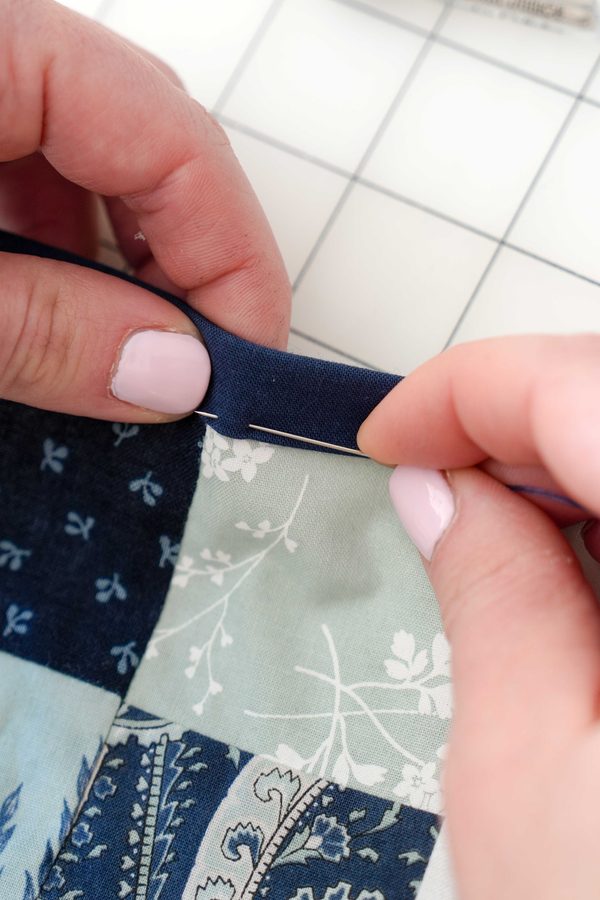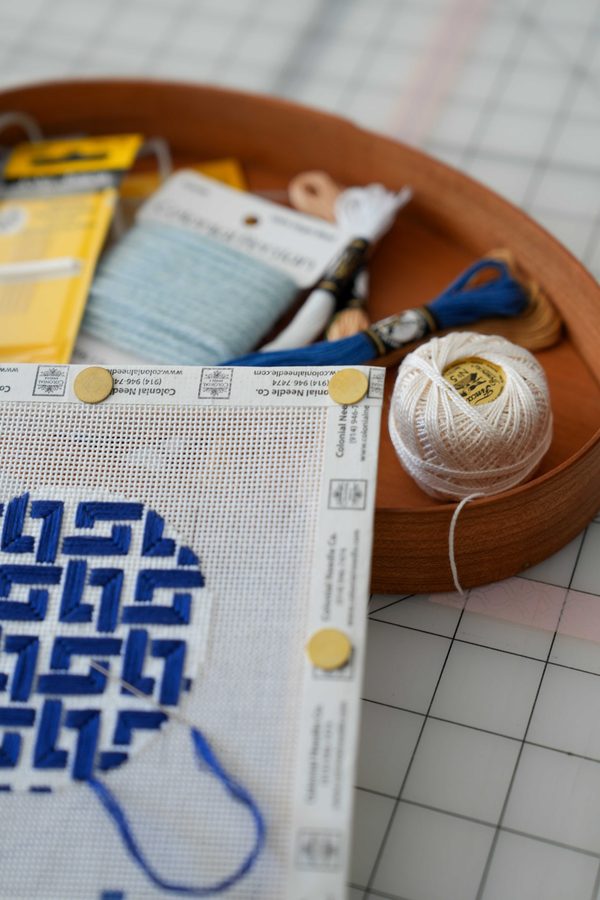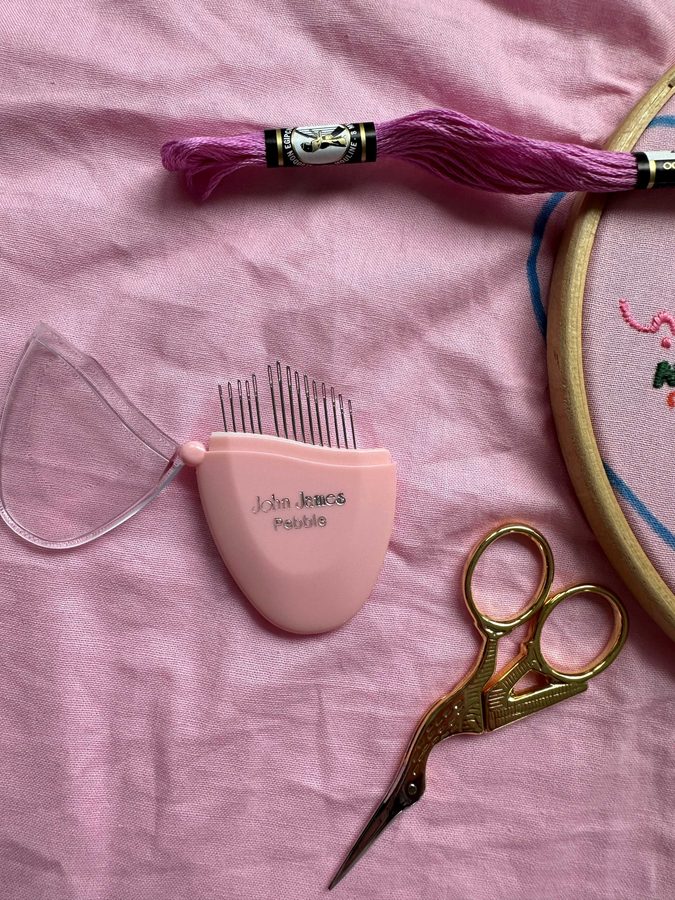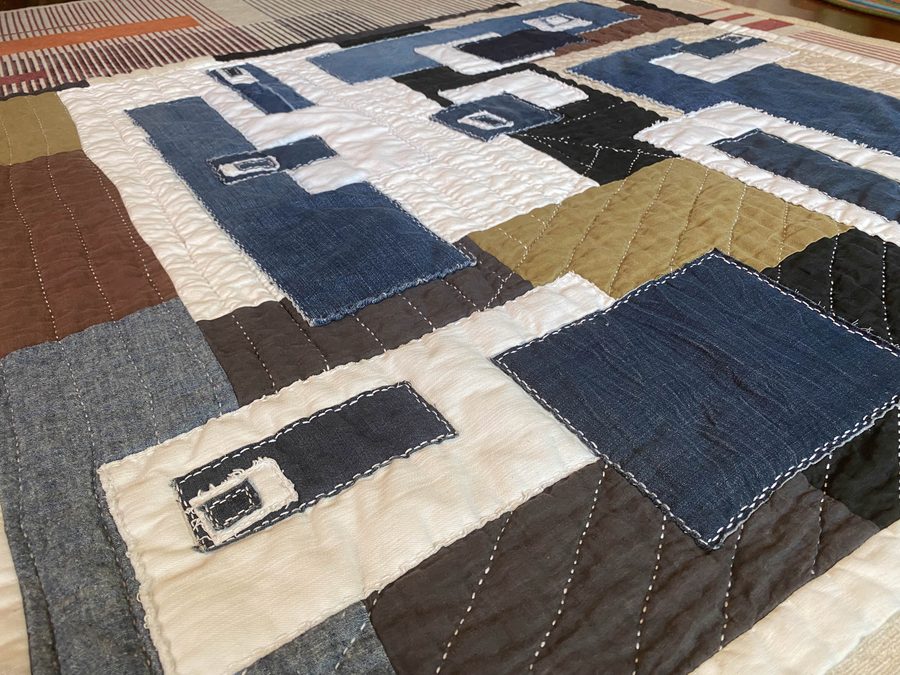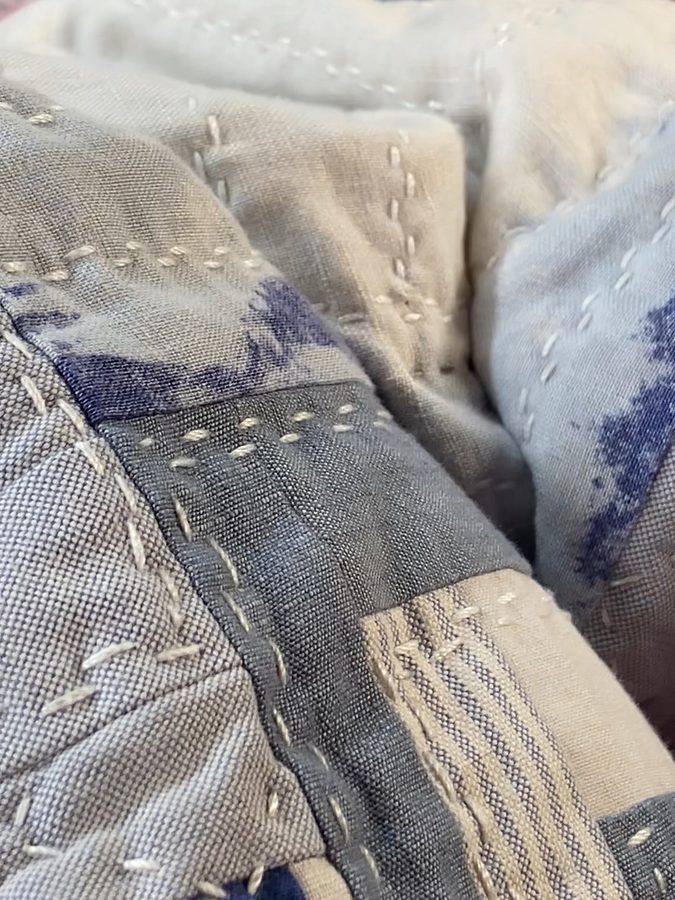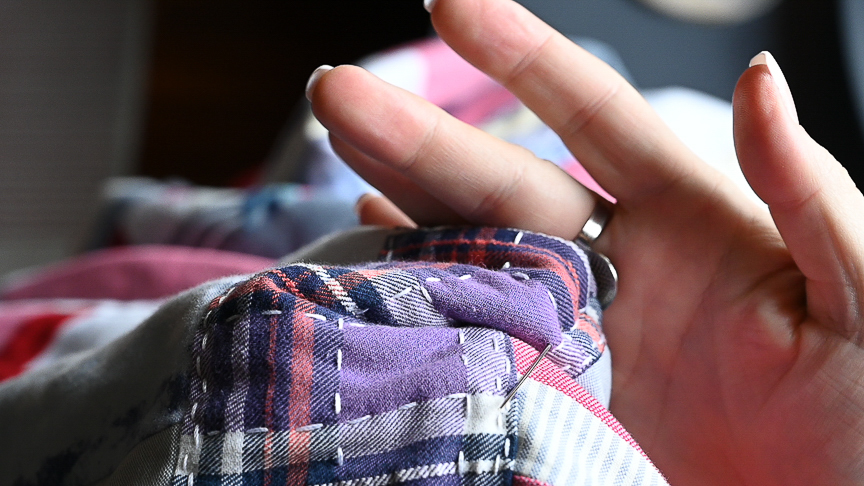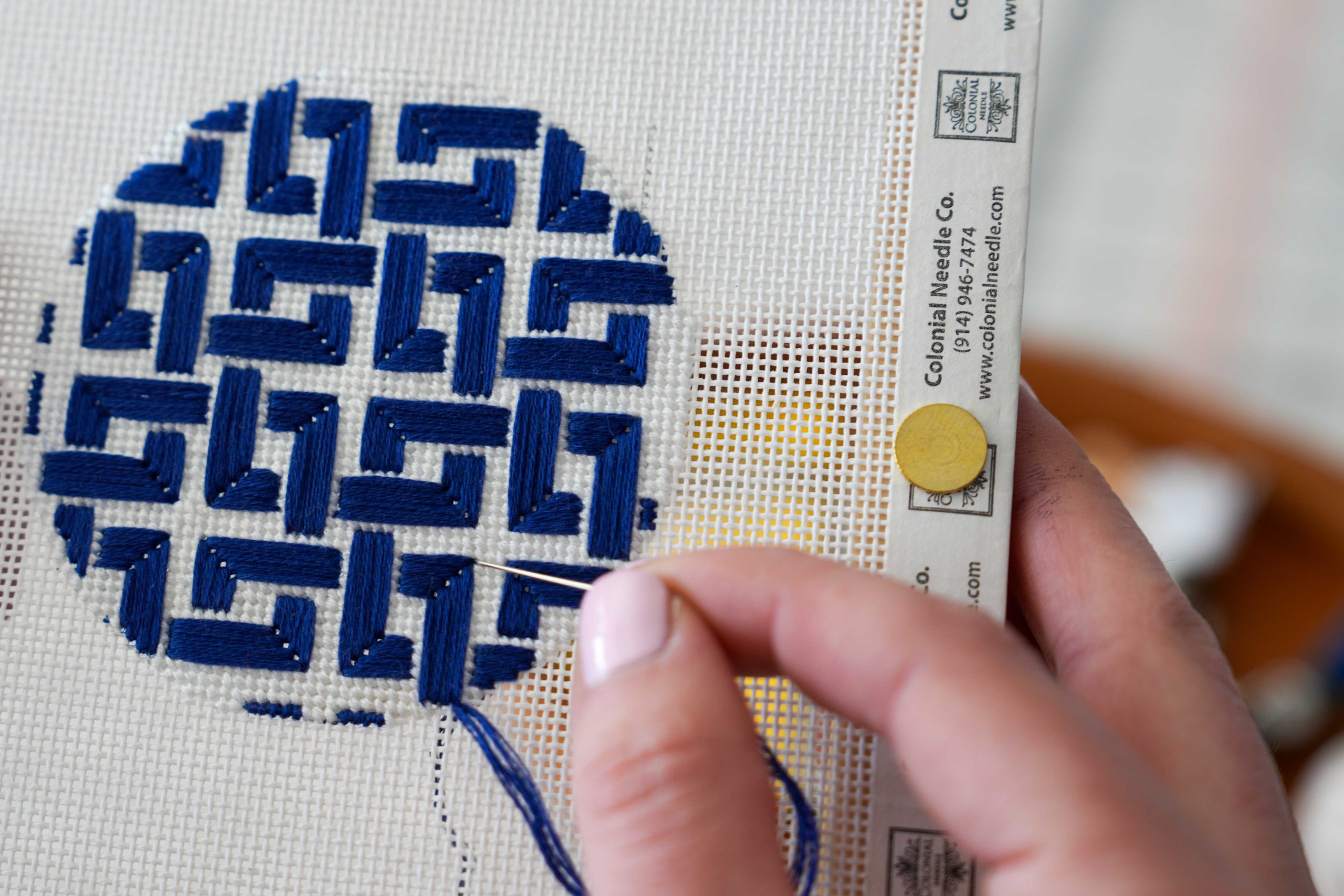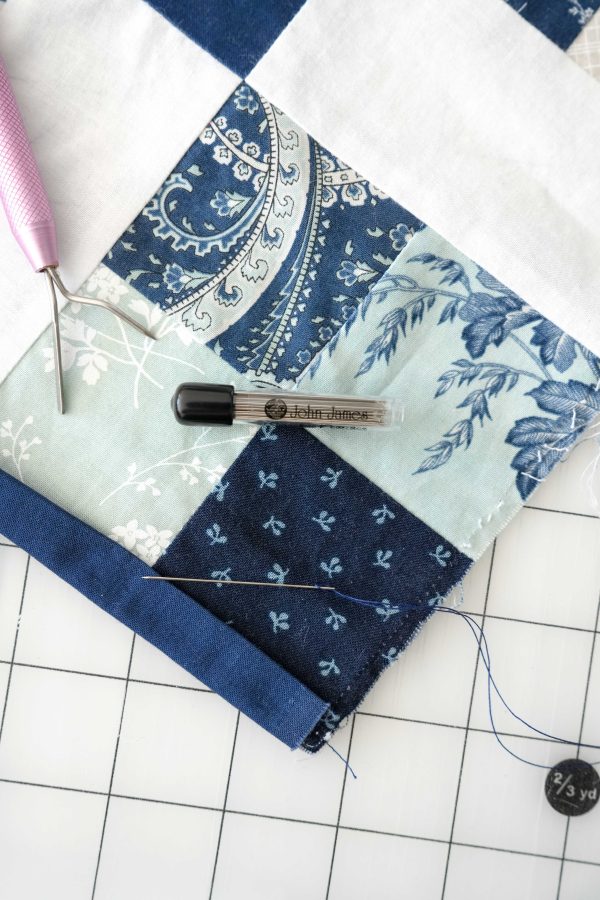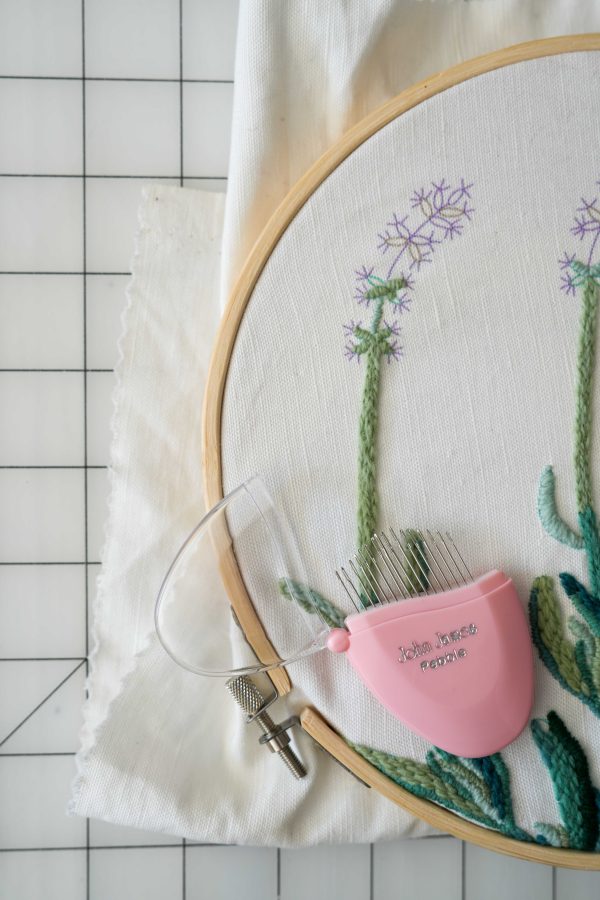
The Right Tool for the Stitch: Hand Quilting & Big Stitch Quilting

As spring settles in, quilting projects often come back into focus. Whether you’re finishing a winter quilt or starting something new, hand quilting offers a rhythm that’s both productive and calming.

From traditional, fine hand quilting to the bold, modern look of big stitch quilting, the tools you choose can dramatically shape both your experience and your results.

If your stitches feel inconsistent, your needle is difficult to control, or your hands tire quickly, the issue may not be your technique—it may be your needle.

Let’s explore how the right needle supports both traditional and big stitch quilting.


The Stitching Scenario

Hand quilting & big stitch quilting

This includes:

  • Traditional hand quilting with small, even stitches
  • Big stitch quilting using thicker thread
  • Quilting through layered cotton, batting, and backing
  • Finishing quilt edges or adding decorative quilting

These techniques require stitching through multiple layers, which makes needle choice especially important.


The Common Challenges

When hand quilting, stitchers often experience:

  • Difficulty rocking the needle through layers
  • Uneven stitch size
  • Needle bending or breaking
  • Hand fatigue or finger strain
  • Trouble maintaining a smooth stitching rhythm

Layered fabrics and batting create resistance, so the needle must be both strong and responsive.


Why the Right Tool Matters

For quilting, a few key needle characteristics make all the difference:

  • Length & Flexibility
    Shorter needles are easier to rock in a quilting motion, while slightly flexible needles help create even stitches.
  • Shaft Strength
    The needle must be strong enough to pass through multiple layers without bending.
  • Eye Size
    A small eye works well for fine quilting thread, while a larger eye is necessary for thicker threads used in big stitch quilting.
  • Point Style
    A sharp point helps penetrate layers cleanly, reducing strain on your hands.

Choosing the right combination allows for smoother stitching and better control.


Our Recommendation: Needles for Hand Quilting

  • Betweens (Quilting Needles) – Sizes 8–10
    These short, slightly stiff needles are designed specifically for traditional hand quilting. Their length makes it easier to rock the needle and create small, even stitches.
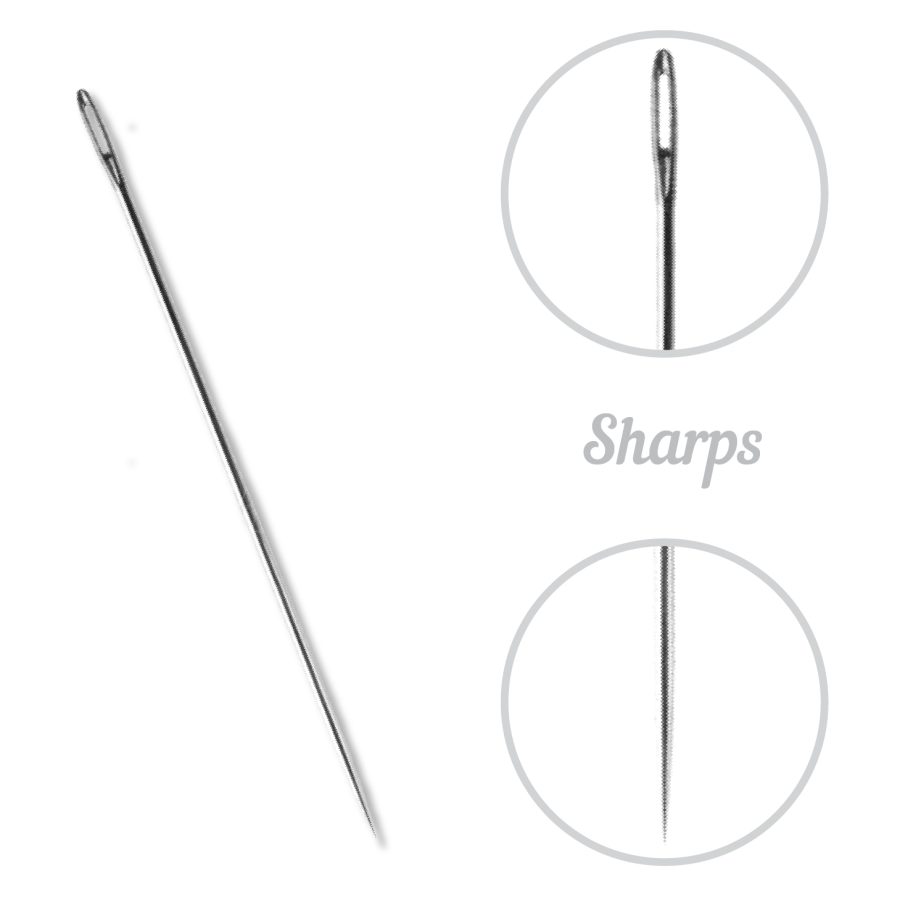
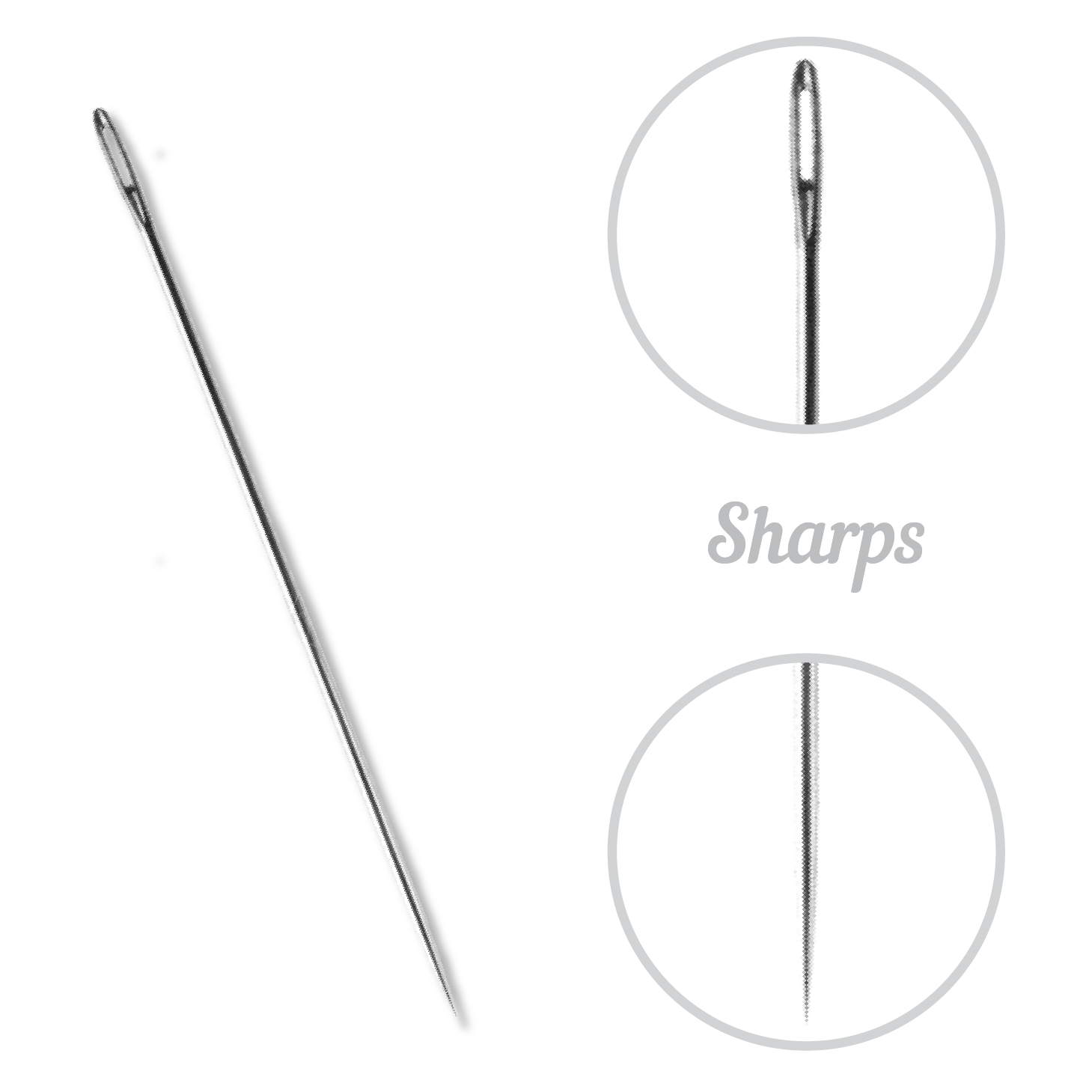
  • Sharps – Sizes 7–9
    A versatile option for quilters who prefer a slightly longer needle or need more reach through thicker layers.
    sharps needles

Our Recommendation: Needles for Big Stitch Quilting

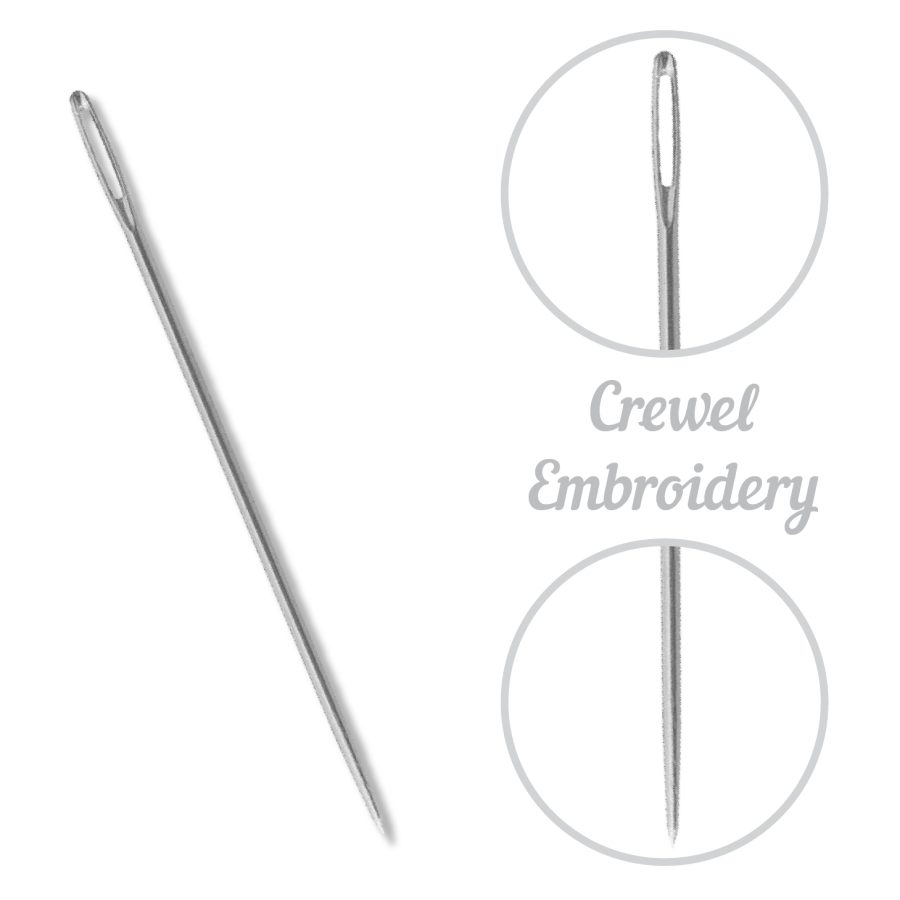
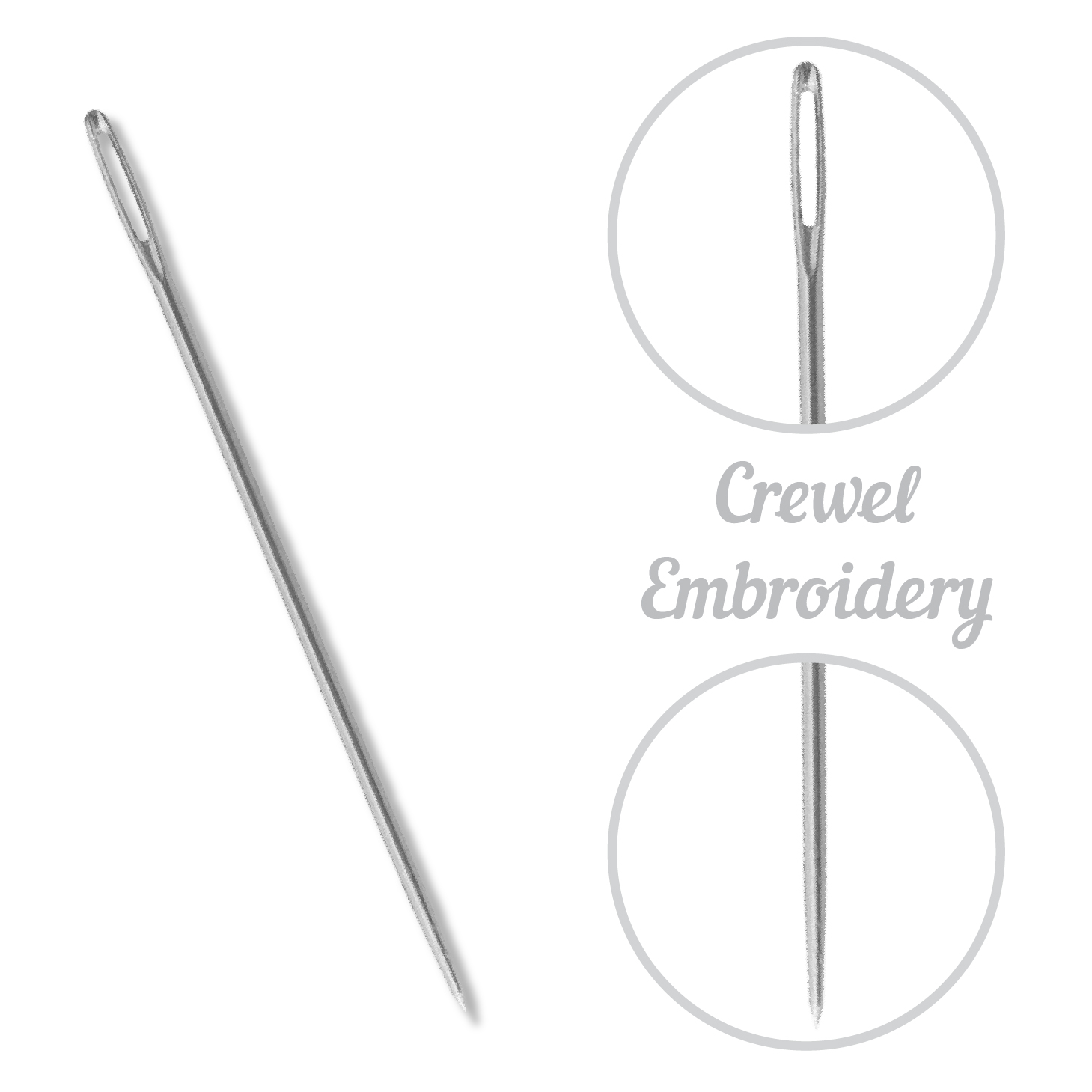
  • Embroidery (Crewel) Needles – Sizes 5–7
    With a longer eye, these are ideal for accommodating thicker threads like perle cotton while maintaining a sharp point for easy stitching.
    crewel embroidery
  • Longer Sharps – Sizes 5–7
    Helpful for creating longer, more visible stitches with a smooth, steady rhythm.
    sharps needles

Pro Tip: Find Your Rhythm

Hand quilting is as much about rhythm as technique.

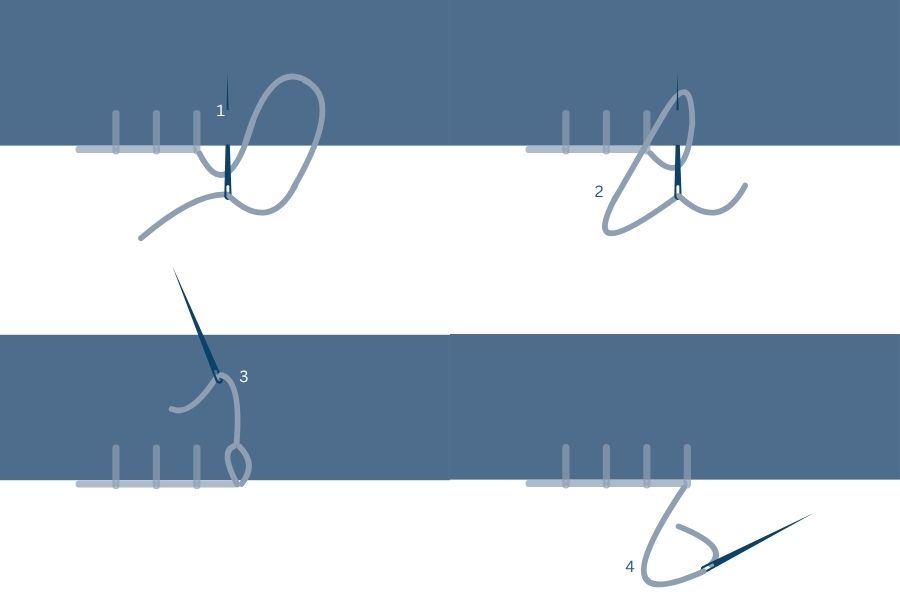
  • Load several stitches onto your needle at once (the “rocking” method)
  • Keep your grip relaxed
  • Let the needle do the work

If stitching feels forced, try a different needle size or length—comfort and consistency go hand in hand.


Special Considerations for Batting & Layers

Different batting types affect how your needle performs:

  • Cotton batting offers more resistance and may require a stronger needle
  • Poly or blends are easier to pass through but still benefit from a sharp point

If you feel resistance, don’t force the needle—adjust your tool instead.


Reader Takeaway: Quick Checklist

When hand quilting:

✔ Choose short needles (betweens) for fine stitches
✔ Use longer needles for big stitch quilting
✔ Match eye size to your thread thickness
✔ Let the needle move smoothly through layers—don’t force it

The right needle helps you stitch with ease and consistency.


Looking Ahead

Next month in The Right Tool for the Stitch, we’ll explore needle choices for cross stitch on linen and evenweave—where precision and fabric awareness are key.

Until then, enjoy the rhythm of stitching and the satisfaction of bringing your quilt to life, one stitch at a time.

Happy Stitching!

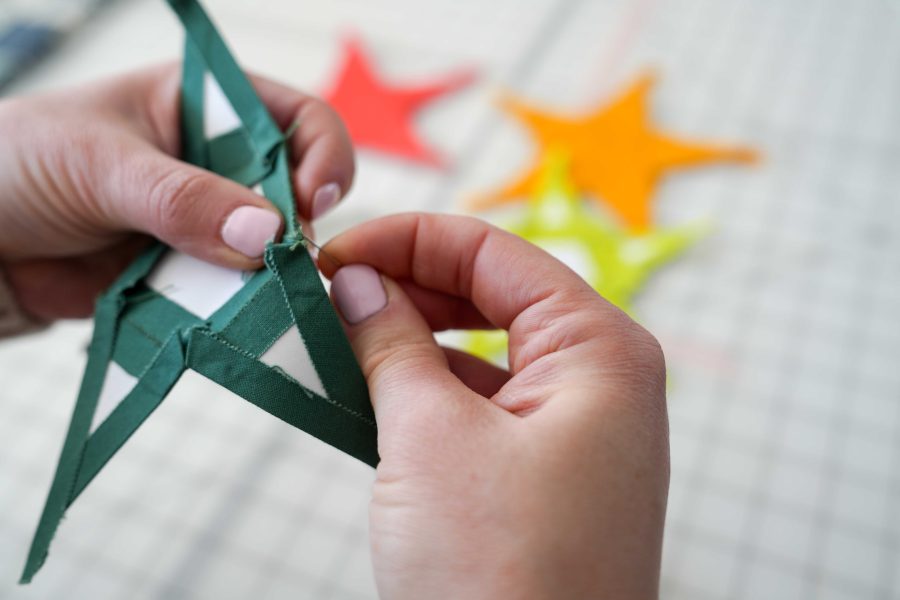
The Right Tool for the Stitch: Wool Appliqué

As winter begins to soften and spring projects start to take shape, many stitchers reach for wool appliqué. The soft texture, rich color, and forgiving nature of wool make it ideal for decorative stitching, layered designs, and heirloom-style projects.

But wool appliqué behaves differently than cotton or linen. Its loft, thickness, and layered construction mean the needle you choose can make a noticeable difference in how easily your stitches form—and how polished the finished piece looks.

If your needle feels difficult to pull through layers, or your stitches look larger than you’d like, it may simply be time to switch tools.

Let’s explore how the right needle supports smooth, consistent wool appliqué stitching.


The Stitching Scenario

Hand wool appliqué

Common projects include:

  • Appliqué quilts
  • Penny rugs
  • Decorative pillows or wall hangings
  • Seasonal table toppers
  • Folk art stitching projects

These designs typically involve stitching wool shapes onto a background fabric using small, often decorative stitches.

Because wool is thicker than most fabrics—and often layered—the needle must be strong enough to pass through both materials without distorting the stitches.


The Common Challenges

When working with wool appliqué, stitchers often notice:

  • Difficulty pulling the needle through layered fabrics
  • Large or visible stitch holes
  • Uneven stitch size
  • Hand fatigue during longer sessions
  • Threads wearing down from friction

The density and loft of wool require a needle that balances strength with finesse.


Why the Right Tool Matters

Several needle characteristics influence how easily you can stitch wool appliqué:

  1. Needle Length
    Shorter needles allow for better control when making tiny appliqué stitches.
  2. Shaft Strength
    A slightly stronger needle prevents bending when passing through thicker layers.
  3. Eye Size
    Your thread should glide smoothly through the eye without shredding—especially when using cotton thread or embroidery floss.
  4. Point Style
    A sharp point helps the needle pass cleanly through wool and the background fabric without excessive resistance.

When these elements are balanced, stitches become smaller, smoother, and more consistent.


Our Recommendation: Needles for Embroidery on Linen

Appliqué Needles – Sizes 9–11
These short, fine needles are favorites among appliqué stitchers because they allow for tiny, nearly invisible stitches. Their length provides excellent control when stitching close to edges.

Sharps Needles – Sizes 8–10
A versatile option that works well when stitching through slightly thicker wool or layered fabrics.

Embroidery (Crewel) Needles – Sizes 7–9
If you’re using embroidery floss or decorative stitching, a crewel needle’s longer eye accommodates thicker threads comfortably.

Choosing the right size depends on:

  • Wool thickness
  • Background fabric
  • Thread type
  • Desired stitch visibility

Testing on a scrap piece before beginning is always helpful.

When in doubt, test on a scrap. Or use our handy Needle Wheel!


Pro Tip: Keep Your Stitches Small

For polished appliqué, aim for stitches that disappear into the edge of the wool shape.

Try this simple technique:

  • Angle your needle slightly under the edge of the appliqué shape
  • Catch only a few threads of the background fabric
  • Keep stitches evenly spaced

A fine needle makes this much easier.


Special Considerations for Layered Projects

Many wool appliqué designs include multiple layers of fabric. When stitching through wool and cotton together:

  • Use a slightly stronger needle if you feel resistance
  • Avoid forcing the needle through thick spots
  • Replace needles that begin to bend or feel rough

A smooth, sharp needle protects both your fabric and your hands.


Reader Takeaway: Quick Checklist

When stitching wool appliqué:

✔ Choose a short needle for better stitch control
✔ Use a sharp point to pass through wool cleanly
✔ Match eye size to your thread
✔ Test your needle on layered fabric before starting

Small adjustments help create beautifully neat appliqué stitches.


Looking Ahead

Next month in The Right Tool for the Stitch, we’ll explore needle choices for hand quilting and big stitch quilting—two techniques where needle flexibility and length make a surprising difference.

Until then, enjoy the rhythm of slow stitching and the satisfying texture of wool appliqué.

The Right Tool for the Stitch: Embroidery on Linen

February invites us to slow down.

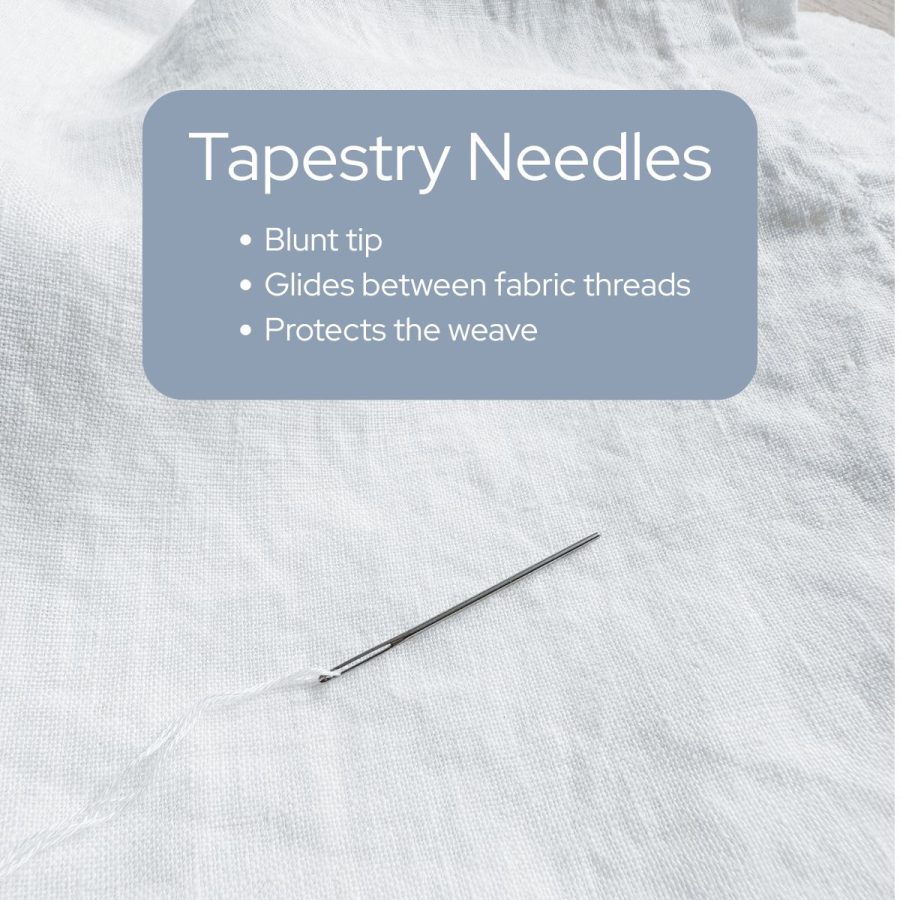
Embroidery on linen is one of those techniques that rewards patience—smooth stitches, soft texture, and beautiful drape. But linen has a personality of its own. Its natural fibers, subtle slubs, and varying weave density mean that not every needle performs the same way.

If your thread is fraying, your fabric feels resistant, or your stitches look uneven, the solution may not be your technique—it may be your needle.

Let’s explore how to choose the right tool for embroidery on linen.


The Stitching Scenario

Surface embroidery on linen

This includes:

  • Crewel embroidery
  • Monogramming
  • Floral surface designs
  • Stitch samplers
  • Slow stitching projects

Linen’s strength and structure make it ideal for embroidery, but its tightly woven fibers require a needle that can glide cleanly without damaging the fabric.


The Common Challenges

When stitching on linen, you may notice:

  • Thread fraying or fuzzing
  • Difficulty pulling the needle through
  • Visible holes around stitches
  • Distortion or puckering
  • Hand fatigue during longer sessions

Linen fibers are strong but not forgiving—using the wrong needle can stretch or separate threads in the weave.


Why the Right Tool Matters

When working on linen, pay attention to:

  • Eye Size
    Your thread should pass smoothly through the eye without shredding. A polished, properly sized eye protects delicate embroidery floss or specialty threads.
  • Shaft Thickness
    A needle that’s too thick creates unnecessary holes. Too thin, and it may bend or feel unstable.
  • Point Style
    Linen benefits from a sharp but refined point—one that parts the fibers cleanly rather than forcing its way through.
  • Length
    Longer needles create rhythm for flowing stitches, while shorter needles offer control for detailed work.

Small differences create noticeable results.


Our Recommendation: Needles for Embroidery on Linen

Embroidery (Crewel) Needles – Sizes 7–10
A sharp point with a slightly elongated eye makes these ideal for most surface embroidery on linen. They accommodate stranded floss without excessive friction.

Sharps – Sizes 8–10
Excellent for fine monogramming or delicate detail work where smaller stitches are desired.

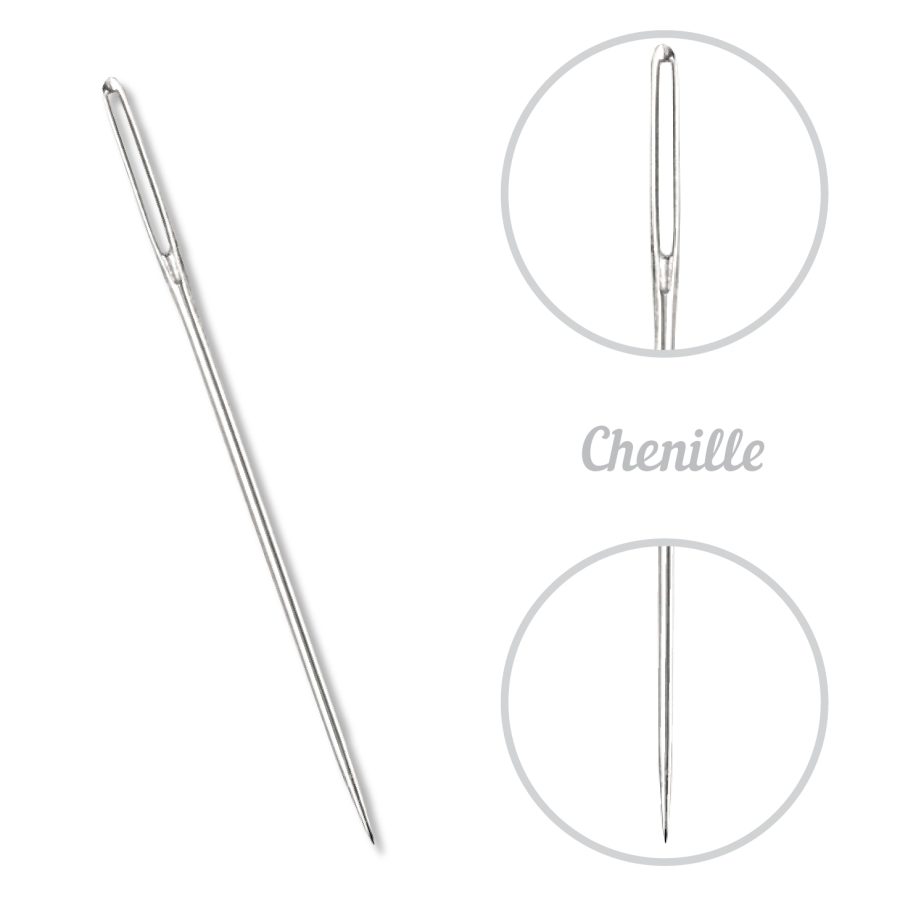
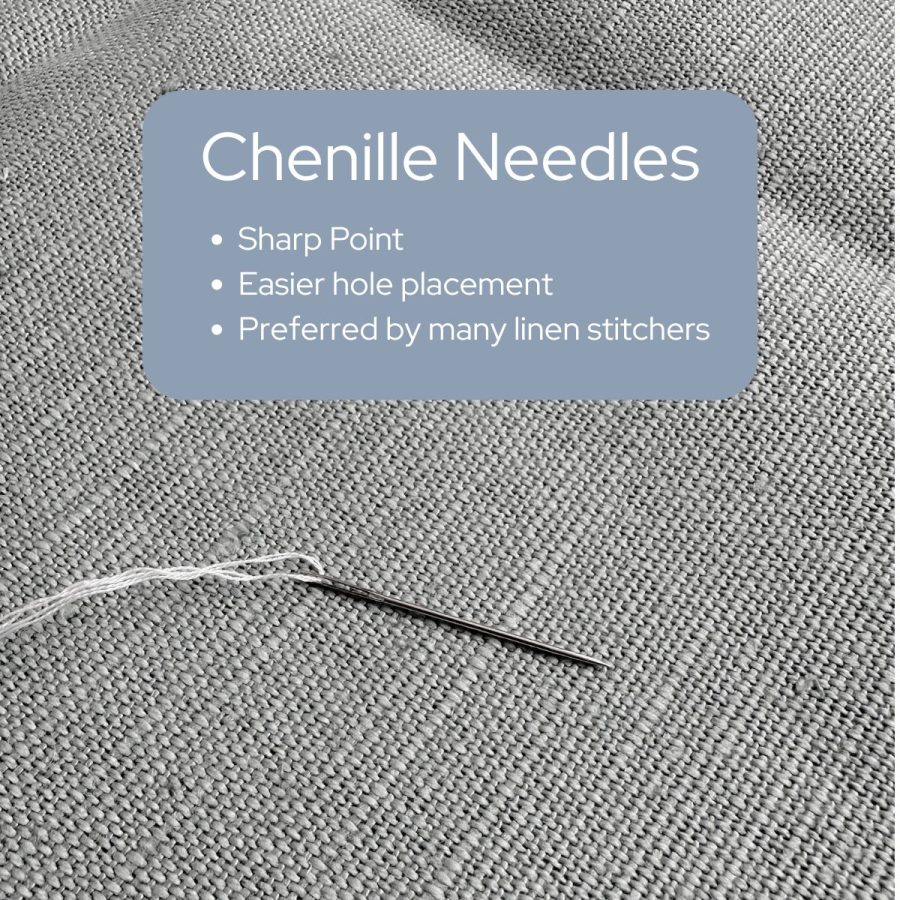
Chenille Needles – Smaller Sizes (if using thicker threads)
If working with wool, ribbon, or heavier fibers, a larger eye with a sharp point allows thicker thread to pass without strain.

Choosing size depends on:

  • Fabric weight
  • Thread thickness
  • Desired stitch scale

When in doubt, test on a scrap. Or use our handy Needle Wheel!


Pro Tip: Protect Your Thread

If your thread is twisting or fraying, try:

  • Using a slightly larger needle eye
  • Shortening your thread length
  • Allowing the needle to hang periodically to untwist

Smooth stitching is often about reducing friction.


Special Considerations for Mindful Stitching

Because February invites slower, intentional making, linen is a beautiful choice. Its texture encourages steady stitching and thoughtful pacing.

Using the right needle:

  • Reduces resistance
  • Minimizes strain
  • Creates cleaner, more defined stitches

The experience becomes calmer—and more enjoyable.


Reader Takeaway: Quick Checklist

When embroidering on linen:

✔ Choose a sharp needle with a polished eye
✔ Match eye size to thread thickness
✔ Avoid oversized needles that enlarge holes
✔ Test before beginning your final piece

A small adjustment can dramatically improve your results.


Looking Ahead

Next month in The Right Tool for the Stitch, we’ll explore needle choices for wool appliqué—another technique where precision and fabric awareness matter.

Until then, may your stitches be smooth, steady, and satisfying.

DIY Fabric Cards

Fabric cards are the perfect way to add a little OMPH to your gift giving and they show that you really do care enough to send something handmade…even if you don’t have a lot of spare time or the extra brain capacity for a larger project. Easy to customize to any size for any occasion (maybe a certain winter holiday that is coming up?), fabric cards show you went that extra mile and put thought and effort into the gift-giving experience. They make that special person receiving the card feel seen and appreciated. Fabric cards have a distinctive handmade quality that is hard to replicate with mass-produced, store-bought cards and it is this uniqueness that adds charm and character to your gift.

They are super easy to make! Fabric scraps are pretty inexpensive and if you are already a sewist or know someone who is, you might already have the materials you need to create your own mini textile masterpiece. Add some quilting or embroidery and your creation really goes to the next level. You can hand stitch, applique, or machine embroider each one for a one-of-a-kind product. We used Finca Metallic Thread to hand embroider our fabric cards. Send yours as postcards, framed miniature textile art, gift tags, or leave one side open to insert a gift card. However you use them, if you are like us, you will end up making several *ahem* extra which is a good thing because you never know when you will need a little piece of handmade excellence to add to your gifting.

Here is how we make ours.

Supplies:

  • Fusible interfacing or stabilizer
  • Fabric scraps (1–2”wide and long enough to cover your card)
  • Finca Metallic Thread – 1 Ply for machine embroidery, 2 Ply for hand stitching.
  • Crewel Needle–Large eye and sharp tip make easy work of the layers
  • Sewing machine with all-purpose thread and jeans needle or embroidery needle
  • Roxanne Glue–Glue Stick or Dip & Dab XL Tube
  • Cover Stock Paper or similar for backing (we like Kraft-Tex for sturdy projects)
    Note: You can use cotton fabric for the backing too. The end result is not as“cardlike”.
  • Scissors or rotary cutter

Cuts:

Cut stabilizer/interfacing to your desired size – Standard post card size is 4”x6” but you can make your cards any size you like
Cut paper backing to the same size as stabilizer

Instructions:

  1. Place strips of fabric on the stabilizer deciding on placement, color, texture, ect.
  2. Remove your chosen strips and place the center strip face up on the stabilizer. We like using diagonal lines, so our first strip covers from the top left corner to the bottom right. You do you though…
  3. Place an adjacent strip on top of the first one with Right sides facing. Sew the seam using a 1/4’’ to 3/8’’ seam allowance. Make sure the fabric covers past the edge.
  4. Press the seam open being careful to watch if your stabilizer has a fusible backing (you can also finger press the seam open as well).
  5. Continue in this manner sewing strips on one at a time moving in one direction.
  6. Once you have covered the first half, turn your card and repeat the process goingf rom the center to the opposite corner.
  7. Once the stabilizer is completely covered turn Right side down and trim off the excessfabric.
  8. Secure the last 2 corners using a glue stick or Roxanne Dip & Dab XL Tube
  9. Add embroidery to your card by hand or machine.
    a. If embroidering by hand use Finca 2-Ply Metallic Thread held double.
    b. If machine embroidering use Finca 1-Ply Metallic Thread as your top thread and all-purpose thread in the bobbin.
  10. Once embroidery is complete apply the paper back to the card.
    a. If your stabilizer has a fusible back you can use an iron to secure otherwise glue the card to the back
    b. If you are using the fabric card as a gift card holder skip this step.
  11. Machine or hand sew a zig-zag or edging stitch around the card to secure the edge.
    a. We specifically like using fabric cards as holders for gift cards…just leave one side open so you can slide the card inside the pocket
    b. If you want to use a satin stitch along the edge, use a fabric backing instead of paper. The punching of the needle that many times will perforate the backing causing it to tear off easily.

Optional: Use a hole punch in one corner of the finished card and thread it with sparkly thread oryarn as a beautiful gift tag.

Gift cards like this can be mailed using standard postage…you’ll need to weigh the item to ensure you have enough postage attached to it. They do tend to get dirty in the mail so we opt for mailing them in an envelope.

For a video tutorial visit our YouTube page here.

We hope you decide to make a few fabric cards this season for your loved ones…let us know how you like them!

Shannon & Jason

Stumpwork Embroidery & Thread Painting

We are so excited to announce a guest contributor to our blog this week, Megan Zaniewski! Megan has recently authored a new book sharing her techniques, tips, and tricks for stitching 3D Nature Motifs. This book is an absolute delight and includes beautiful pictures and easy-to-follow descriptions and instructions to create your own thread masterpieces. We are truly inspired by her work and are thrilled to be able to share a digital copy of her book with one lucky winner!

*To Enter: Follow us and Megan on Instagram and be sure to like the contest post. For additional entries, tag a friend in the comments. Each tag = one additional entry so be sure to share the love!

Hi! I’m Megan Zaniewski, author of Stumpwork Embroidery & Thread Painting: Stitch 3D Nature Motifs and I’m guest writing for Colonial Needle today to discuss my favorite needles for thread painting and stumpwork embroidery techniques and share some tips for selecting the correct needle size for your project.

Embroidery tablescape with stitching tools

Why is needle choice important?

Even though the differences between different types of needles and their sizes may seem slight or insignificant, choosing the appropriate needle for your project can make a big difference in your stitching experience and the quality and look of your finished work. 

The type of embroidery you are doing will help determine the type of needle you select. John James Sharps and Embroidery needles are both well-suited, high-quality choices for most hand embroidery with 6-strand cotton embroidery thread, including thread painting and stumpwork techniques. 

What is thread painting?

Thread painting refers to an embroidery style where long and short stitches are used to blend threads, similar to the way a painter blends paint with brushstrokes. Thread painted designs are most often worked in stranded cotton embroidery thread or silk split down to 1 or 2 strands at a time. This blending technique allows the artist to create depth and shadows that render their subjects in realistic, precise detail. This type of detailed embroidery requires a thin needle with a sharp point profile to achieve the best amount of coverage and detail in your work. When thread painting with a single thread of stranded cotton, a size 10 John James Sharp needle is my preferred needle. For 2 strands, I use a size 9 John James Sharp needle. 

A thread painted hummingbird body.
A Hummingbird stitched using Megan Zaniewski’s thread painting technique.

What is stumpwork?

Stumpwork embroidery includes a variety of techniques that produce a 3-dimensional effect. Padded stumpwork and wire slips are two embroidery techniques I use in my work and teach in my book. The John James Sharps needles are my preferred needles for these projects as well because of their sharp point profile. Their thinness and sharpness allow you to precisely couch wireslips in place and stitch through multiple layers of padded felt with very little resistance. Again, I recommend a John James Sharps size 10 for 1-stranded work involving wireslips and padding. The dependably high-quality of these needles will also help ensure your work is clean, consistent, and precise.

A stumpwork pink and purple violet.
A flowery example of Megan’s stumpwork.

How to select needle size

The size of the needle you select in your own embroidery will depend on the number of strands you are stitching with. Follow this general guideline choosing the correct needle size Note: there is some flexibility between sizes. The brand of stranded cotton embroidery floss you are using may affect your needle selection slightly. For example: a size 9 needle can be used for 1 strand as well if you are having difficulty threading it. 

  • 1 strand – size 10
    • 2 strands – size 9
  • 3 strands – size 8
  • 4 strands – size 7
  • 5 strands – size 5
  • 6 strands – size 3

How do I know if my needle is too small?

If you’ve mixed up your needles and cannot confidently identify their size, here are some signs to look out for that might indicate the needle you are using is too small:

  • You have more-than-usual difficulty threading the needle. Smaller needles have smaller eyes to accommodate fewer threads, so if you are trying to thread multiple strands through a smaller needle, like a size 9 or 10, you will find it is very difficult, if not impossible. 
  • You experience resistance when pulling the needle through the fabric. If you have to tug or pull to get your needle and thread through the fabric, your needle is too small. 
  • You lose fabric tension and notice your fabric is denting or puckering around the needle as you pull it through the fabric. 
  • A slight popping sound when the needle pushes through the fabric is often normal and okay, but loud or abrasive sounds as you pull the thread through might indicate that your needle is too small. The hole the needle creates should be large enough to accommodate your thread so that it glides smoothly through the fabric without a lot of rubbing or abrasion.
  • Your thread is becoming fuzzy-looking, breaking, or tangling easily. This happens when the hole is too small for the thread to glide through smoothly, causing the thread to rub excessively against the fabric and wear down with each pass.
  • Sore hands. If you are having to work harder to get the thread through the fabric, the additional strain on your hands can cause them to hurt or tire easily. 

If you encounter any of these issues and suspect your needle is too small, try the next size down (ex. switch from a size 9 to a size 8). Remember, needles get larger as the size # decreases.

How do I know if my needle is too large?

Alternatively, here are some signs that might indicate the needle you are using is too large:

  • Visible holes left in the fabric around the thread are a sign that your needle is too large. The needle should create a hole wide enough for the thread to pass through comfortably without resistance, but not much larger than that. 
  • Stitches that are loose.

If you suspect your needle is too large, try the next size up (ex. switch from a size 8 to a size 9), which will be a slightly smaller needle.

I hope these tips help take some of the guesswork out of choosing the correct needle size for your hand embroidery project. Remember, stitching should be comfortable and fun above all else. If your needle is causing you hand strain or frustration, try out different sizes until you find what works best for you. 

Happy Stitching!

Book Cover: Stumpwork Embroidery & Thread Painting

Preparation for Needleturn Applique: Tools & Tips

By Judy Moore Pullen

Applique is an awesome, not awful, word to me. I feel like a sculptor as I swoop and turn under that scant 1/4” seam allowance; traveling down straight folded edges of applique fabric, then creating curves, dipping into innie points and playing with my newest trick for pointy outie points. There are several things I suggest doing in preparation for my joy of sculpting fabric, AKA: hand applique.

Thing 1: Gather your tools. Tools as in fabric cutting scissors: sharp to the point and rather short for better control of where you clip and how far you clip into the seam allowance. And use just those sharp points of your scissors to clip and trim. I learned that the hard way several years ago while hand quilting on a frame on my mother’s quilt. I opened large scissors all the way and clipped the thread as well as the quilt top. That was a good, life-long lesson I learned that day. Sometimes I also use pinking shears to carefully trim the cut edges of the applique, taking tiny bites out of the fabric for ease in turning under the seam allowance and reducing bulk beneath the applique. Practice first with those pinking shears. You can always trim away more, but it is most frustrating to try to turn under a seam allowance that is too narrow and ultimately frays.

Thing 2: One of my favorite tools for hand applique that I gather is a thimble. I especially love using Roxanne Thimbles. A correct fitting is required (Colonial Needle has put some tips together here). When I owned a quilt shop several years ago, I suggested to my customers who were interested in a Roxanne Thimble that they bring some handwork, and spend a little time trying out several sizes by sittin’ and stitchin’ for a little while — somewhat like walking around in a new pair of shoes to make sure they fit prior to purchase. In addition to being very comfortable with a proper fit, Roxanne’s  Thimble  is ergonomically better for your hands. The side-push of the needle with your finger is better for your hands than pushing the needle with the tip of your finger. Using this thimble allows me the joy of continuing to hand stitch for many years to come. Roxanne’s Thimble also makes a lovely gift for that special friend or family member with a choice of gold plated, silver plated, or sterling. Every time I use mine, I am reminded of a dear friend who gifted me with one- a gift that keeps giving.   

Thing 3: Another very small but also very helpful tool are Needle Grip-Its. Press your thumb and fore- finger together where you grip a needle. Then peel a little circle from a sheet in the package and apply the sticky side to the tip of your thumb on your dominant hand. Repeat for your forefinger on your dominant hand. The repetitive motion of gripping, pushing, and pulling a needle can cause pain and swelling in one’s hands. These little unobtrusive circles stick well to your finger and thumb, and help to more easily grip and direct the needle exactly where you desire into the fabric. This also helps with that invisible applique stitch. Needle Grip-Its come packaged in sheets of 70 adhesive dots to easily carry in your sewing basket. They can also be cut into pairs to include in customers’ kits for classes, offering a great opportunity to try before you buy. 

Some of my favorite tools to do one of my favorite things: hand applique!

Thing 4: The quality of Presencia Thread for my hand applique assures me that the time and effort I spend making my stitches as invisible as possible is well worth it. Presencia begins with the finest 100% Egyptian Cotton, virtually lint-free, strong, and durable. As I acquire more candles on my birthday cake and my number becomes bigger, I am reminded that the bigger the number, the finer the thread (and hand sewing needles – sewing machine needles are the opposite.) For those nearly invisible hand applique stitches, there are four things that are especially helpful: applique thread size, applique thread color, the needle, and the stitch.  I recommend sewing with sizes 50 weight or 60 weight for hand applique. Both sizes 50 and 60 are 3-ply (three fibers plied, twisted  into one fine thread) therefore also very strong. For thread color, if possible, unwind a few inches of Presencia Thread from the spool and lay it across your applique fabric. We used to just lay a spool of thread across the fabric to audition thread color, but another lesson learned, thread color on the spool is different from a strand of thread.  My personal favorite thread size is 60 weight since it is smaller in diameter than 50 weight.

Thing 5: I love so many needles that Colonial Needle Company has to offer. Over the years, I have also learned that fitting the needle to the thread and the project is most important. I used to sew with whatever needle I could see to thread, with whatever thread was available. With time comes wisdom! I really enjoy using the John James Signature Collection Needles, especially their Milliners and Quilting Needles for needleturn applique. The Milliners are long, very fine, strong, and help to easily pierce the folded edge of my applique as well as the background fabric. Because the needle is so sharp and made in England of the finest quality steel, I can easily pierce the fabric rather than push and distort where I want the applique. The length of the Milliners Needle helps me to turn under the seam allowance then hold the fold with the thumbnail of my other hand. With needleturn applique, I can spend my time and effort stitching, rather than preparing the appliques, although I must admit that friends who do prepared hand applique do beautiful work. The process of needleturn is what I love so much! Sometimes I enjoy a change, and use the John James Signature Collection Quilting Needle. It gives my hands a break, kind of like changing from tennis shoes to slip-on shoes mid-day. John James Signature Collection Needles also are available in Embroidery and Sharps Needles. They are packaged in the USA  in crystal clear tubes of 25 needles, enough to keep you supplied for quite a while and to share with friends.

Thing 6: Just to mention a few other things I keep handy in preparation for hand applique: I highly recommend a good light source directly over your work. My light source is also magnified, helpful due to all those birthday candles…I also stitch with a pillow on my lap which helps to bring my sewing up to a level that is comfortable for me, and helps me rest my hands as well as more accurately position my needle and scissors. A pincushion for fine straight pins is a better option than the arm of my “nest” chair where I sit and stitch. A needle threader is helpful, and I will have a suggestion on tips for threading a needle in blogs to come. I enjoy hand sewing so much that I neglect getting up and moving around, so setting a timer is a good reminder for me if I am listening to an audio book or the serene sound of silence while I sew. If watching TV, I challenge myself to stand and stretch during commercials. 

I try to keep several containers, baskets and boxes prepared with a collection of tools and WIPS (Works in Progress) for grabbing and going out the door, or putting in my car the evening prior to an appointment or meeting. One never knows when one will need to savor just sittin’ and stitchin’. Most of us can multi-task anyway- listen and stitch. Needleturn applique helps me to be somewhat less annoying while listening to a speaker, while waiting for a delayed appointment, or for taking to the park when I have some time to spare between appointments. It also offers me the opportunity to meet new people, share interests, and perhaps even acquire converts to hand sewing. It’s all good, and gets better with the best and right tools and tips.

Happy sewing,

Judy Moore Pullen