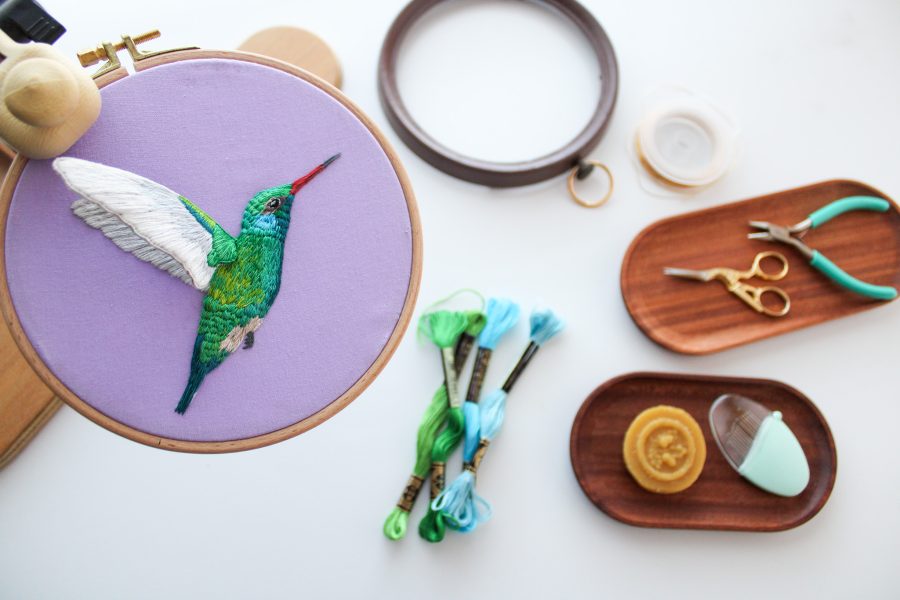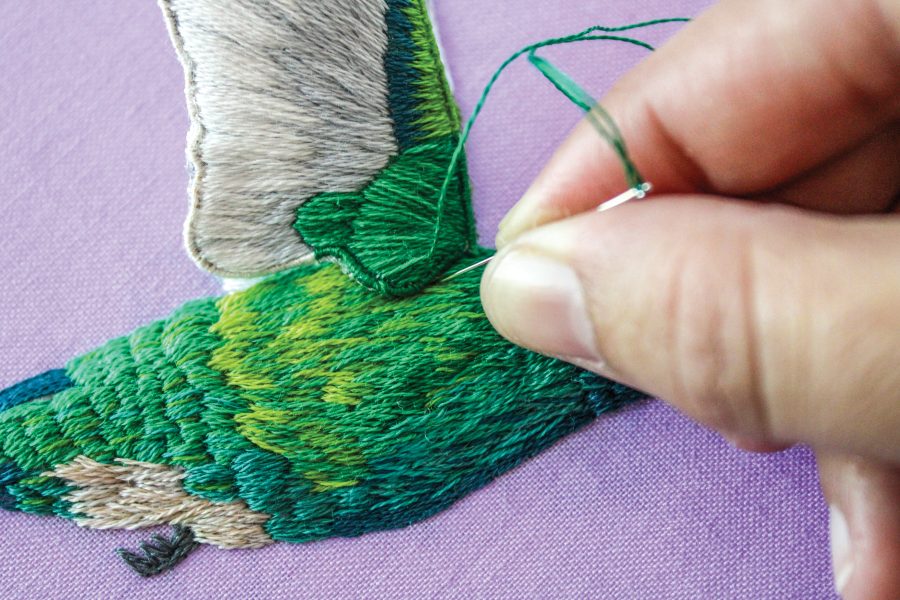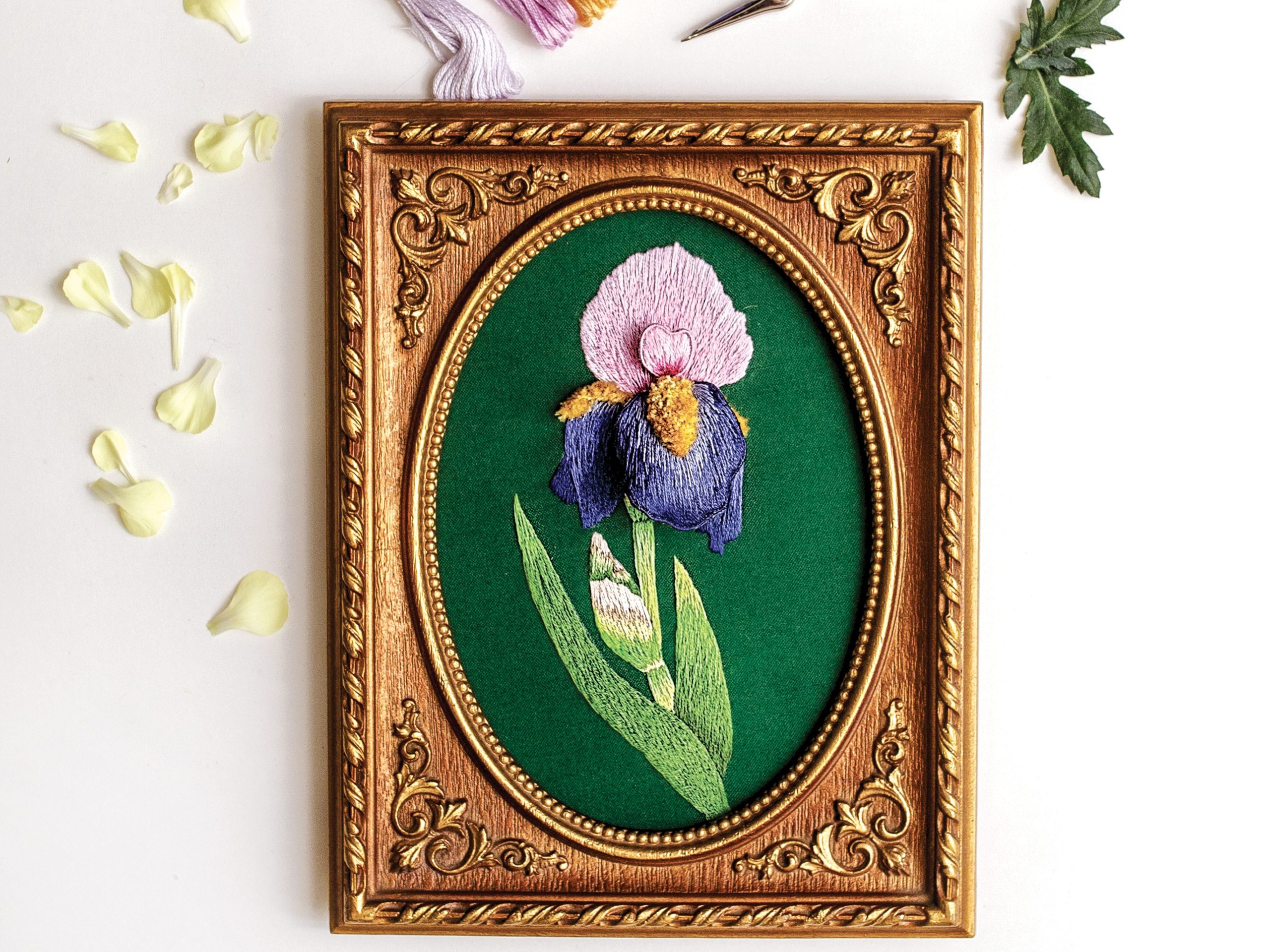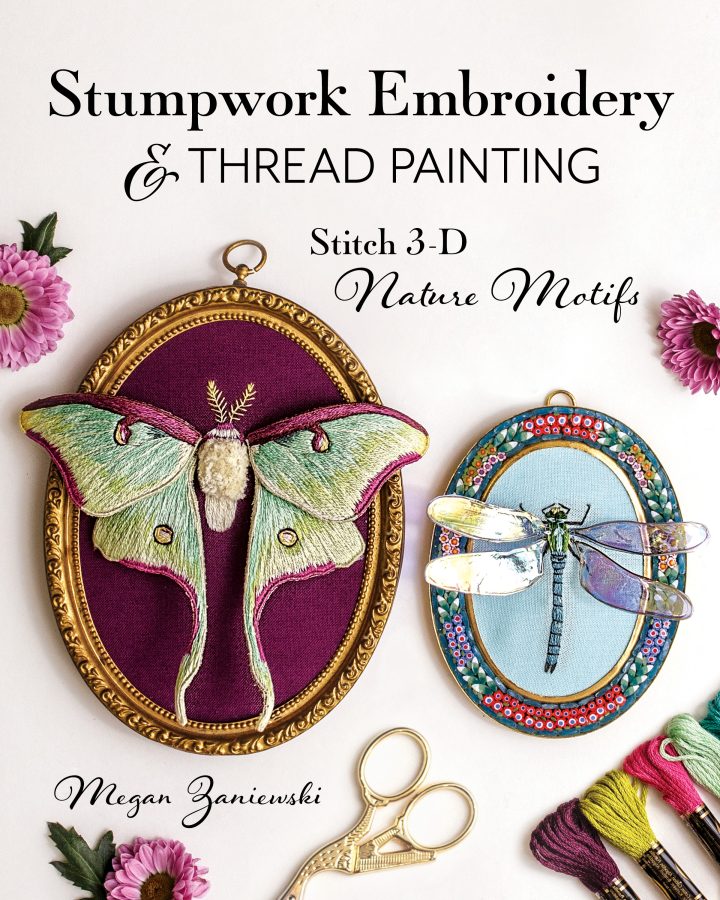
Hi! I’m Megan Zaniewski, author of Stumpwork Studio: Mastering 3-D Embroidery (C&T Publishing), and I’m guest writing for Colonial Needle today to share some tips for selecting the correct needle type for your stumpwork embroidery projects.
What is Stumpwork?
Stumpwork is the term used to describe any and all types of 3-dimensional embroidery. It includes a wide variety of techniques that create varying degrees of depth and dimension. Everything from slightly raised embroidery stitches to fully sculptural free-standing designs fall under the broad umbrella of stumpwork. In this guide, I will be sharing needle recommendations for the following stumpwork embroidery techniques: surface beading, thread-wrapped beading, beaded slips, wireslips, fabric applique, felt padding, and dimensional stitches.
Why is needle choice important?
Did you know there are 100’s of needle variations? Navigating the many needle options out there can feel overwhelming even for an experienced embroiderer. And though the differences between different types of needles may seem slight or insignificant, choosing the appropriate needle for your project can make a big difference in both your stitching experience and the quality and look of your finished work.
When worked with stranded cotton embroidery thread, many stumpwork techniques can be accomplished with Sharps or Embroidery/Crewel needles . In some cases, though, you may find it easier or even necessary to work with other types of needles. While it can be helpful to have a small variety of needles available on hand, you certainly do not need to stockpile every needle type. With just the following 6 needles, you’ll be able to comfortably accomplish a wide variety of stumpwork techniques.
An Overview of My 6 Essential Needles
Needles have four variables: their point profile, diameter (i.e. thickness), eye size, and length. Understanding each needle type’s unique characteristics and how those features affect its function will help inform your needle choice.
- Sharps
These are general purpose sewing needles with a sharp point and small, rounded eye. They are well suited for many embroidery techniques and stitches done with sewing, silk, and cotton thread.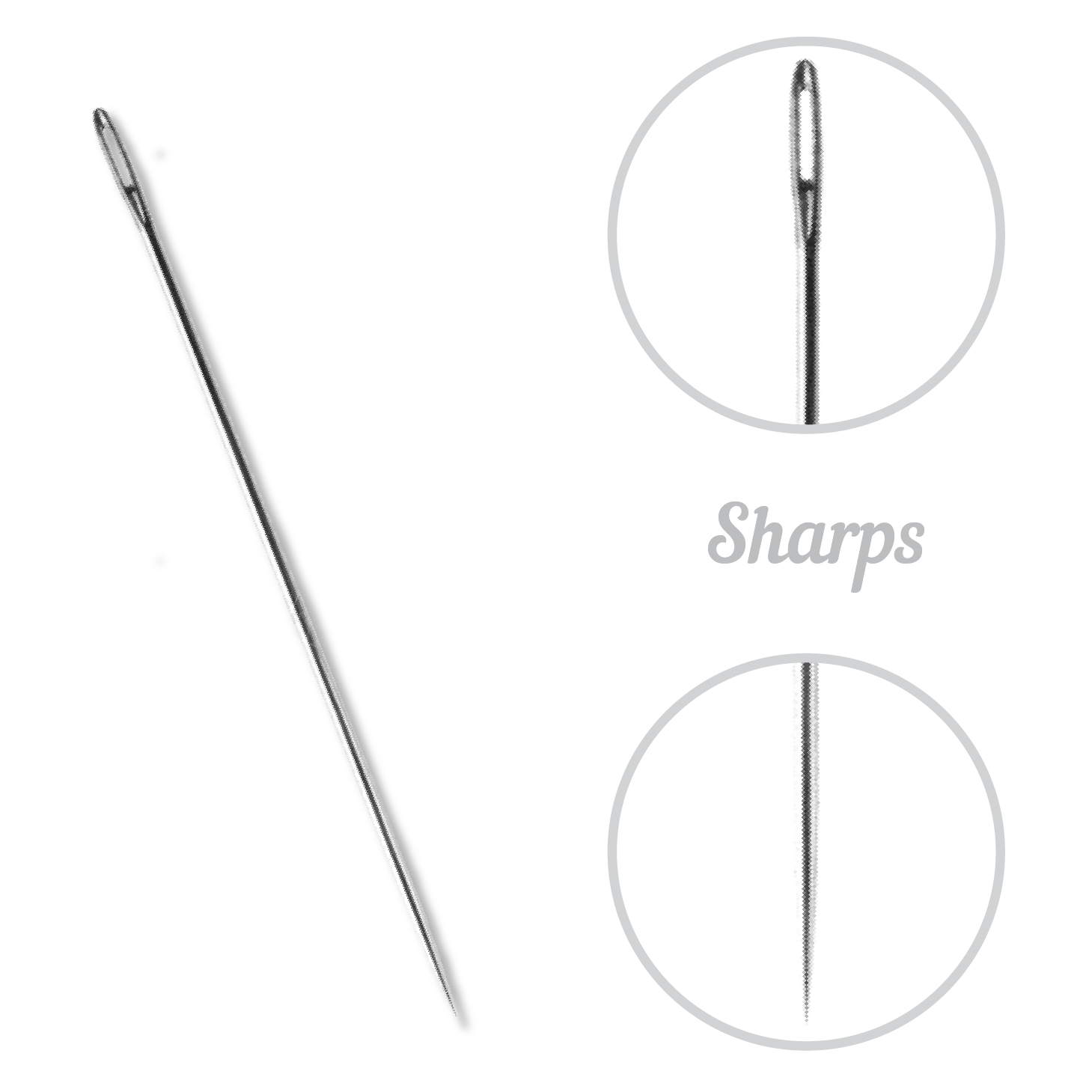
- Embroidery/Crewel
Embroidery/Crewel needles have a longer eye than a standard Sharps needle that can better accommodate multiple strands of thread. It also makes threading the needle easier. Otherwise, their length, diameter and point profile is the same as a Sharps needle. They are also suitable for many embroidery techniques worked in silk and cotton thread.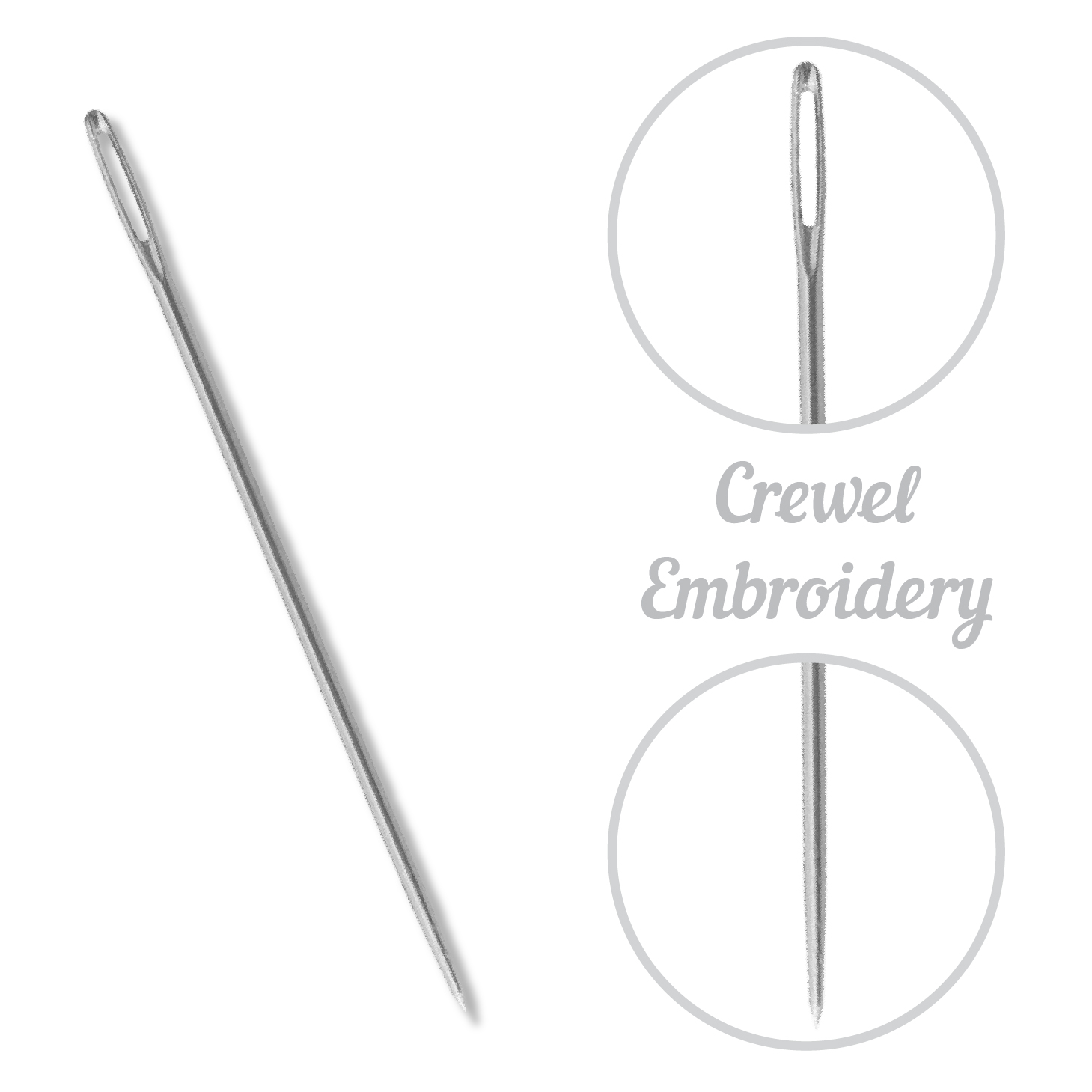
- Tapestry
Tapestry needles feature a blunt tip, large eye, and thick profile. They are designed to accommodate thicker, often delicate fibers like tapestry wool. The needle’s thick diameter creates a hole large enough for the thread to pass through the fabric easily with very minimal friction (which can cause wear and tear). Its blunt tip does not pierce fabric well, so this needle is best suited for canvaswork. The blunt tip also makes it an ideal needle for working dimensional stitches in stumpwork designs, such as woven stitches and detached stitches which require careful maneuvering apart from a fabric base.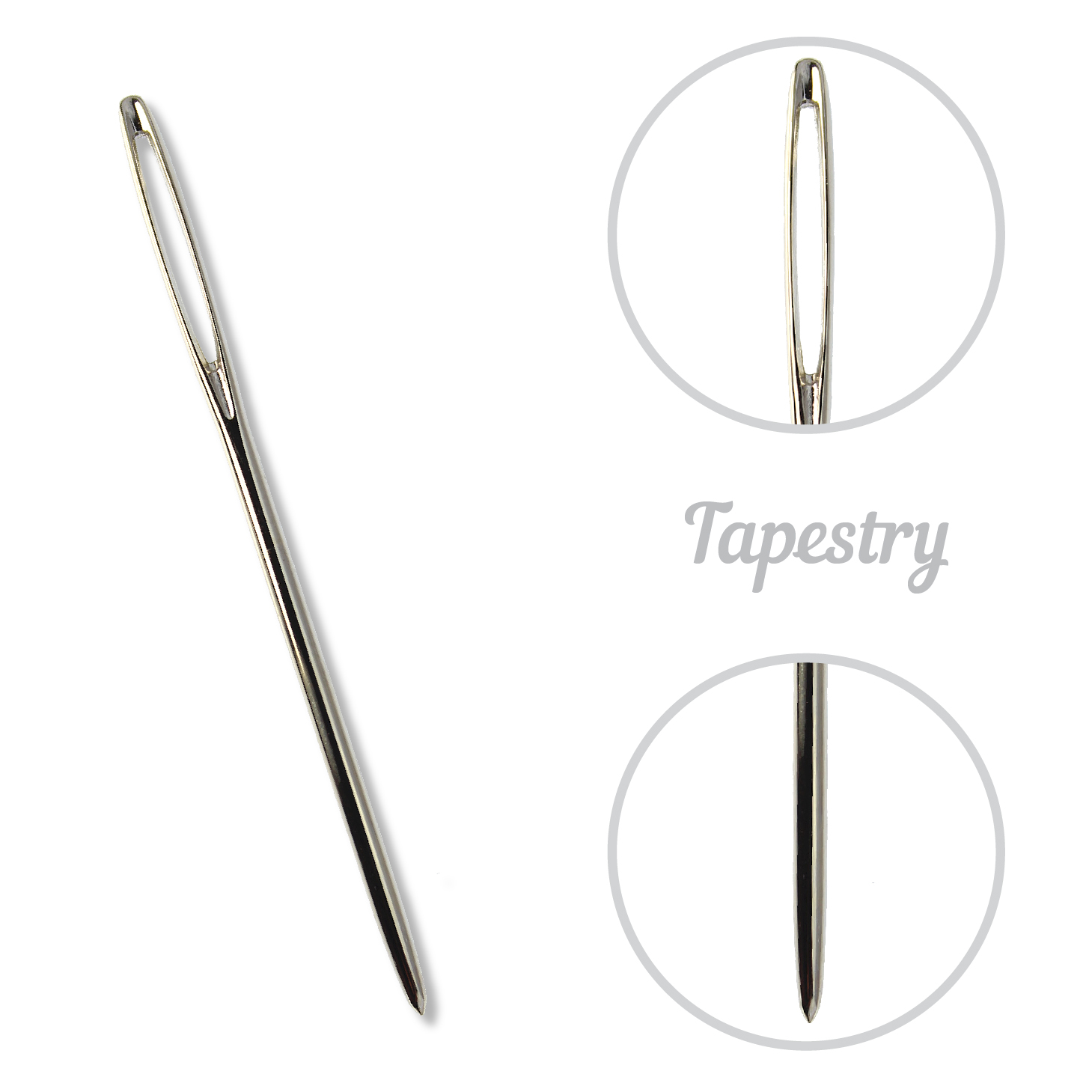
- Chenille
Chenille needles are identical to Tapestry needles in length, diameter, and eye size. These features make it well suited for working with thicker, textured, or more delicate specialty fibers like tapestry wool, silk ribbon, wool-silk blends, metallic threads, linen threads, and more. The difference between a Chenille needle and Tapestry needle is its point profile. A Chenille needle has a sharp point, enabling the needle and fiber to pass through even thick or coarse fabrics easily.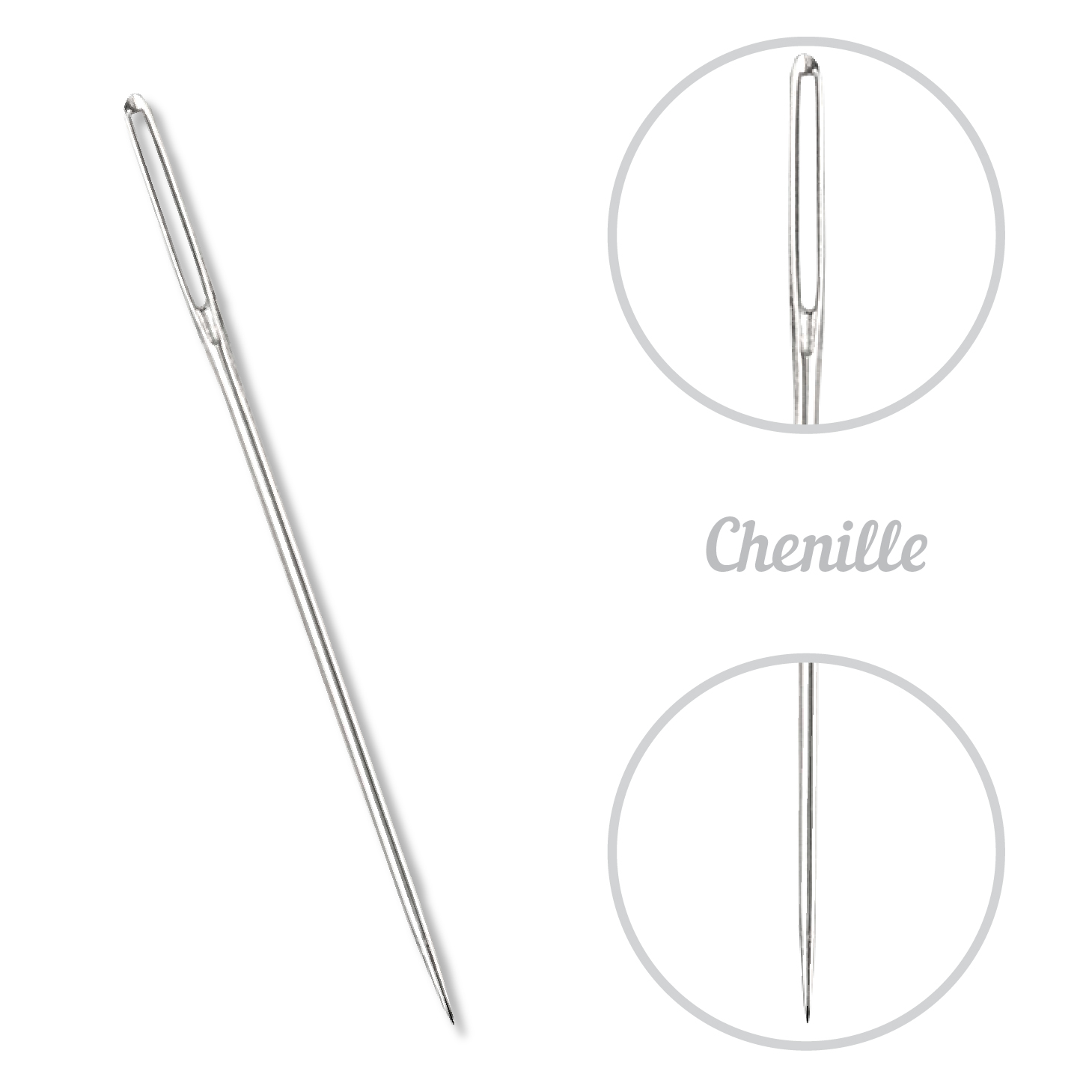
- Milliner
Milliner needles are similar to a Sharps needle. They have the same sharp point profile and small rounded eye as a Sharps needle, but they are longer. Their long length and small eye make them helpful needles for working dimensional stitches that require wrapping the thread around the needle multiple times (like Cast-on Stitch and Bullion knots).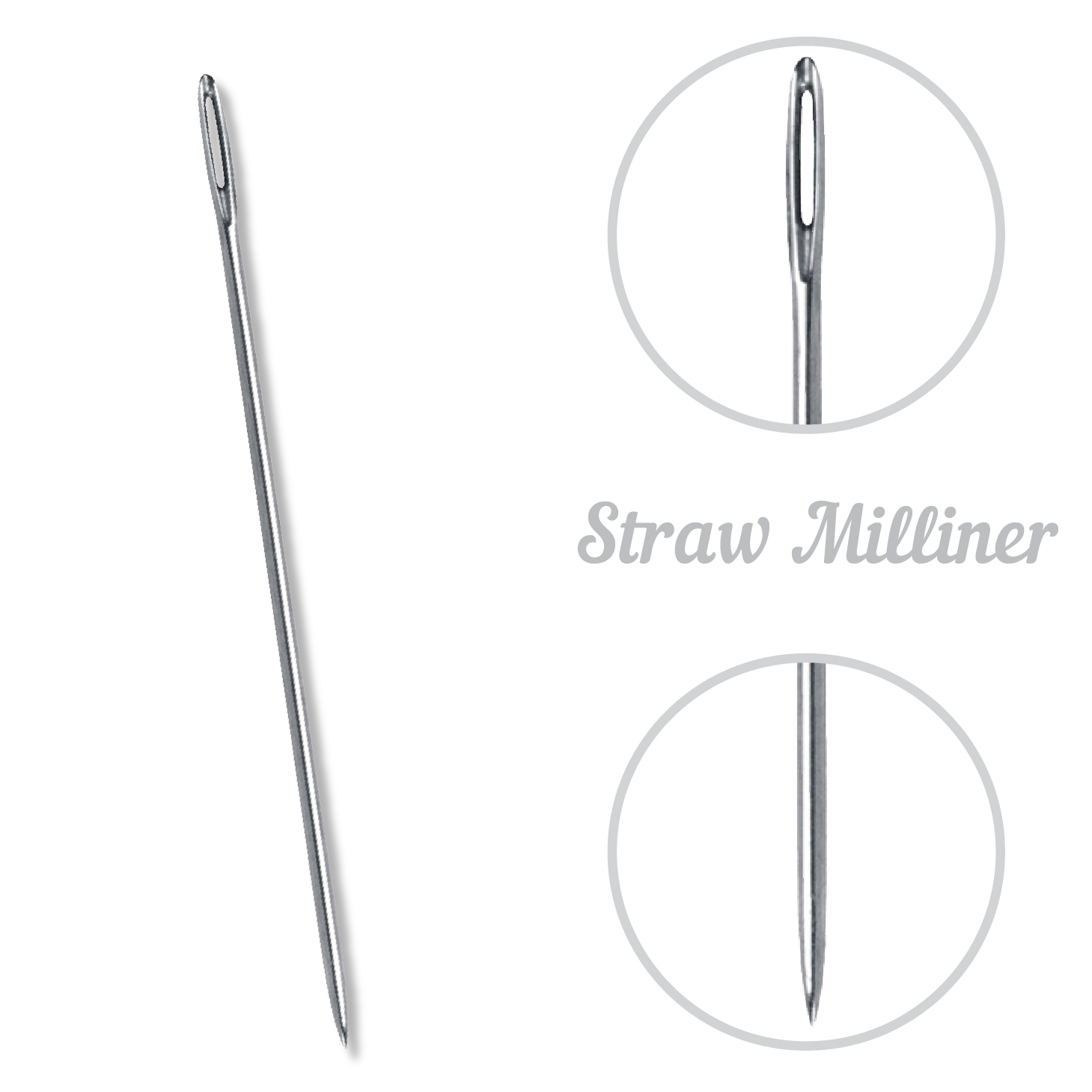
- Beading
Beading needles are made from steel wire, with a sharp point and a very long and thin profile. The eye is also small, allowing the needle to pass through beads and sequins easily without getting stuck. The long length allows you to easily scoop up and thread multiple beads at once.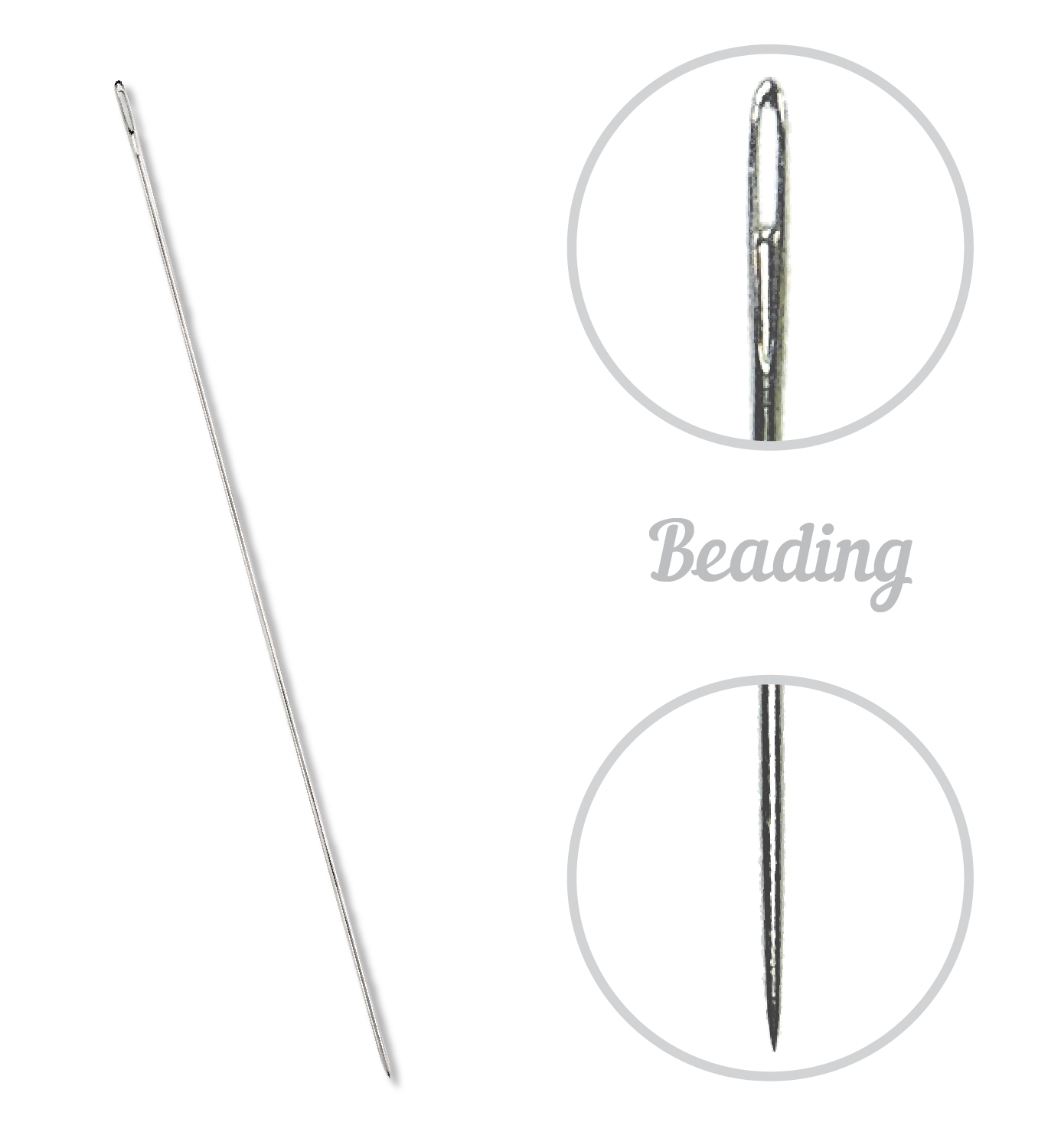
With the defining features of each needle type in mind, let’s take a look at some stumpwork techniques and my recommended needle for each one.
Needles for Beading Techniques
Beads are a highly versatile material in stumpwork embroidery. As surface decoration, beads can elevate a design with texture, dimension, and sparkle. Beading needles are most often the suitable choice for embroidering with beads. Their elongated and uniformly thin profile allows you to easily scoop and thread even the smallest seed beads. Keep in mind, these needles are very long and pliable so they are prone to bending if used too roughly. If you find beading needles too difficult to maneuver, you can try working with a thin-sized embroidery/crewel needle such as a size #11 instead. This size will still accommodate many bead sizes, even the smallest seed beads.
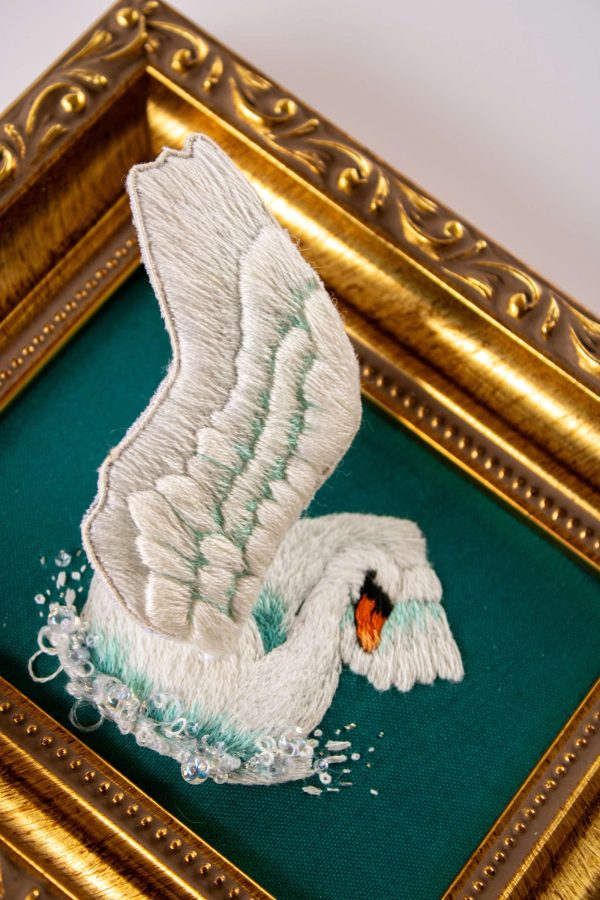
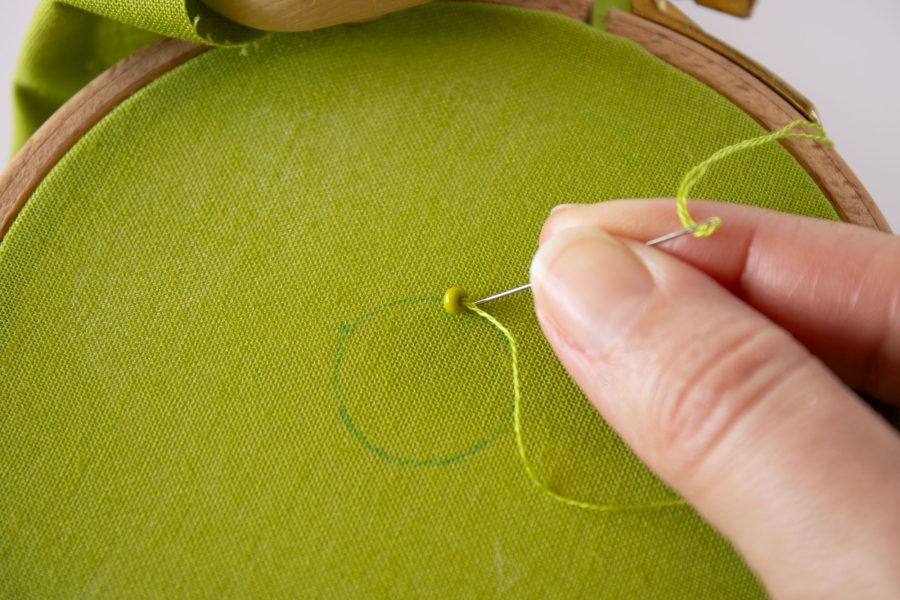
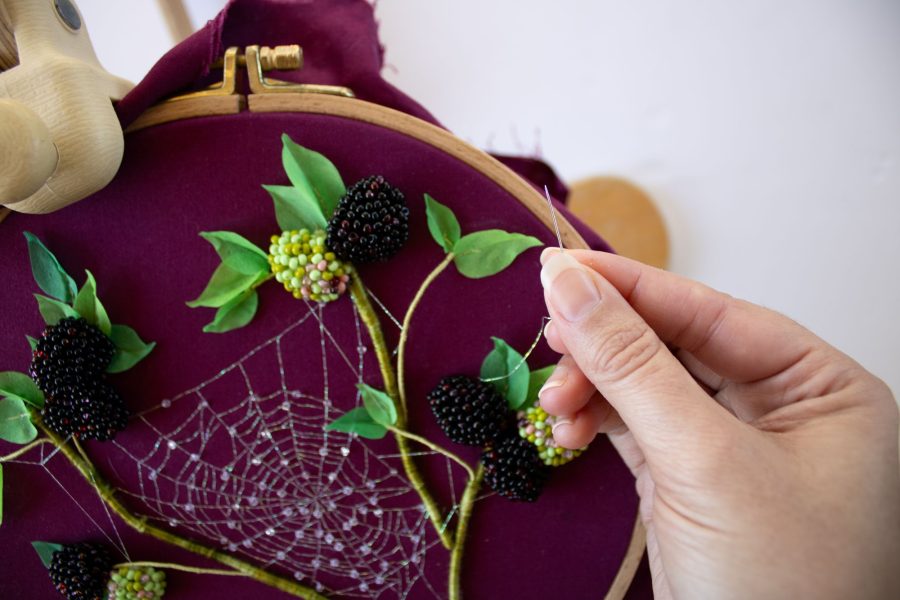
Beads can also be used to create more sculptural forms with a technique called a beaded slip. With this technique, beads are embroidered onto a flat surface before being sewn into a rounded shape. This technique is helpful for recreating things like berries or a flower center, though it can be modified in many ways for an entirely different look (ex. try using French knots instead of beads). Beading needles are again the most suitable needle for working this technique, though thin embroidery/crewel needles may also be used as an alternative for most bead sizes.
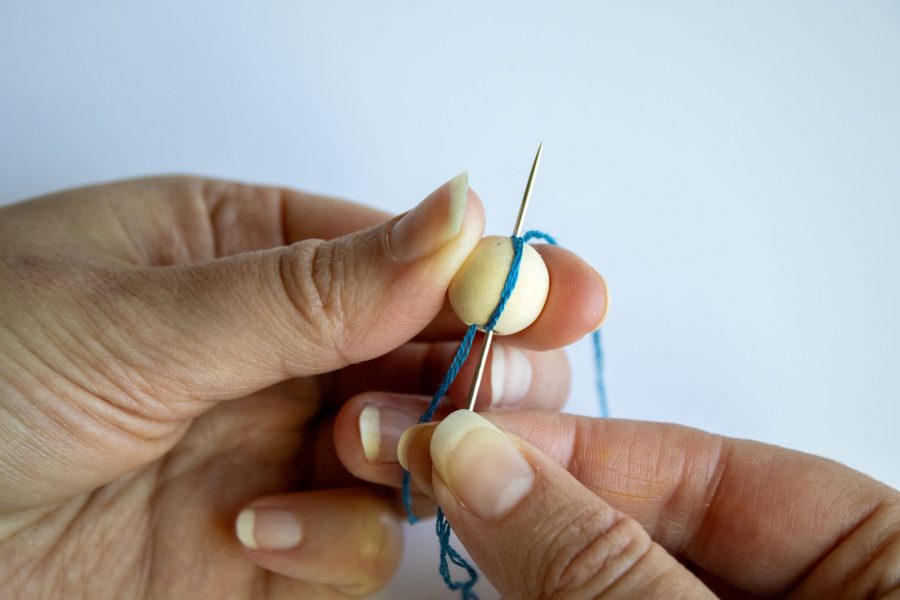
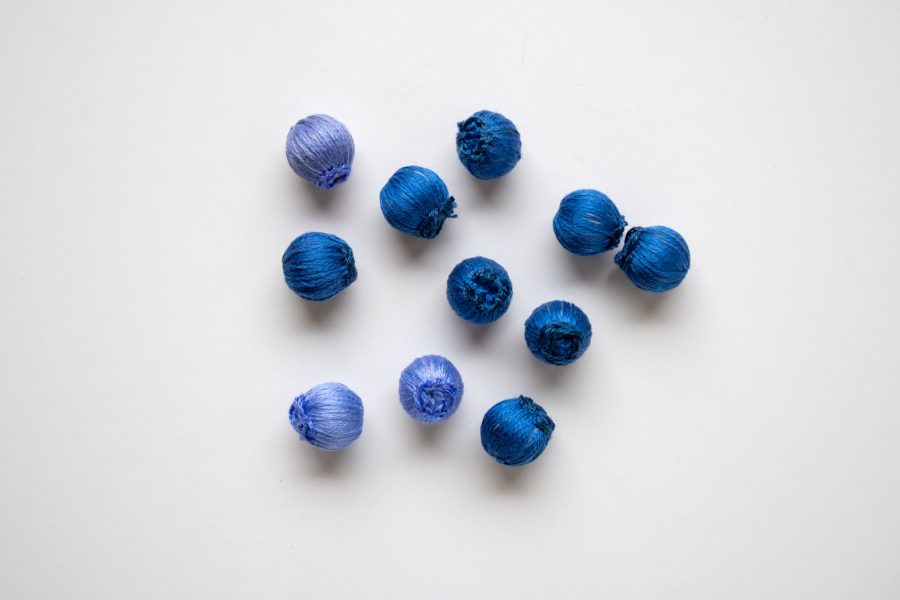
Another way that beads can be used as a sculptural element in an embroidery design is through a bead-wrapping technique. Bead-wrapping involves covering the bead (or another similar bead-like form made from clay, paper, cotton, etc) with thread. Wrapped-beads can be used in innumerous ways. In nature motifs, they can serve as berries, insect eyes, flower buds, seeds, eggs, and more. Beads with larger holes make the best forms for this technique, as they can better accommodate the thread’s bulk as it is wrapped around the bead. Because the interior of the bead can become quite densely packed with thread, I recommend using a chenille needle for this technique. Its strong and sharp profile will prevent it from bending or breaking under pressure as you pass it through the densely packed bead.
Needles for Raised Stitches
Raised stitches are a simple yet effective way to add texture and dimension to an embroidery design without additional materials or supplies. All you need is a needle and thread.
The type of needle you need will depend on the type of stitch and fiber you are working with. For many stitches worked in stranded cotton embroidery thread, a Sharp or Embroidery/Crewel needle is suitable. For example, Turkey Stitch, which produces a tufted rug-like effect that can be trimmed and shaped, can be worked with cotton thread and a crewel needle to add a fuzzy texture to a design.
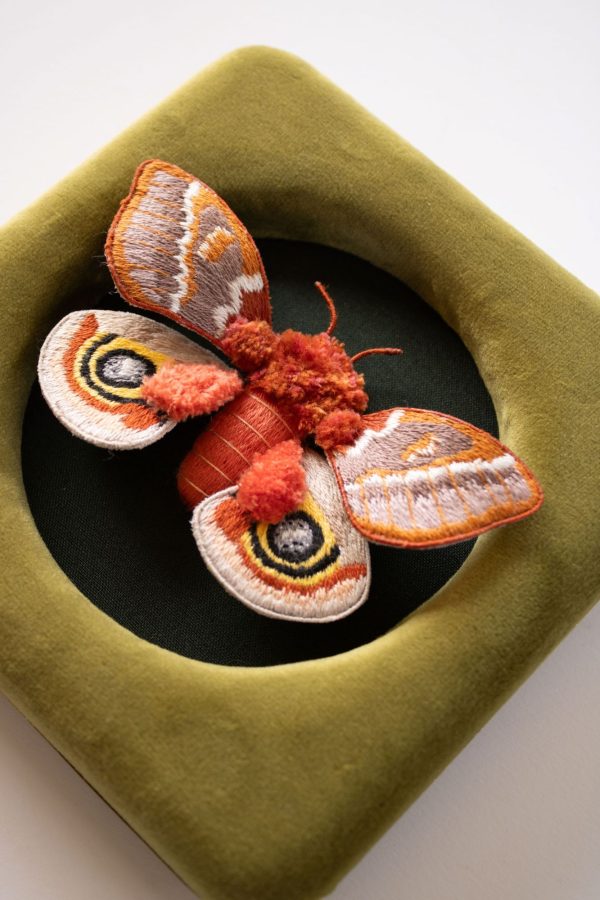
When working the same stitch with larger or more delicate fibers, such as silk or wool, I recommend using a chenille needle. The thicker profile will allow the threads to pass through the fabric more easily, preventing fraying or breakage.
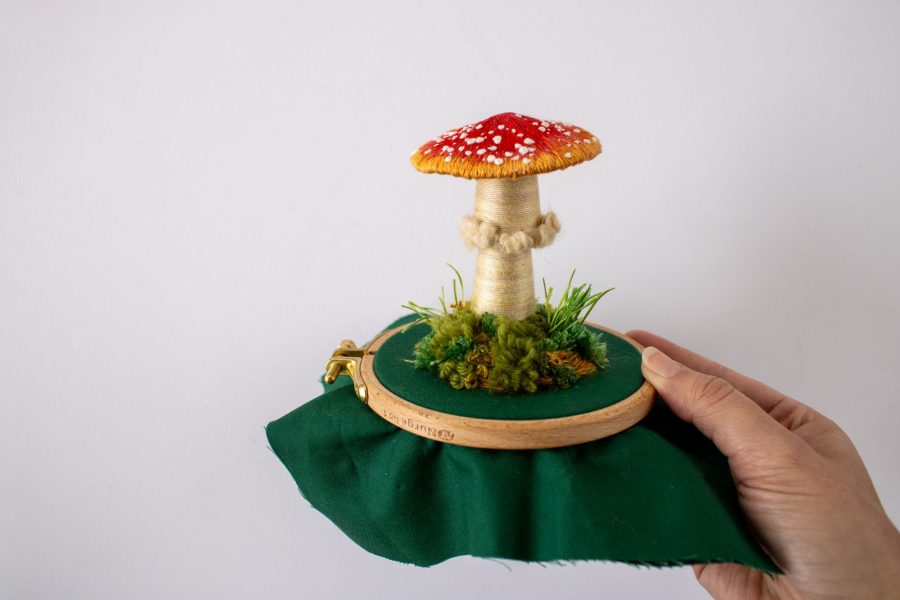
If you find yourself struggling with some raised stitches, you may find that switching to a Milliner’s needle makes all the difference. For example, stitches that require you to wrap the thread around the needle multiple times before passing it through the fabric, such as French Knots and Bullion Knots, are best executed with a Milliner’s needle. Its long, straight shaft has an even diameter from tip to eye, allowing the wrapped threads to glide through more easily, preventing tangles and knots.
With other dimensional stitches that require you to weave or manipulate the thread in more complicated maneuvers (such as the Woven Picot or a Brussels Stitch), I suggest using a tapestry needle. Its blunt tip will help prevent you from piercing the thread as you weave the stitches.
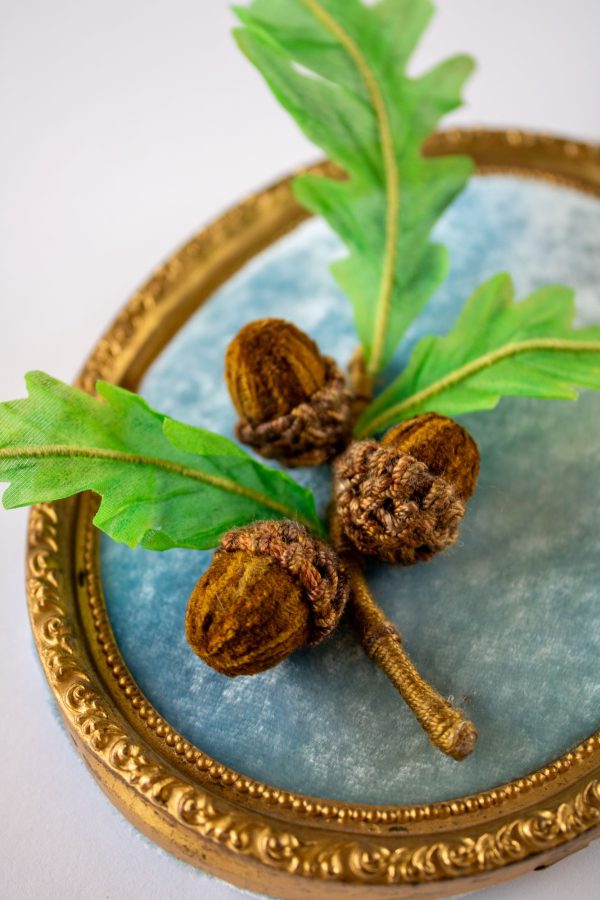
These are just a few examples of the many ways that stitches can be used in stumpwork designs, giving your embroidery a 3-dimensional effect. If you are trying out a new-to-you stitch and are unsure of what needle to use, as a general rule, consider the characteristics of the thread you are working with (ex. stranded cotton vs a more delicate fiber) and how the stitch is executed (ex. surface, woven, wrapped, etc). These factors can help guide you.
TIP: For stitch tutorials and inspiration, I highly recommend checking out the Stitch Bank by the Royal School of Needlework, a free and comprehensive resource that includes over 500 stitches with information about their history, applications, and full step-by-step video and photo instructions.
Needles for Wirework
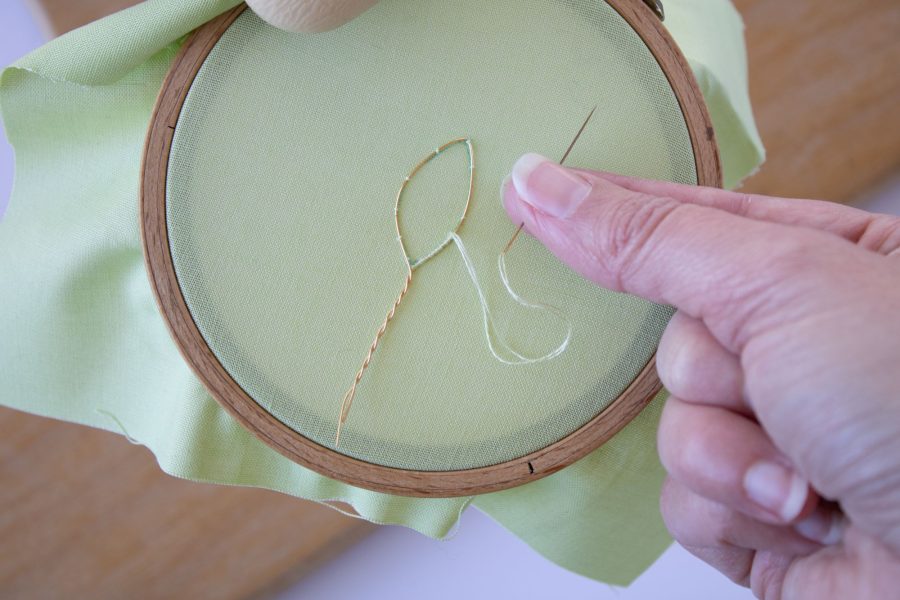
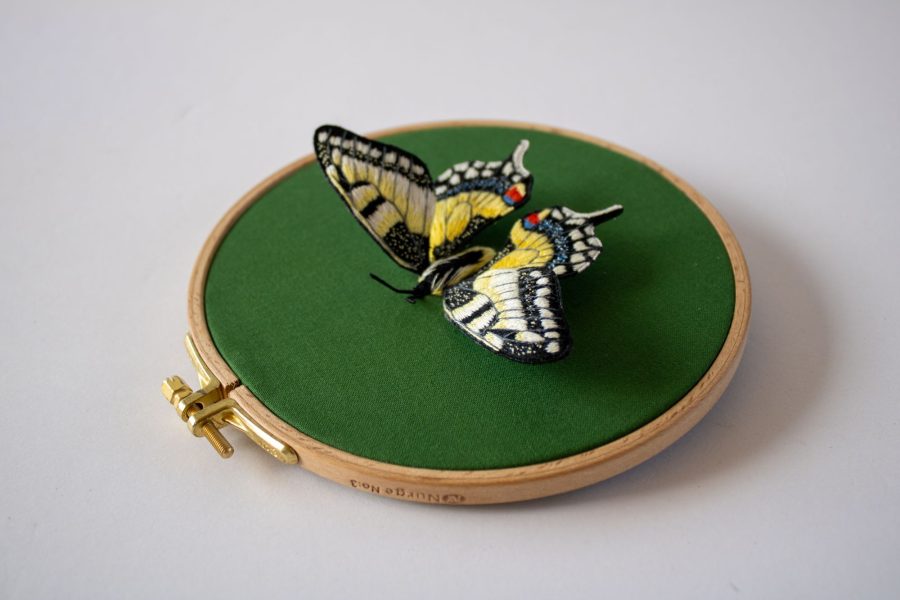
Wires can be used in a variety of different ways to add dimension to an embroidery design. One popular and easy-to-learn technique is called a wireslip, where wire is embroidered along the edge of a design. This framework allows you to cut out the embroidery and either display it alone or attach it to a base as a 3-dimensional feature. When embroidering over the wire, it is important to keep your stitches as neat and precise as possible and work with a fine yet strong cotton or silk thread. For this reason, I always recommend using a Sharp or Embroidery/Crewel needle when working a wireslip (a size #10 is ideal when working with 1 strand). The thin point and profile of these needles allow you to stitch as closely to the wire as possible, resulting in a clean and tidy edge to your design.
Needles for Padding and Applique
Fabrics can serve as more than just a base for your embroidery. With a couple of applique techniques, fabrics can add height and texture to your embroidery design.
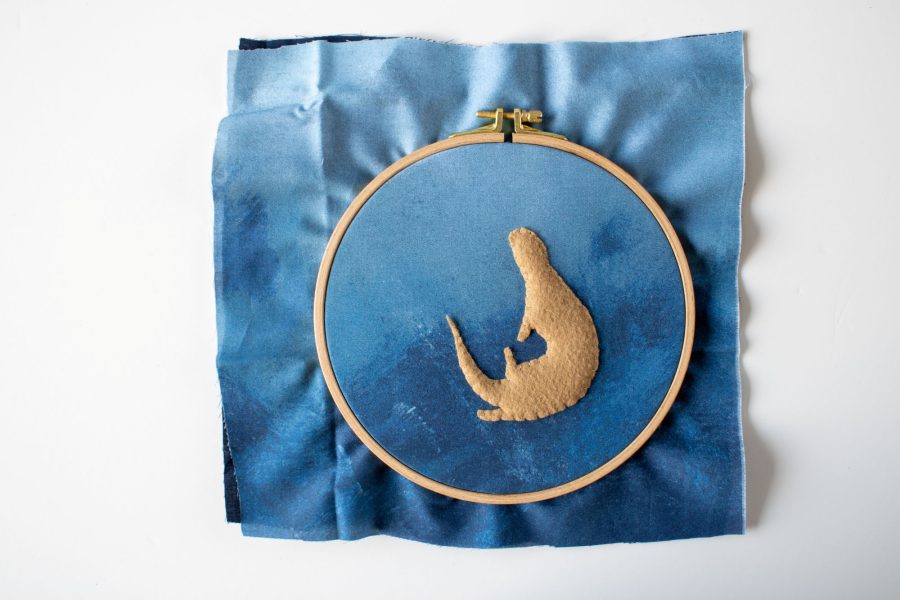
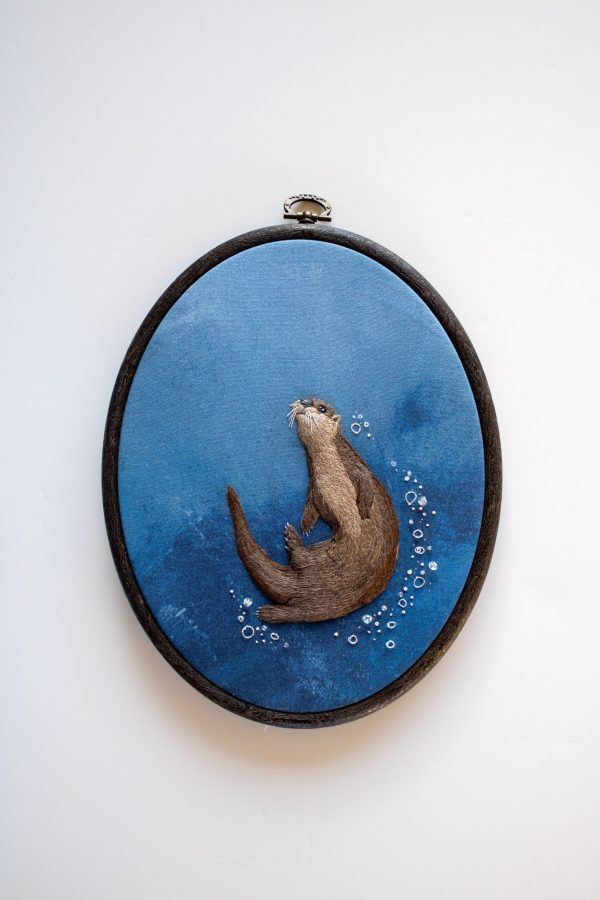
Felt padding is a beginner-friendly technique that creates a raised shape to embroider over. In this technique, layers of wool felt are stitched to your fabric base in increasing size, resulting in a firmly padded form that rises above the fabric background. These wool felt pieces are appliqued in place with a single strand of cotton thread. To ensure that you are creating neat stitches as close to the edge of the felt as possible, I recommend using a size 10 Sharp or Embroidery/Crewel needle.
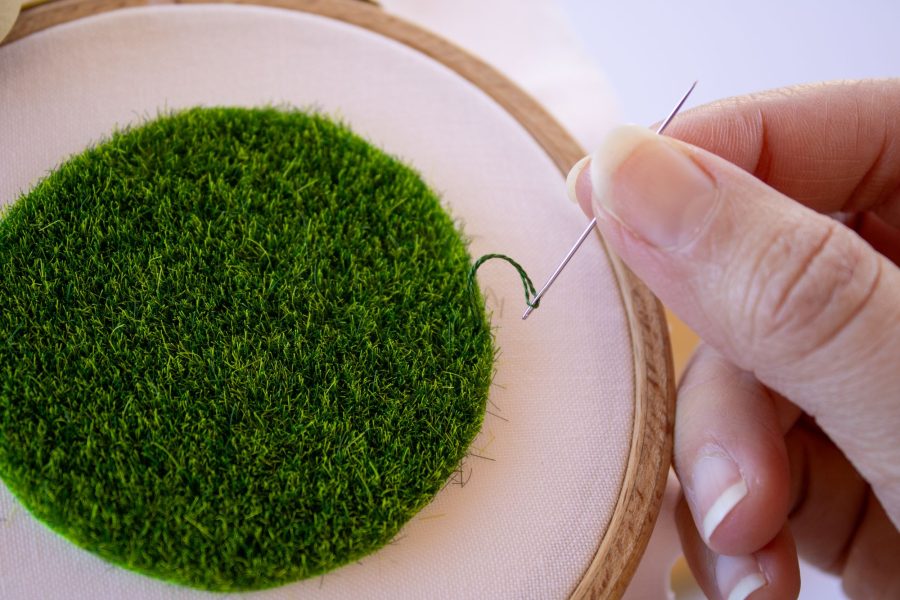
Fabrics can also be used to add visual interest to a design with padded applique. Textured fabrics, such as fleece, velvet, faux fur, leather, and vinyl are ideal for this technique as they offer interesting textures and do not fray when cut. The cut fabrics can either be sewn directly to the base or padded with a layer of stuffing between it and the base for extra height. This technique is also worked with a single strand of cotton thread near the edge of the fabric. So to keep your stitches precise and well-disguised, I again recommend using a size 10 Sharp or Embroidery/Crewel needle.
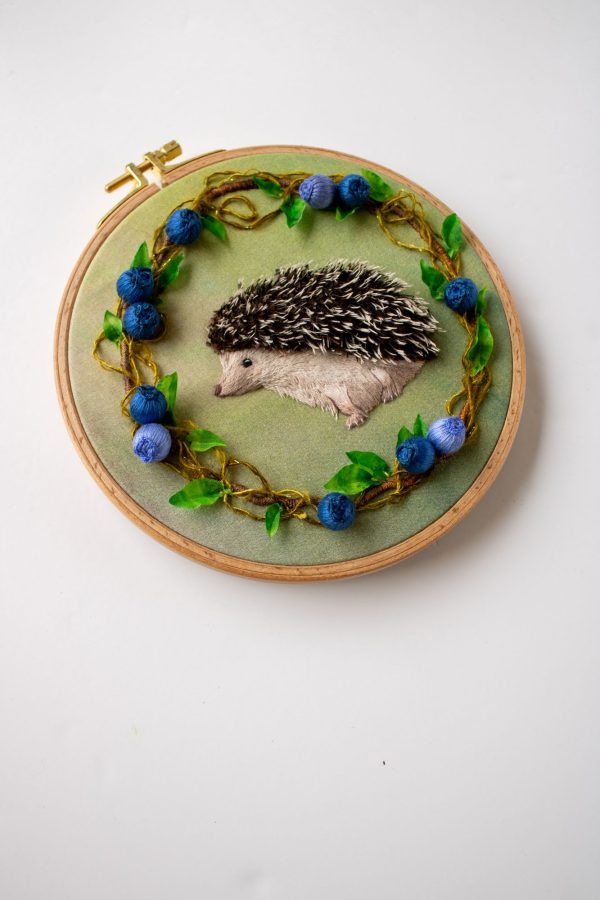
These are just a few of the ways you can explore stitch, fiber, and technique to create 3-dimensional embroidery designs. For more ideas and in-depth step-by-step tutorials, please check out my book, Stumpwork Studio: Mastering 3-D Embroidery. I hope that this needle selection guide helps take some of the guesswork out of choosing the right needle for your projects, especially if you are exploring stumpwork embroidery for the first time. While this guide can help you make an informed choice between your needle options, please remember there are no rules when it comes to embroidery. Above all else, stitching should be comfortable and fun. So, I encourage you to experiment with different needle types to get a feel for what works best for you.
Happy stitching!