The “Extra Hand” You Can Stick Anywhere (And We Mean Anywhere)

We Have Five Rolls of Handy Tape in Our Studio. Here’s Why:

You know a tool has become indispensable when you stop putting it back in the drawer because you might need it close at hand at any given moment. We have Handy Tape everywhere. One roll lives on the peg board over the cutting table, another lives in the top drawer of the sewing machine cabinet, and there’s one in the studio “miscellaneous supplies” box. Oh… then there’s one in the utility drawer in the kitchen for gallery wall projects and there’s one that’s currently sitting on Jason’s desk because we used it to wrap a present a few days ago instead of regular tape. Yes, you read that right. We used Handy Tape to wrap a gift. So yeah… we have it on hand pretty much everywhere. That’s how useful this stuff is.

What Even Is Handy Tape?

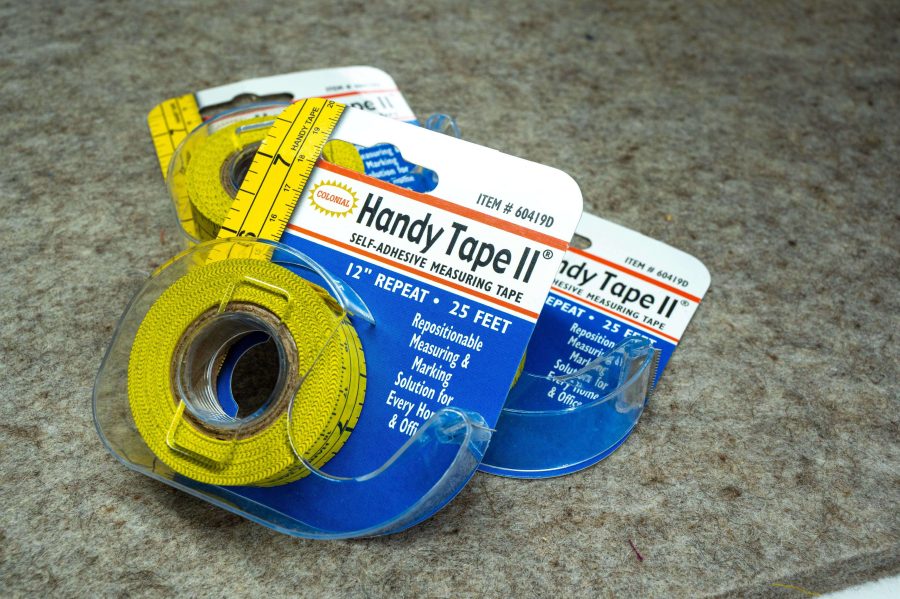
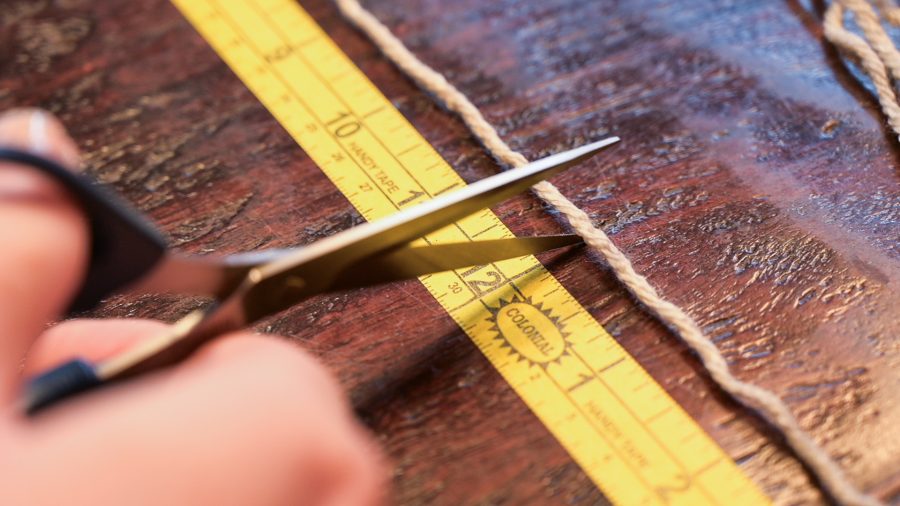
On the surface, Handy Tape is exactly what it sounds like: a measuring tape with a low-tack adhesive backing that sticks to things. Fabric, walls, tables, your sewing machine, even skin (more on that later). But calling it “sticky measuring tape” is like calling a rotary cutter “a round blade.” Technically accurate but missing the entire point.

Handy Tape is the third hand you’ve been wishing for when you’re trying to measure something by yourself, mark guidelines without permanent lines, or create temporary grids that actually stay put while you work. It’s repositionable, it doesn’t leave residue, and once you start using it, you’ll find yourself reaching for it in situations that have nothing to do with measuring. Like wrapping presents. (We’re still a little surprised by that one ourselves.)

How We Actually Use It (The Real List)

The Temporary Design Wall

This is probably our most-used application. We hang a flannel sheet on the wall (flannel because quilt blocks stick to it), then apply strips of Handy Tape to create a grid or border. Suddenly we have a design wall where we can space out quilt blocks, test different layouts, rearrange components of a textile art piece, and see the whole composition without committing to anything permanent.

The tape sticks to the flannel, the blocks stick to the flannel, and everything stays put while we audition different arrangements. When we’re done, we peel off the tape and the flannel sheet is clean.

Why this matters: Most design walls are either expensive foam boards or permanent installations. Either way, they take up valuable space that, personally, we don’t have. This solution costs about $12 and packs flat when you’re not using it.

The Sewing Machine Seam Guide

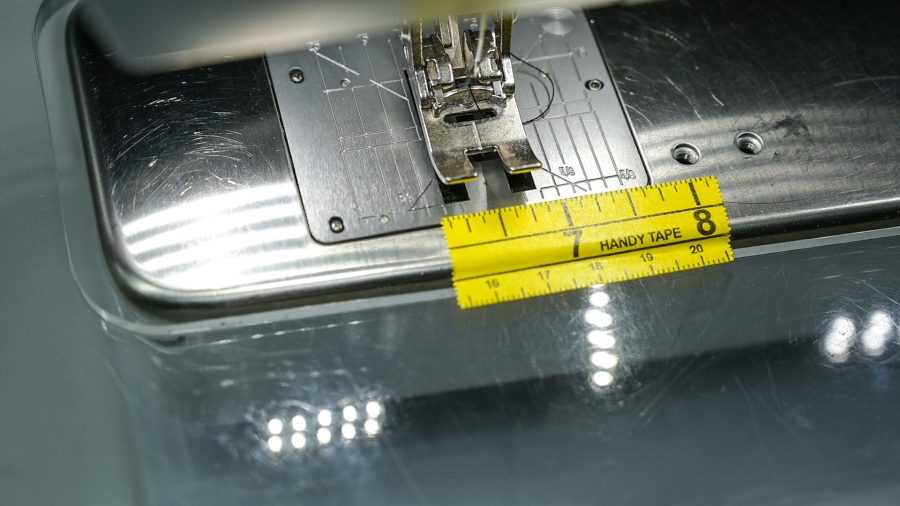
We have guides etched into our sewing machine’s stitch plate. They’re fine. They’re also tiny, hard to read, and easy to lose track of when you’re chain-piecing at speed. And if you sew on a machine that has seen some years of use, those lines can be worn down and faded making them all but useless. Handy Tape applied directly to the machine in front of the stich plate stitch plate creates a bold, high-contrast guide that’s impossible to miss. Just line up one of the marks on the tape with where your needle is set, and follow the clear, bold Handy Tape lines. And the low-tack backing makes it easy to reposition Handy Tape or remove it entirely without leaving sticky residue.

Bonus: It’s much easier to see on camera than etched metal lines. When we’re recording workshops or tutorials, we don’t have to zoom in and out constantly to show measurements. The tape is visible, clear, and stays exactly where we put it.

The Solo Measuring Solution for Awkward Spaces

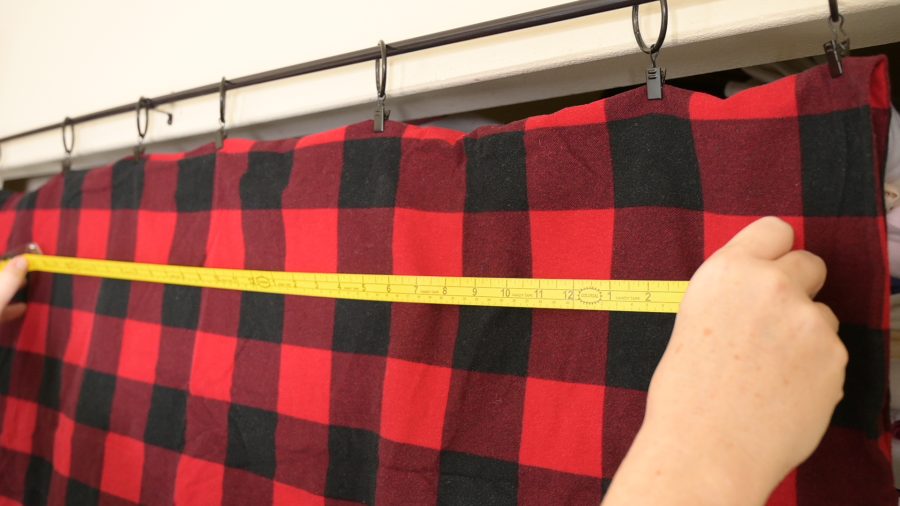
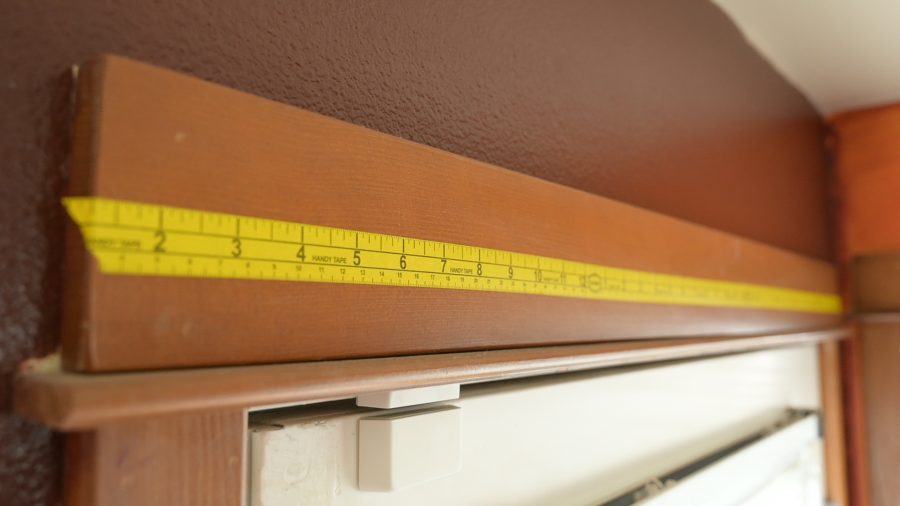
Try measuring a doorway by yourself with a regular tape measure. One end wants to snap back. You’re holding it at arm’s length. You’re squinting to read the numbers while simultaneously trying to keep tension on the tape.

Now try it with Handy Tape: stick one end to the door frame, walk it across, stick the other end down, read the measurement. Done.

We’ve used this for:

  • A large living room window (trying to figure out curtain yardage or curtain rod length)
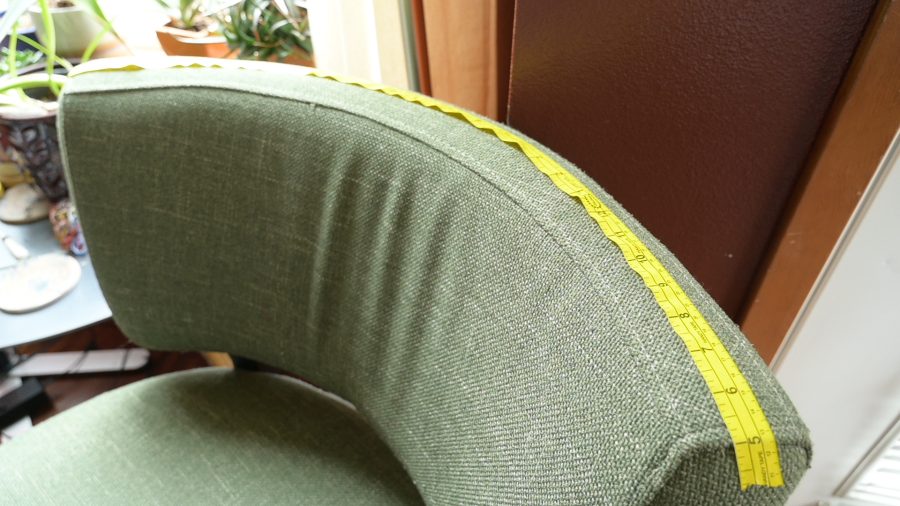
  • A curved chair back we were reupholstering (impossible with a rigid measuring tape or cloth tape)
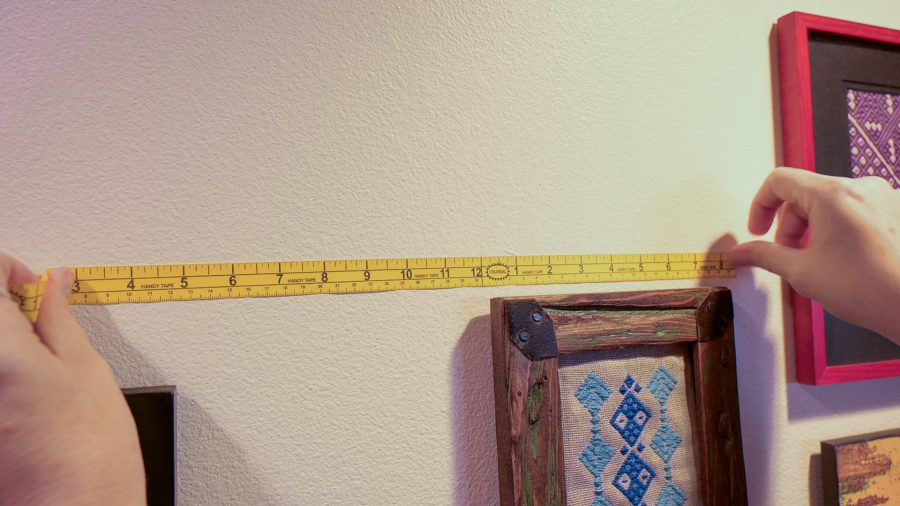
  • Walls when we’re planning furniture placement and art placement
  • Any situation where you need a third hand but you’re working alone

The curved chair was a revelation. Regular measuring tapes bend but they don’t stay in place. Previously, we would use a separate roll of tape to hold our cloth tapes in place but Handy Tape does it all quickly and efficiently. We laid Handy Tape on the curve and had our measurements without the gymnastics.

Gallery Wall Spacing (No More “Oops” Holes)

Hanging multiple pieces of art or textile work in a grid is an exercise in spatial geometry and crossed fingers. Measure wrong, and you’ve got unnecessary holes in your drywall. Handy Tape lets you plan first, drill later. Stick strips to the wall to map out where each piece will go. Step back. Adjust. Move things around. When the spacing looks right, mark your hook or nail spots, hang your pieces, and peel the tape away.

No guessing. No regrets. No spackle.

Body Measurements (The Solo Solution)

Here’s a use case we discovered by accident and now recommend all the time:

Taking your own body measurements is awkward. Getting someone else to take them for you is either impossible (you live alone) or uncomfortable. Not everyone wants hands-on help, and not everyone has a person available who knows how to measure correctly. And it’s not like we’re going to run to the neighbor’s and ask them to hold the tape for us. GAH!).

Handy Tape sticks lightly to fabric and skin without leaving residue or pulling uncomfortably. Wrap it around yourself – bust, waist, hips, whatever you’re measuring – stand straight, mark the overlap point with a marker, remove the tape, and count the inches. It’s like having a tailor’s assistant who doesn’t ask questions and doesn’t judge your measurements. We give this advice constantly now. It’s especially helpful for people who sew their own garments but don’t have a sewing buddy nearby to help with fitting.

The “Not Actually Measuring” Uses

And then there are the times we use Handy Tape for things that have nothing to do with measuring at all.

  • In place of washi tape for mixed media art: The measuring tape marks add visual interest, and the low tack adhesive means it repositions easily on paper and fabric without tearing.
  • Wrapping presents: This happened just a few days ago. The tape dispenser was sitting next to a roll of washi tape we’d been using. We needed to wrap a gift. We grabbed the Handy Tape instead because it was right there. It worked perfectly. We’re not even mad about it.
  • Scrap bin organization: We stick strips to the top of our scrap bin lids so we can instantly check if a piece of fabric is large enough for a project without digging out a ruler or clearing off the cutting mat.
  • Teaching tool for workshops: When we’re demonstrating spacing for sashiko grids or blanket stitch edges, we apply Handy Tape directly to the fabric. Students can see the measurements clearly on the overhead video regardless of the classroom lighting situation. IYKYK

The Bottom Line: It’s Not Just a Measuring Tape

Here’s what we’ve learned after going through multiple rolls of this stuff:

  • Handy Tape isn’t solving one problem. It’s solving the “I need a measurement guide that stays put, doesn’t damage anything, and works in situations where regular tools don’t” problem.
  • It’s the tool you didn’t know you needed until you try it once, and then suddenly you have five rolls scattered around your workspace and house because you keep finding new uses for it. Fair warning: order a few extra rolls because others will discover just how handy Handy Tape is and yours will mysteriously disappear. Just sayin’…
  • Handy Tape may not be the flashiest gadget in your toolbox, but it’s one of those quiet workhorses that makes everything else easier. Measure solo. Mark temporarily. Create grids that actually stay where you put them. Wrap the occasional gift when the regular tape just isn’t special enough.

Like we said… we have it everywhere.

Ready to add a helping hand to your studio?

Shop Handy Tape Here

Watch the video demonstration on YouTube here to see Handy Tape in action.

What’s the most creative place you’ve ever used Handy Tape? Let us know in the comments. We’re always looking for new uses we haven’t thought of yet!

The “Magic Wand” of Your Sewing Kit (A Guide to Needle Threaders)

Why You Should Never Struggle to Thread a Needle Again

We’ve all been there: you’re in the flow of a beautiful Sashiko piece or a delicate EPP project, and then… you have to re-thread. Suddenly, you’re squinting, snipping thread ends, and losing your “stitching zen.”

At a recent workshop, we realized that while most of us know what a needle threader is, many of us aren’t using the right one or we weren’t taught how to use them. Since our friends at Colonial Needle Company sent us their full lineup to test, we’re breaking down which threader belongs in your kit and how to use them for both hand and machine sewing.

Meet the Lineup

Not all needle threaders are created equal. Depending on your project, you might need a different “wand”:

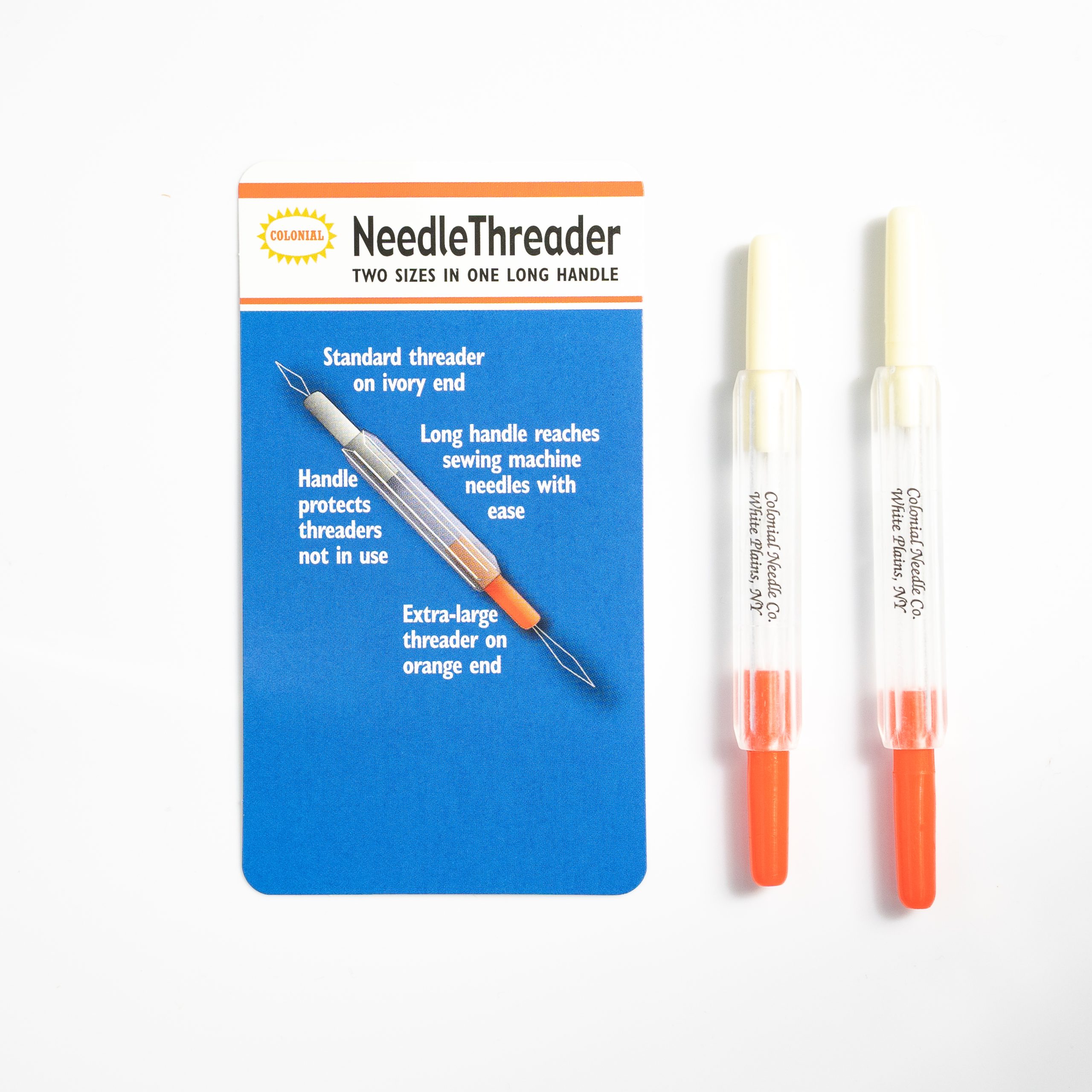
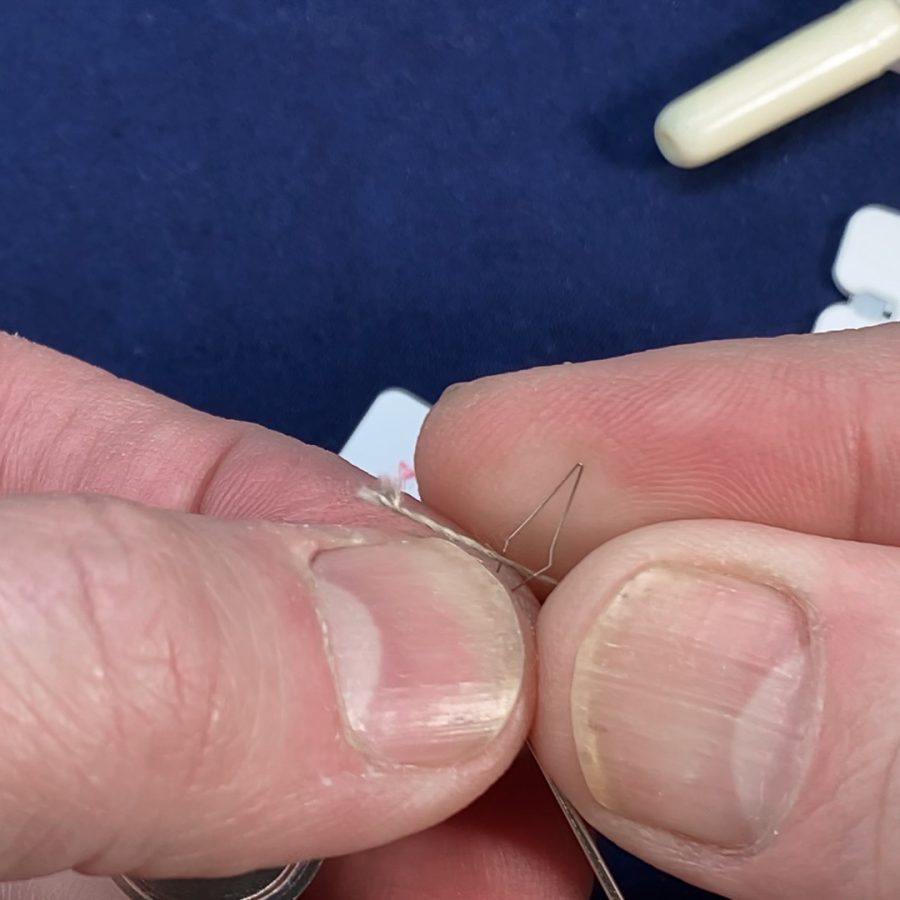
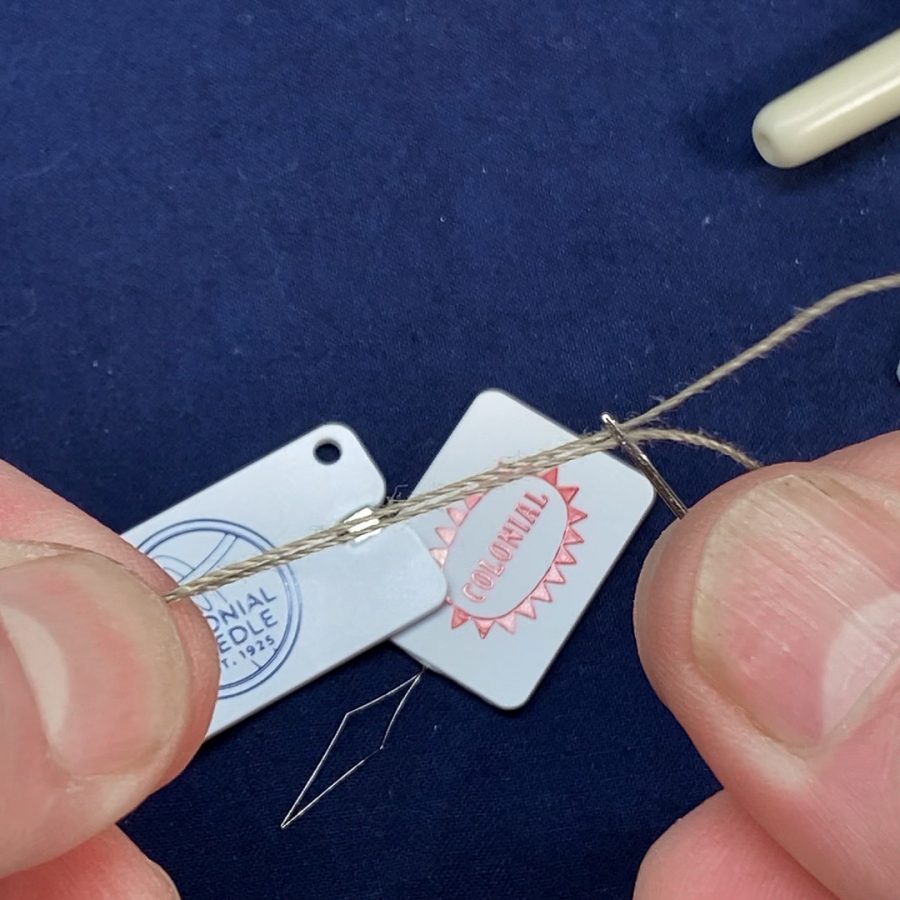
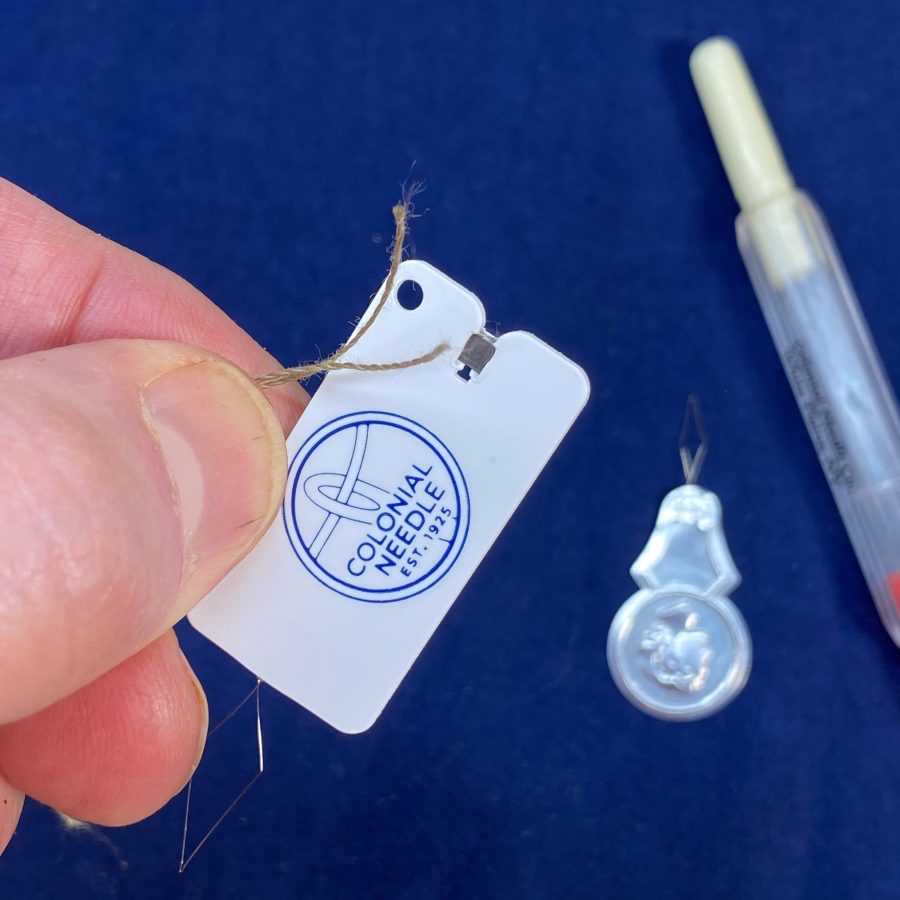
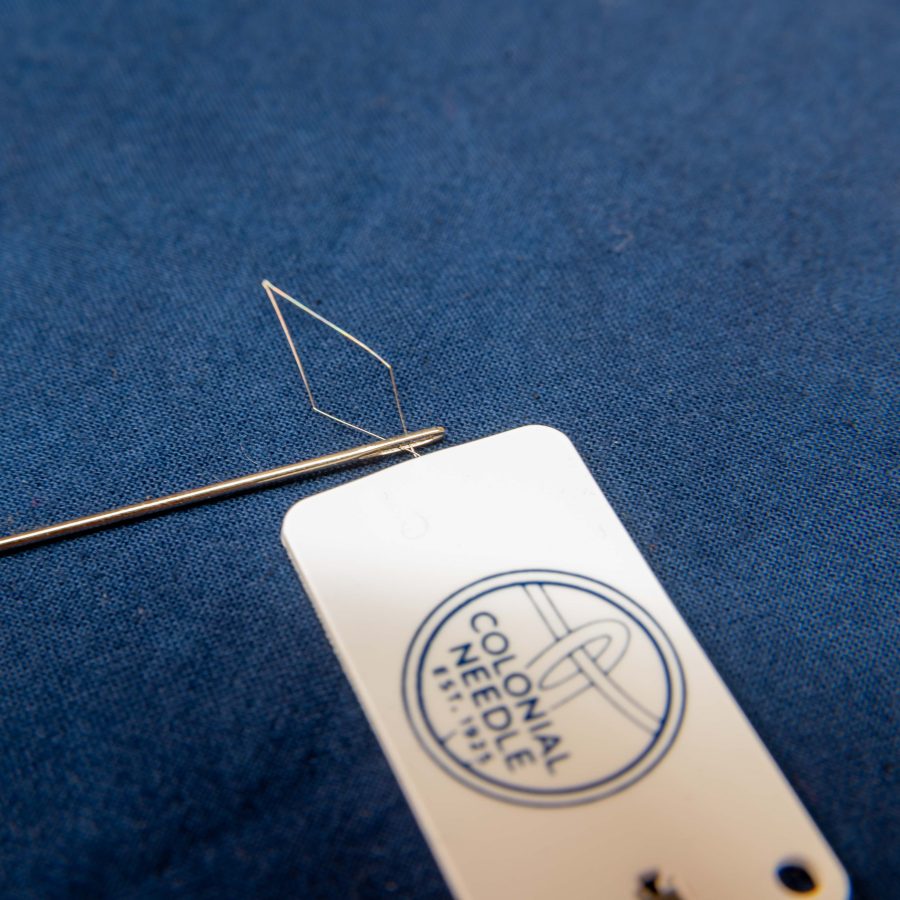
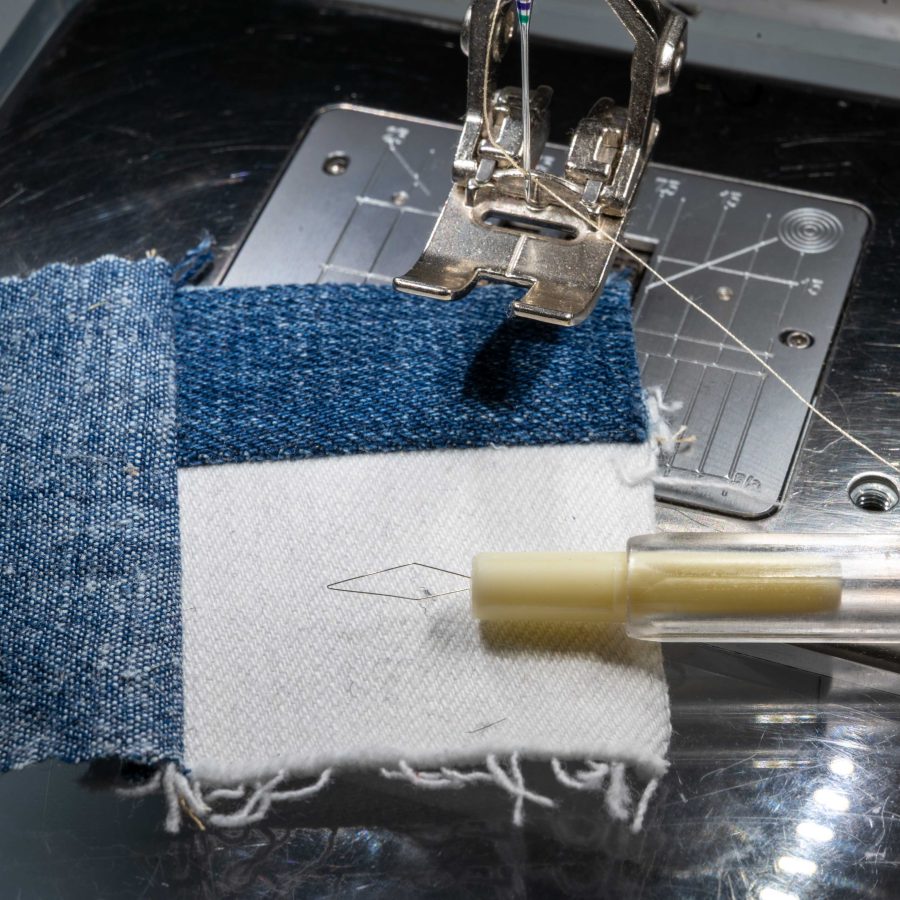
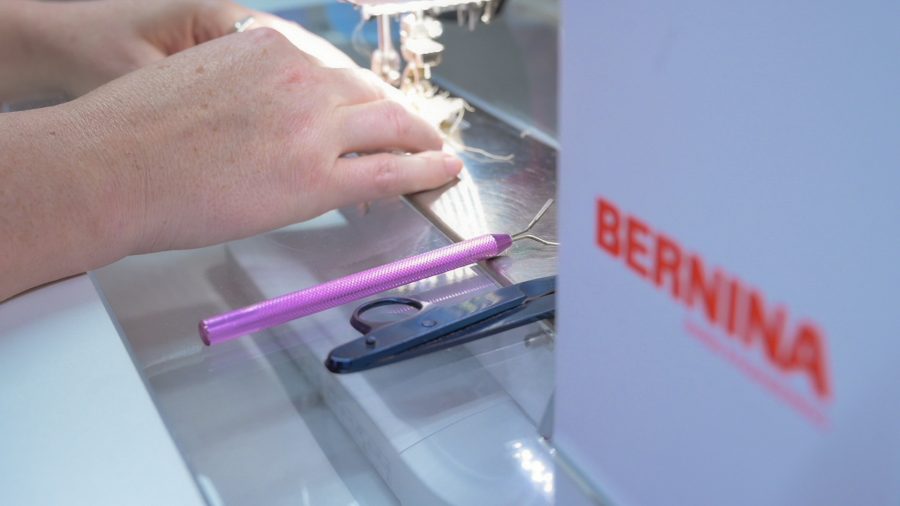
  • Colonial Dual Threader: This is the one that lives in our sewing machine tray. It features a long handle (perfect for reaching into tight machine spaces) and two different wire sizes: a standard end and an extra-large end for thicker threads or Pearl Cottoncolonial dual ended threader image
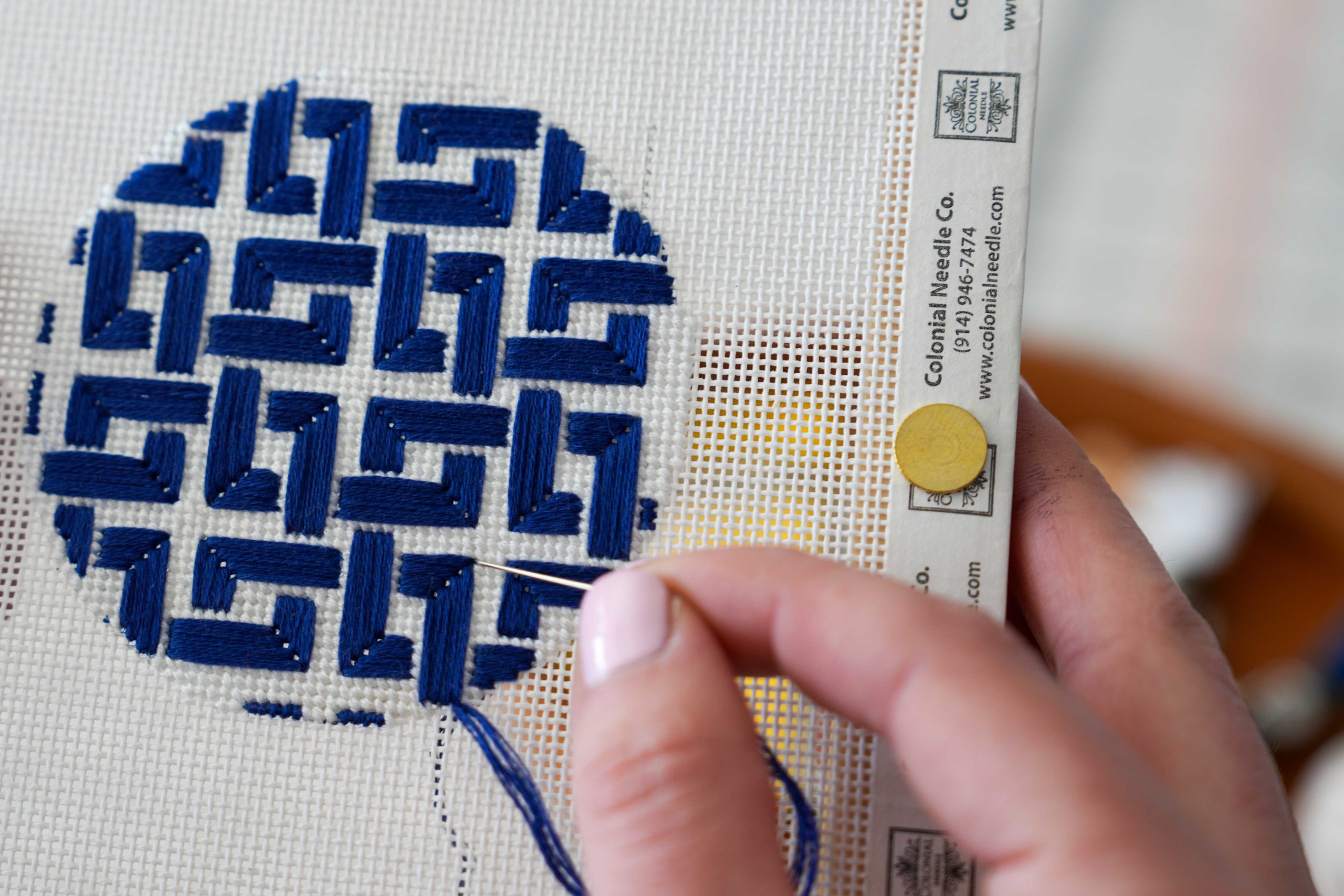
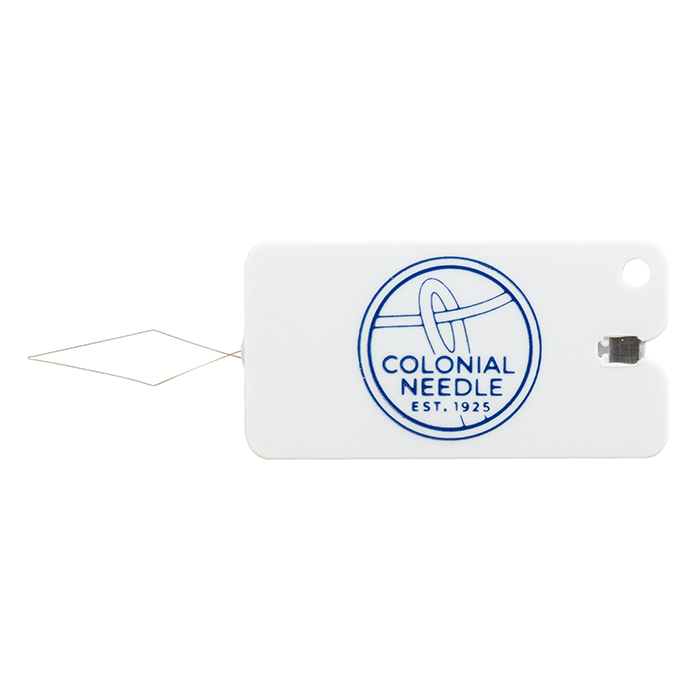
  • Ultrafine Threader with Cutter: The “must-have” for Sashiko and fine appliqué. The wire is incredibly thin to fit through tiny needle eyes, and the built-in cutter means you don’t have to reach for your scissors every time you finish a strand.
    colonial ultrafine threader
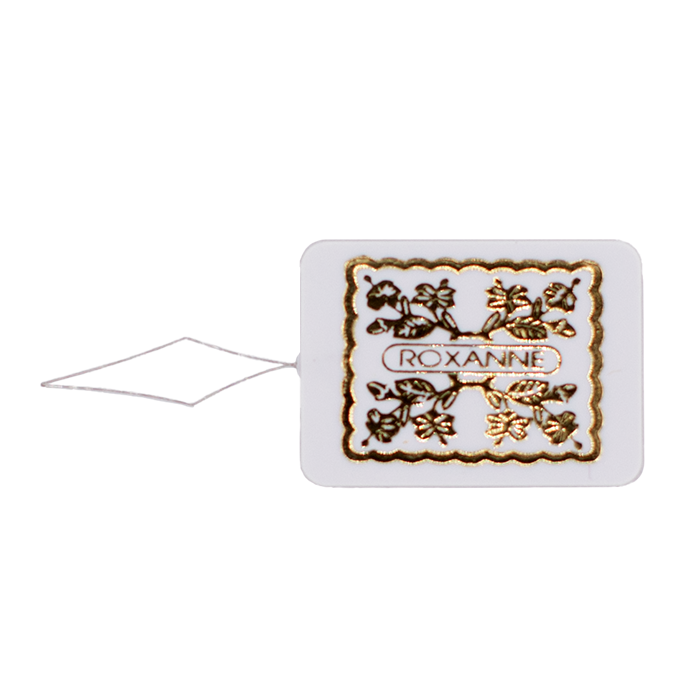
  • Roxanne Needle Threaders: If you do a lot of hand quilting or beading, these are legendary. They are patented, exceptionally fine, and designed to be sturdy enough for repetitive use without the wire snapping.
    roxanne ultrafine threader
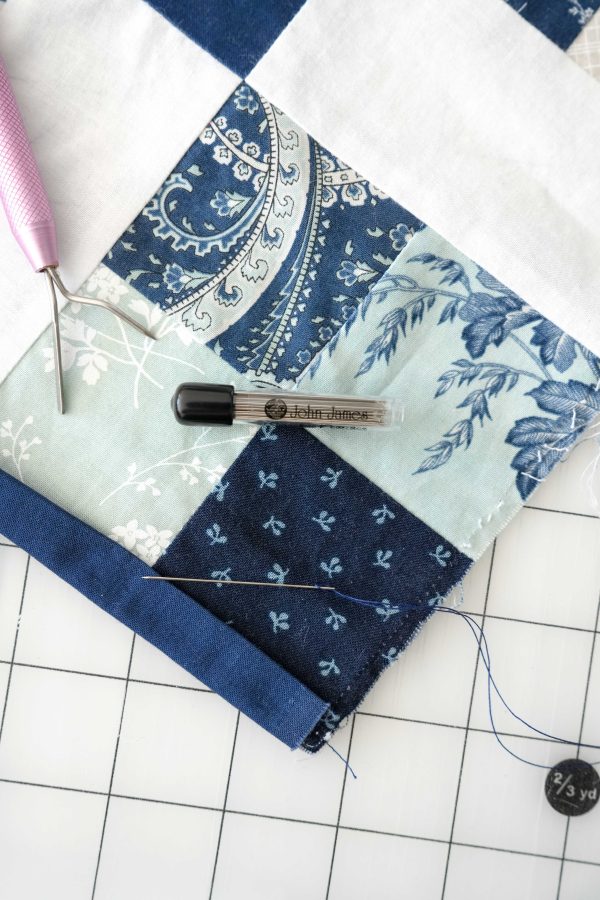
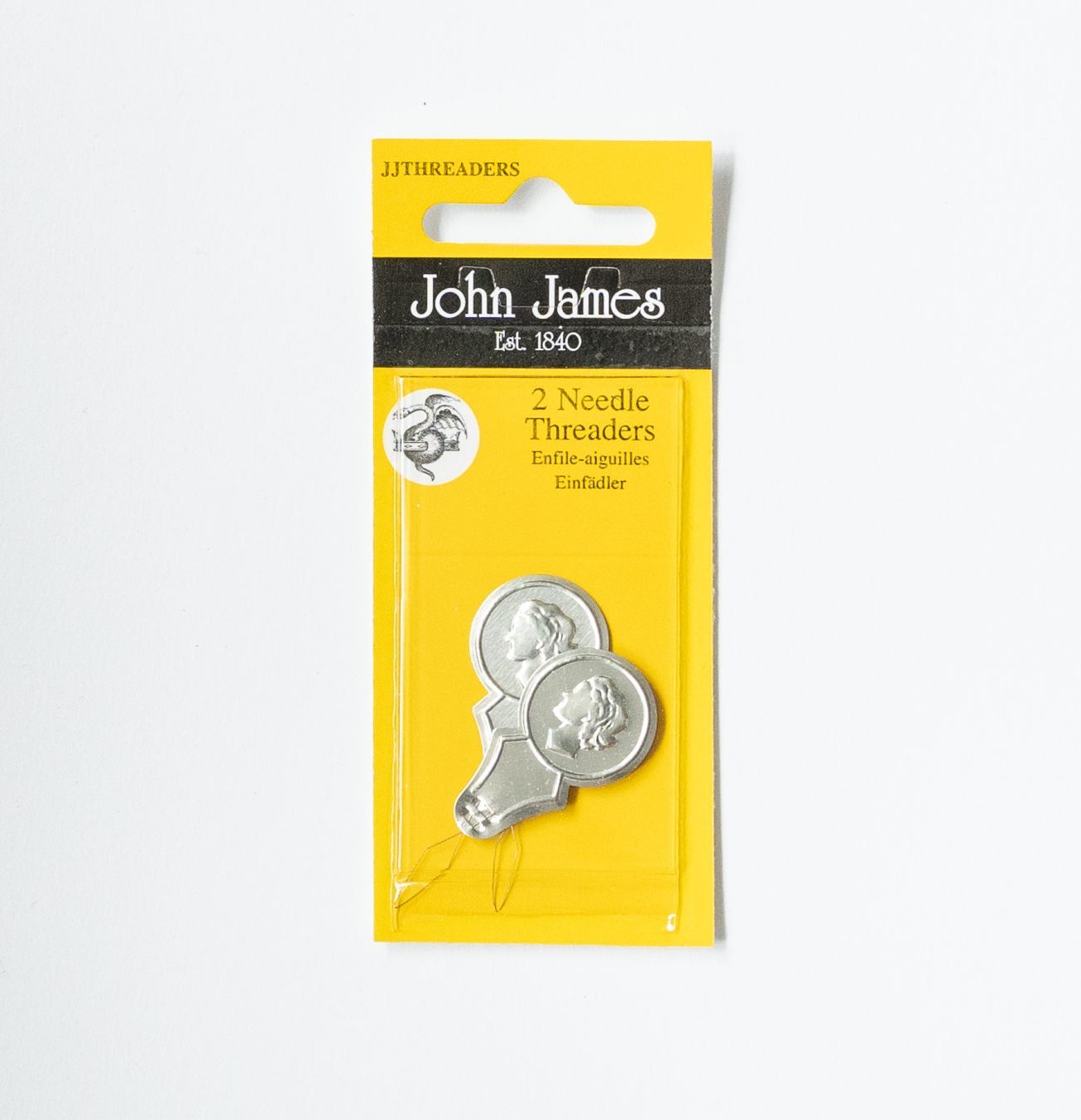
  • John James Threaders: These are the gold standard for traditional hand sewing. They are simple, reliable, and come in various sizes to match your favorite John James needles.john james threaders

How to Use a Needle Threader (The Correct Way!)

For Hand Sewing:

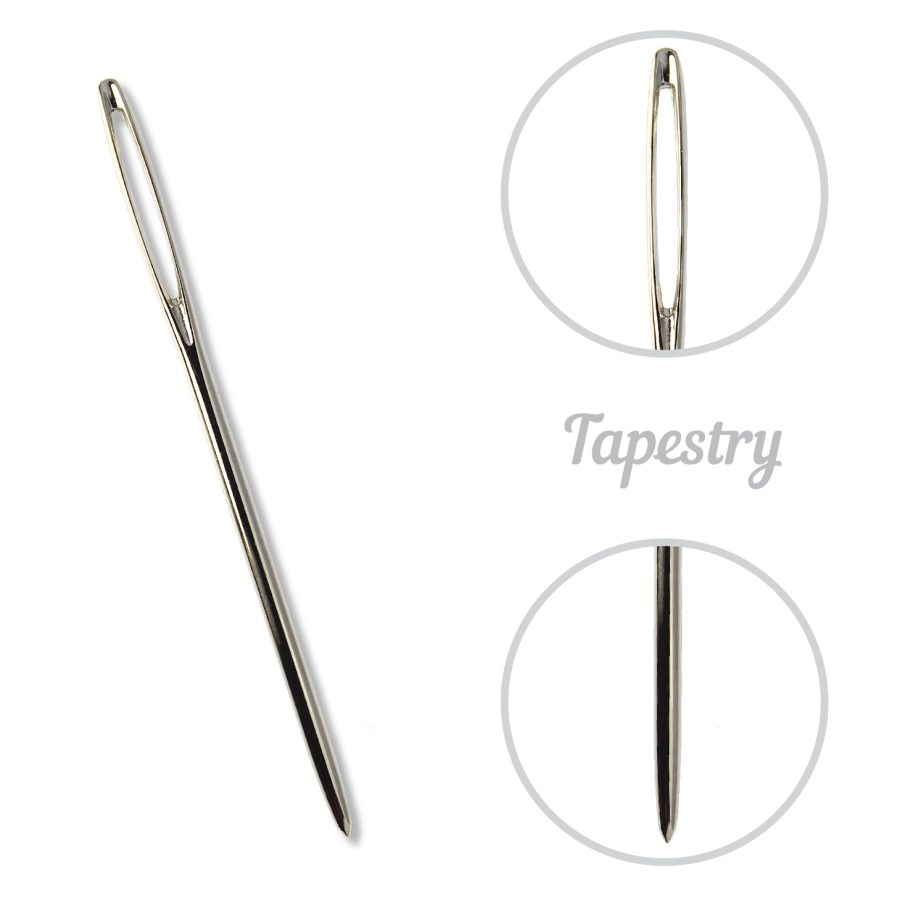
  1. The Insert: Hold the needle threader by the handle and slide the wire loop through the eye of your needle.
  2. The Thread: Pass your thread through the large wire loop (not the tiny needle eye!).
  3. The Pull: Gently pull the wire loop back through the needle eye. The wire will carry the thread right through.

For Machine Sewing:

  1. The Positioning: Ensure your needle is in the highest position.
  2. The Reach: Using the Colonial Dual Threader, insert the wire loop through the needle eye from the back to the front (or side to side, depending on your machine).
  3. The Magic: Place your thread in the loop and pull the threader back through.

Pro Tip: If you’re using the Ultrafine Threader, be gentle! These are high-precision tools. If the wire feels stuck, don’t force it—ensure your thread weight is appropriate for your needle size.


Watch the Step-by-Step

Want to see these in action? We filmed a quick tutorial demonstrating exactly how we use the Ultrafine Threader for Sashiko and the Dual Threader at the machine.

It’s funny how the simplest tools can sometimes be the most intimidating… until someone shows you the trick! Whether you’re a lifelong quilter or just starting your first Sashiko project, there is no shame in reaching for a ‘magic wand’ to save your eyes (and your sanity).

Now we want to hear from you: Is there a tool in your sewing tray that you still aren’t quite sure how to use? Or maybe you have a threading hack of your own? Let’s chat in the comments below!

Until next time…

STITCH ON!!
S&J

The Tool We Can’t Sew Without: The Sixth Finger Stiletto

If you’ve ever watched a professional sewist guide a tiny scrap of fabric toward a needle with terrifying precision, you might have wondered: How are their fingertips still intact?

For a long time, my “secret weapon” was actually a set of long acrylic nails. They were great for tucked pleats and guiding seams, but once I moved away from them, I realized I needed a replacement that was just as precise (and a lot more durable… ever snagged a needle on an acrylic nail? Ugh.).

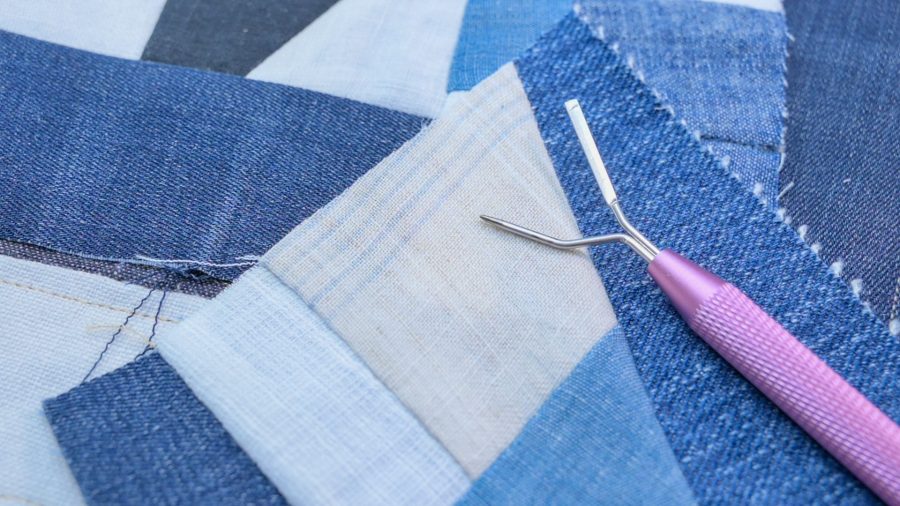
Enter the Sixth Finger Stiletto from Colonial Needle Company. It has officially earned a permanent spot in the tool tray right next to our machines. Here is why this little tool is a total game-changer in our textile studio.

1. Safety Without Sacrificing Precision

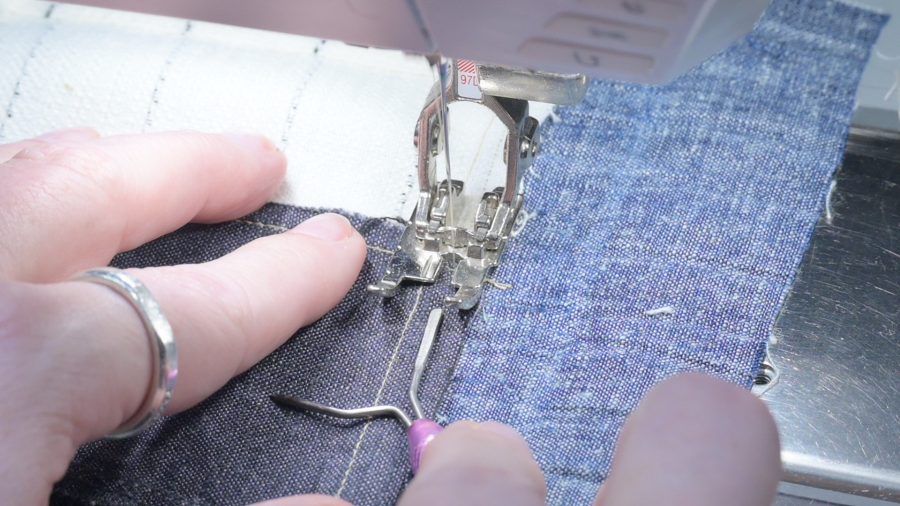
The primary job of the Sixth Finger Stiletto is to do exactly what its name suggests: act as an extension of your hand. When you’re feeding fabric into the machine – especially at the very beginning or end of a seam ­– your fingers can get uncomfortably close to that very sharp, very fast-moving needle. The stiletto gives you ultimate control to nudge, push, and hold fabric flat without putting your actual fingers in harm’s way. Anyone else cringe hard at the memory of a needle-meets-finger moment?

2. The EPP “Glue-Saver” Hack

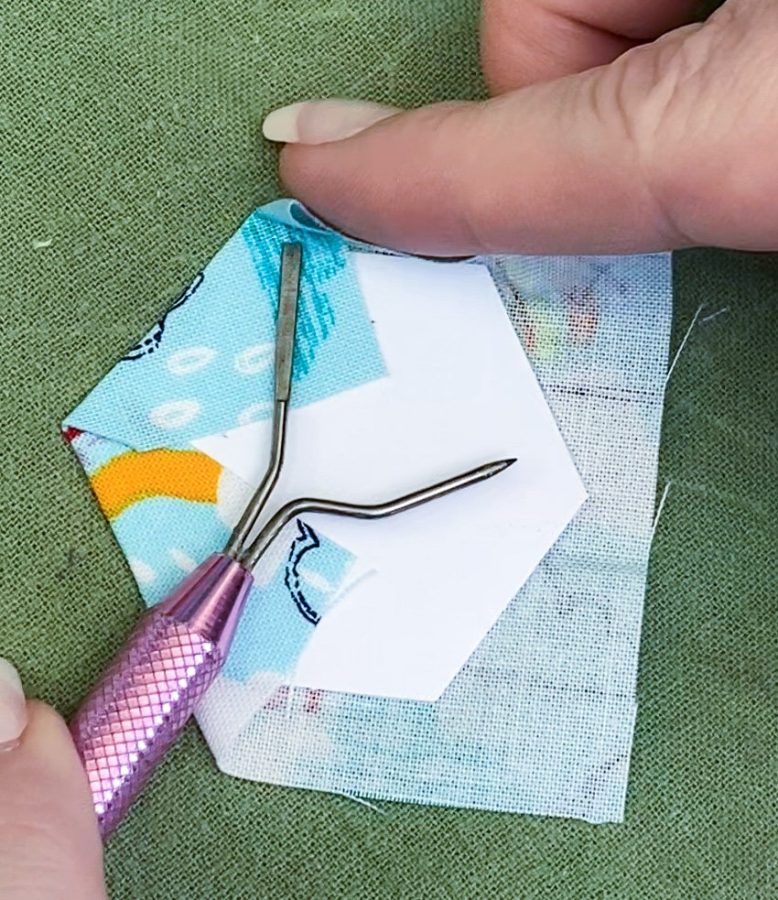
We discovered a brand-new use for this tool last year that we can’t stop talking about. If you do English Paper Piecing (EPP), you know the struggle of glue-basting:

  • Glue gets on your fingertips.
  • Your sticky fingertips then touch the front of your beautiful fabric.
  • The fabric sticks to you instead of the template.

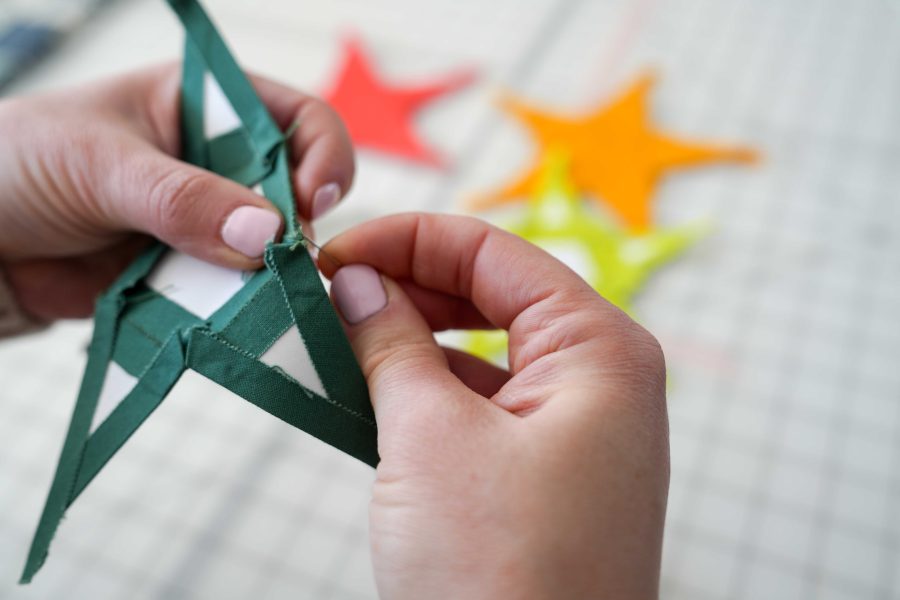
We started using the flat prong of the Sixth Finger Stiletto to fold the fabric over the edges of the EPP templates. It creates a crisp, tight fold and keeps the glue exactly where it belongs – on the paper, not on your hands! A quick swipe with a damp cloth or a small sponge kept on the side and the prong is clean of glue residue and you are on your way again.

3. It’s Always Within Reach

Some tools end up buried in a drawer, but the Sixth Finger is a “front-row” tool. Whether I’m guiding a bulky seam allowance, holding a ribbon in place, or helping a feed dog grab a slippery silk, it’s sitting right there in the tray. It’s simple, ergonomic, and honestly, I feel a little lost sewing without it now.

Bonus: Pressing Tool

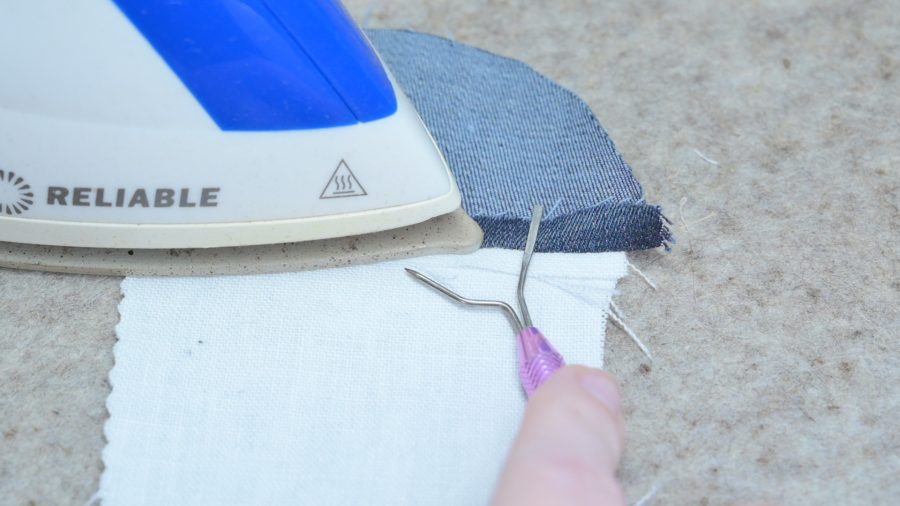
Unlike some rounded pressing assist tools, we absolutely love using the flat prong of the Sixth Finger Stiletto to open and then “finger press” a seam open. Even with shorter nails, I don’t like dragging them across my fabric to set a pre-crease so this tool is perfect for that. Then, we hold the flat edge across the seams securing them while pressing the seam open. It slides easily along the seams holding it in place ahead of the tip of the iron. Safety and precision all in one!

Pro Tip: Because it’s made by Colonial Needle Company, the quality is top-notch. It’s sturdy enough to handle heavy denim but precise enough for delicate appliqué and slippery gauze and silks.


What’s Next?

Tune in! Make sure you check our YouTube video demonstration where we show you the Sixth Finger Stiletto in action at the machine and give you a close-up look at our EPP folding technique and all the ways we use this versatile tool in our studio.

Do you use a stiletto in your sewing room, or are you still risking your fingertips? Let us know in the comments!

The Right Tool for the Stitch: Hand Sewing & Mending

January is the season of fresh starts—and in the sewing room, that often means returning to the basics. Whether you’re mending a favorite garment, repairing household linens, or trying visible mending for the first time, hand sewing is where many stitchers reconnect with the simple satisfaction of needle and thread.

Yet even the simplest stitch can feel frustrating if the tool in your hand isn’t quite right. Choosing the right needle for hand sewing and mending can make stitches smoother, neater, and more enjoyable—and can even extend the life of the fabric you’re repairing.

Let’s take a closer look at how the right needle supports better hand sewing and mending.


The Stitching Scenario

Everyday hand sewing & mending

This category includes:

  • Closing seams or hems
  • Repairing small tears or worn spots
  • Attaching buttons
  • Darning socks or sweaters
  • Visible mending on garments or textiles

These projects often involve a mix of fabrics and threads, which means flexibility matters.

The Common Challenges

Many stitchers struggle with:

  • Thread fraying or knotting while stitching
  • Difficulty pulling the needle through fabric
  • Uneven or bulky stitches
  • Hand fatigue during longer mending sessions

These issues are often blamed on technique—but just as often, the needle itself is the culprit.

Why the Right Needle Matters

A hand sewing needle may look simple, but small differences make a big impact:

  • Eye size: Too small, and your thread frays or won’t pass through smoothly. Too large, and stitches can look sloppy.
  • Shaft thickness: A needle that’s too thick can damage fabric fibers; too thin, and it may bend or break.
  • Point style: The point determines how the needle enters fabric—cleanly or with resistance.
  • Length: Longer needles are helpful for basting or running stitches, while shorter needles offer more control for fine repairs.

Matching these qualities to your project improves both stitch quality and comfort.

Our Recommendation: Needles for Hand Sewing & Mending

For most general hand sewing and mending, look for:

Sharps (Sizes 7–9)
These are the workhorses of hand sewing. They have:

  • A sharp point for easy fabric penetration
  • A medium eye suitable for most sewing threads
  • Enough strength for woven fabrics and light repairs
  • Sharps are ideal for hems, seam repairs, and general garment mending.

Betweens or Quilting Needles (Sizes 8–10)
Shorter and slightly stiffer, these offer excellent control for:

  • Small, precise stitches
  • Reinforcing worn areas
  • Fine, nearly invisible mending

Darners (Sizes 5–7)
Helpful for:

  • Running stitches
  • Basting repairs before machine sewing
  • Visible mending designs

A small assortment allows you to adapt easily as projects change.


Pro Tip: Let the Fabric Lead

When in doubt, test your needle on a scrap of the fabric you’re repairing. If the needle glides smoothly without resistance—and the thread passes through without fraying—you’ve found a good match. If you hear fabric “popping” or feel drag, try a finer needle.

Special Considerations for Visible Mending

Visible mending is as much about expression as repair, and needle choice supports that creativity.

  • Use a larger eye when working with thicker threads or embroidery floss
  • Choose a slightly longer needle for rhythmic, even stitches
  • Avoid forcing thick threads through tiny eyes—it weakens both thread and fabric

The goal is durability and beauty.

Reader Takeaway: A Simple Needle Checklist

If you’re hand sewing or mending:

  • ✔ Match needle size to fabric weight
  • ✔ Match eye size to thread thickness
  • ✔ Keep a small assortment on hand
  • ✔ Replace needles that feel rough or bent

A fresh needle truly makes a difference.

Looking Ahead

Hand sewing and mending are foundational skills—and mastering them sets you up for more advanced techniques throughout the year. In our next installment of The Right Tool for the Stitch, we’ll explore needle choices for embroidery on linen and other specialty fabrics.

Until then, may your stitches be smooth, your repairs satisfying, and your sewing basket well-stocked.

Roxanne Chalk Marking Pencils: The Game-Changer We Didn’t Know We Needed

We’ll be honest: we almost overlooked these.

For years, the Roxanne Chalk Marking Pencils sat in our tool kit like wallflowers at a dance—present, but not particularly noticed. We assumed they were just another marking pencil, nothing special, nothing different from the dozens of other chalks and markers cluttering our workspace.

We were so wrong.

It wasn’t until we really dug into what these pencils are made of and why they behave the way they do that we had our revelation. These aren’t just marking tools—they’re problem-solvers, game-changers, and (in the case of that silver pencil) actual unicorns.

Let us explain.

The Problem With Most Marking Tools

If you’ve been making for any length of time, you’ve probably been betrayed by a marking tool. Maybe it was the wax chalk that melted into your quilt when you accidentally hit it with an iron. Or the “disappearing” pen that left a permanent yellow ghost after washing. Or the heat-erasable marker that reappeared the moment your finished project hit cold storage.

We’ve all been there. It’s heartbreaking to spend hours—sometimes days—on a piece, only to have your marking tool leave a permanent scar.

The truth is, most marking tools involve a trade-off:

  • Wax-based chalks are durable and don’t rub off easily, but they can become permanent if heat is applied, and they’re notoriously difficult to remove completely.
  • Heat-erasable pens give you fine lines that vanish with an iron, but they often leave white “ghost” shadows or reappear in cold temperatures.
  • Water-erasable pens are easy to see and precise, but their chemicals can react with detergents to leave permanent yellow or brown stains if not thoroughly rinsed.

It’s a minefield. And for those of us working with precious fabrics, heirloom projects, or pieces destined for exhibition, the stakes are high.

What Makes Roxanne Different: The Chemistry of Clean

Here’s where Roxanne Chalk Marking Pencils break the mold entirely.

  • Pure Chalk, Zero Wax
    Unlike most marking pencils, Roxanne pencils contain **no wax binders**. None. This means marks will never “set” into your fabric if you accidentally iron over them. The chalk stays on the surface of the fibers rather than melting into them.
  • Chemically Inert
    These pencils are mineral-based, not dye-based. There are no chemicals to react with your detergent, no dyes to oxidize over time, no “chemical roulette” that might leave rust-colored stains months after you thought your project was finished. The marks are just chalk—pure, simple, inert.
  • 100% Water Soluble
    Because there’s no wax or chemical binder holding the chalk in place, Roxanne marks brush off easily or disappear completely with a damp cloth. When you’re done stitching, the roadmap vanishes—no ghosts, no shadows, no evidence it was ever there.
  • Archival Quality
    For textile artists concerned about the longevity of their work, Roxanne pencils are acid-free. Your marks won’t degrade or discolor the fabric over time, making them safe for heirloom quilts, museum-quality pieces, and everything in between.

The “Silver Unicorn” & Why It Changed Everything

If you work with dark fabrics—indigo for sashiko, black cottons, navy solids—you know the struggle. Most marking tools are either invisible on dark fabric or rub off the moment your hand touches the surface.

Enter the **Roxanne Silver Pencil**, which we now affectionately call “the unicorn.”

  • It Works on Everything
    The silver pencil uses a light-reflective mineral that creates a metallic sheen on fabric. On dark indigo or black, it glows like a beacon. On light cream or white, it shows as a soft grey. This means you can work across high-contrast patchwork—going from a dark navy sashiko block to bright white cotton—without ever switching tools.

    Let that sink in for a moment. One pencil. All your fabrics.
  • It Survives the Handling
    For sashiko artists and hand quilters, this is critical. The metallic mineral base “grips” the fiber better than standard chalk, staying crisp and visible through the heavy handling that complex stitching requires. We tested this by aggressively rubbing our hand across marked fabric—the Roxanne line stayed sharp while a standard white chalk line nearby smeared into oblivion.
  • It Still Disappears Completely
    Despite its tenacious hold during the stitching process, the moment you’re done, a damp cloth or a quick wash makes it vanish. In the video, you can see the mark literally pop off the fabric with zero effort and zero residue.

It’s magic. Truly.

The Artistic Revelation: Permanent When You Want It

Here’s where things get really exciting for mixed media artists, embroiderers, and textile artists who work freehand.

Because these pencils are water-soluble, you can use them wet—dipping the tip in water and painting directly onto fabric like you would with watercolor pencils or graphite. The effect is soft, blendable, and beautifully artistic.

Once the marks dry, you can heat-set them to make them permanent. Suddenly, these aren’t just marking tools—they’re design tools. You can sketch freehand, shade, blend, and create dimensional effects that become a permanent part of your textile work.

For artists who want to move beyond rigid patterns and embrace spontaneous, organic design, this opens up an entirely new way of working.

The Bottom Line: Confidence in Every Mark

We spent years thinking Roxanne Chalk Marking Pencils were just another option in an overcrowded market. We were wrong.

These pencils solve problems we didn’t even realize we’d been working around:

– The frustration of switching between light and dark fabrics

– The anxiety of wondering if marks will truly disappear

– The heartbreak of accidental permanence

– The limitation of working only from traced patterns

Whether you’re a quilter who needs marks that survive hours of hand-stitching, a sashiko artist working on dark indigo, or a textile artist who wants to sketch and paint directly on fabric, Roxanne Chalk Marking Pencils deliver precision, versatility, and—most importantly—peace of mind.

Mark with confidence. Create with joy. Let Roxanne take care of the rest.

Ready to Try Them Yourself?

👉 Shop Roxanne Chalk Marking Pencils here.
📺Watch the full video demonstration on YouTube to see the silver pencil in action and learn how to use these tools for both temporary marking and permanent artistic effects.

Have you tried Roxanne Chalk Marking Pencils? We’d love to hear about your experience! Share your thoughts in the comments or tag us on social media with your projects.

Stayin’ Sharp!

There are a vast array of reasons to love rotary cutters. From the easy speed they provide, to the clean edge of the cuts they make, to that smooth slicing sound they make when elegantly gliding through a stack of cotton…yea, that sound… rotary cutters are a crafters best friend. But what if your best friend is no longer fast, clean, or smooth. It’s time for a little intervention.

Just like dull knives in the kitchen, dull tools in your sewing room are a recipe for frustration and accidents. A blunt blade can mean skips, and ragged edges which can result in thread snags and pulls and having to take the time to go back and snip those threads and missed cuts when all we really want to do is sew. In addition, when the blade is dull, we usually compensate by applying more pressure which can lead to hand, wrist, and shoulder pain or injury. And none of us has time for that! The solution? Either out swap the blade (in this economy?!?) or give it a spa day and sharpen it. Yeah. That second one.

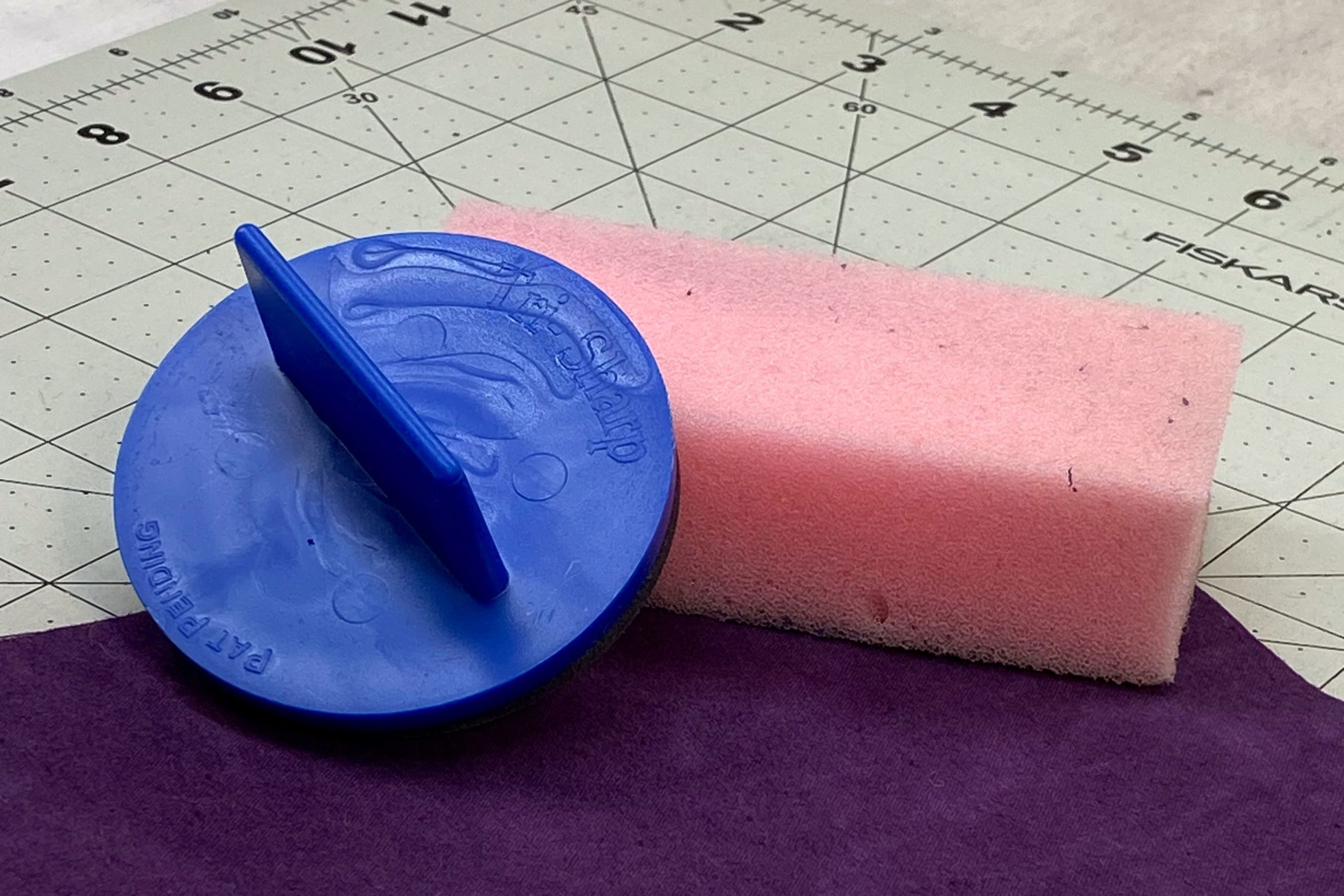
While we do keep a stash of spare blades “just in case,” there’s an easy, budget-friendly option: Colonial’s Rotary Blade Sharpener. This magical little tool is like a fairy godparent for your rotary blades—no wand required. Carefully remove your blade, pop it into the sharpener, and give it a few gentle twists. Voilà! The dual grit sides work together to turn back the clock on your blade’s dull days, leaving it sharper, shinier, and ready for action.

The result? Your blades work better, live longer, and stop making you question your crafting life choices. Give it a whirl—you’ll thank yourself, and so will your fabric.

As always, Stitch On!

Shannon & Jason