Cross stitch on linen and evenweave has a look all its own—soft texture, delicate detail, and beautifully defined stitches. But these fabrics behave differently than standard Aida cloth, and the needle you choose can dramatically affect both your stitching experience and your finished results.
If your thread twists, your fabric holes seem difficult to find, or your stitches feel bulky or uneven, your needle may be working against you instead of with you.
Let’s explore how the right needle supports smoother, more precise stitching on linen and evenweave fabrics.
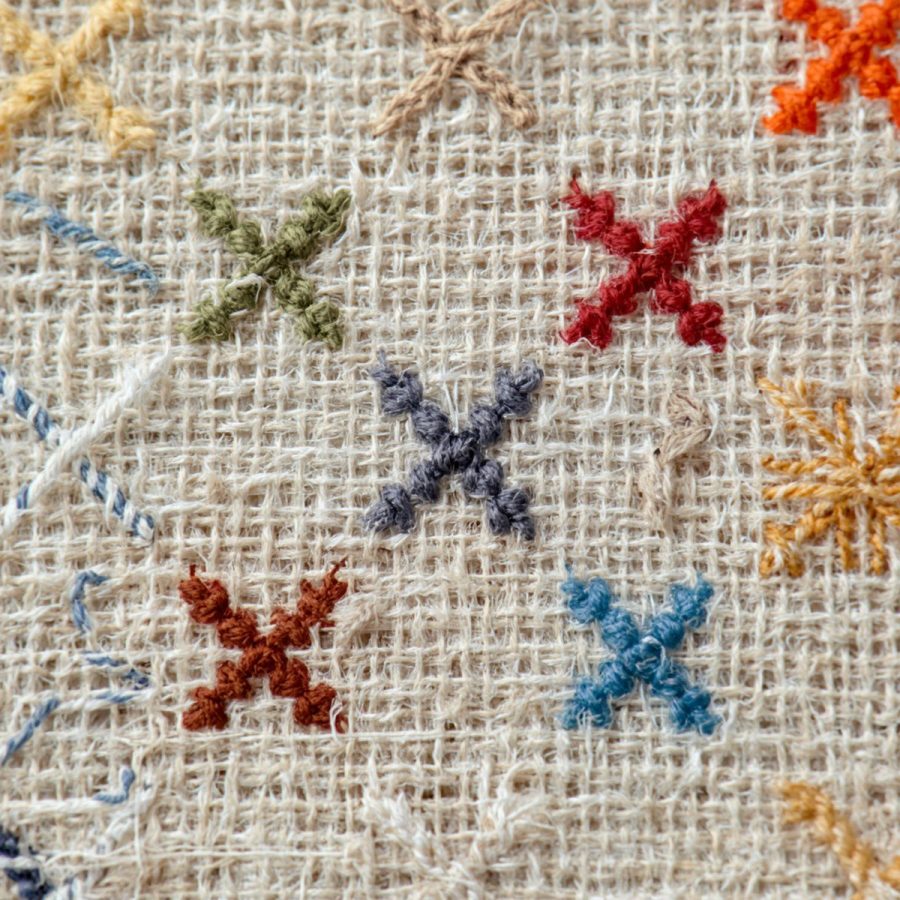
The Stitching Scenario
Cross stitch on linen & evenweave
These fabrics are favorites for:
- Heirloom samplers
- Detailed counted cross stitch
- Specialty stitches
- Fine monogramming
- Elegant finishing projects
Unlike Aida, linen and evenweave require stitching “over two” fabric threads, making precision and visibility especially important.
The Common Challenges
When stitching on linen or evenweave, stitchers often notice:
- Difficulty seeing fabric holes
- Twisted or worn thread
- Uneven stitch tension
- Splitting fabric threads accidentally
- Eye strain or hand fatigue during detailed work
These fabrics reward precision—but they also require the right tool for the job.
Why the Right Tool Matters
Several needle characteristics improve stitching on linen and evenweave:
Point Style
This is where personal preference often comes into play.
Many stitchers use blunt tapestry needles because they slide between fabric threads without piercing the weave. They’re especially helpful for maintaining fabric structure and preventing thread splitting.
However, many experienced linen stitchers prefer chenille needles for cross stitch on linen and evenweave. Because chenille needles have a sharp point paired with a large eye, they allow for more precise hole placement—especially on higher-count fabrics or natural linens where holes can be harder to see.
The best choice often depends on:
- fabric count
- lighting and visibility
- stitching style
- personal comfort
Eye Size
The eye should comfortably accommodate your floss without causing fraying or drag.
Needle Size
A finer needle works better on higher-count fabrics because it passes easily through smaller openings without enlarging holes.
Needle Length
Comfort matters—some stitchers prefer shorter needles for control, while others like slightly longer needles for rhythm and grip.
The goal is smooth movement through the fabric with minimal resistance.
Our Recommendation: Needles for Cross Stitch on Linen & Evenweave
Tapestry Needles – Sizes 24–28
A classic choice for counted cross stitch. Their blunt point glides between fabric threads, helping preserve the weave and reduce accidental splitting.
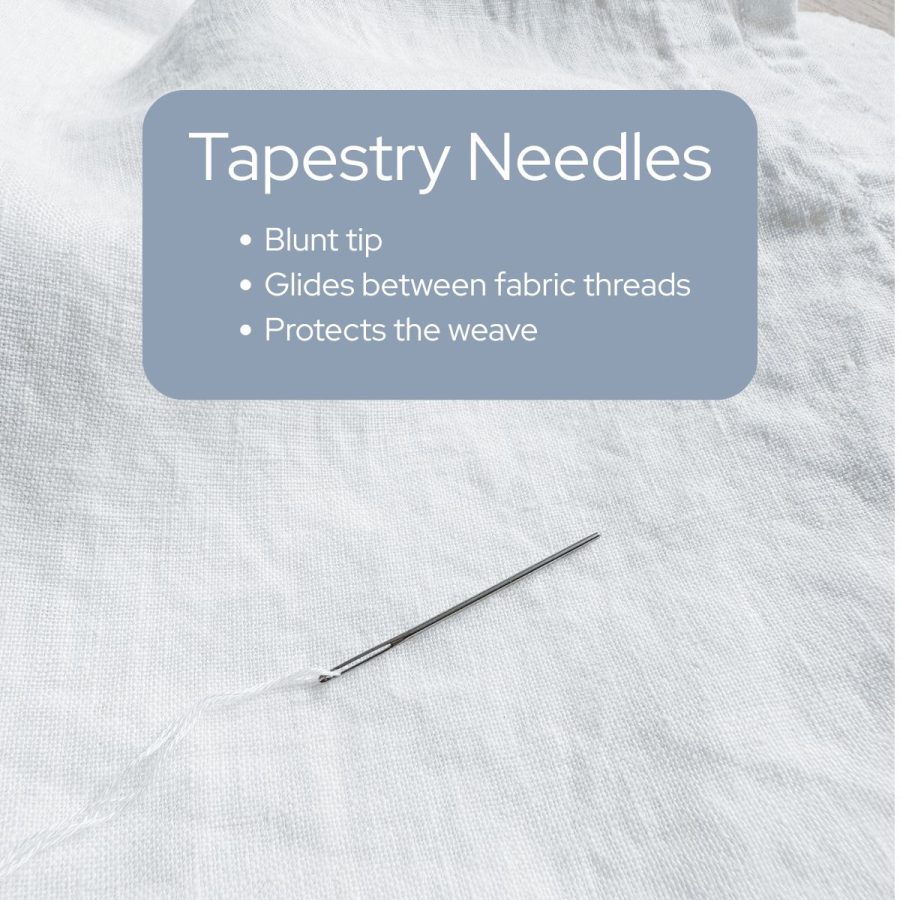
These are especially popular for:
- standard cross stitch,
- lower-count fabrics,
- and stitchers who prefer a softer feel against the fabric.
Chenille Needles – Sizes 24–28
A favorite among many linen stitchers, chenille needles combine:
- a sharp point,
- a long eye,
- and easy threading.
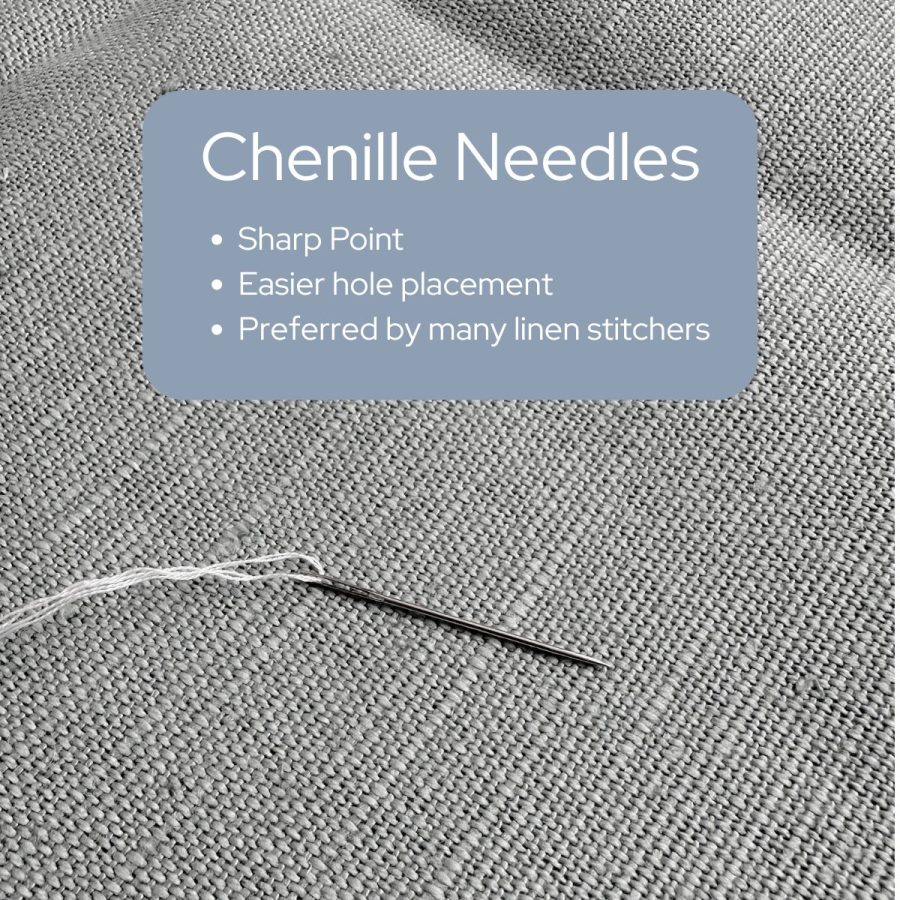
The sharp tip allows for more precise hole placement, which can be especially helpful on:
- high-count linen,
- uneven natural fibers,
- specialty stitches,
- or projects stitched “over two.”
Many stitchers find chenille needles easier to control when fabric holes are less visually defined.
Pro Tip: Try Both
If you’ve only ever stitched linen with tapestry needles, try a chenille needle on your next project—or vice versa.
Some stitchers love the glide of a tapestry needle, while others prefer the precision of a sharp chenille point. Small differences in point style can dramatically change how comfortable and accurate stitching feels.
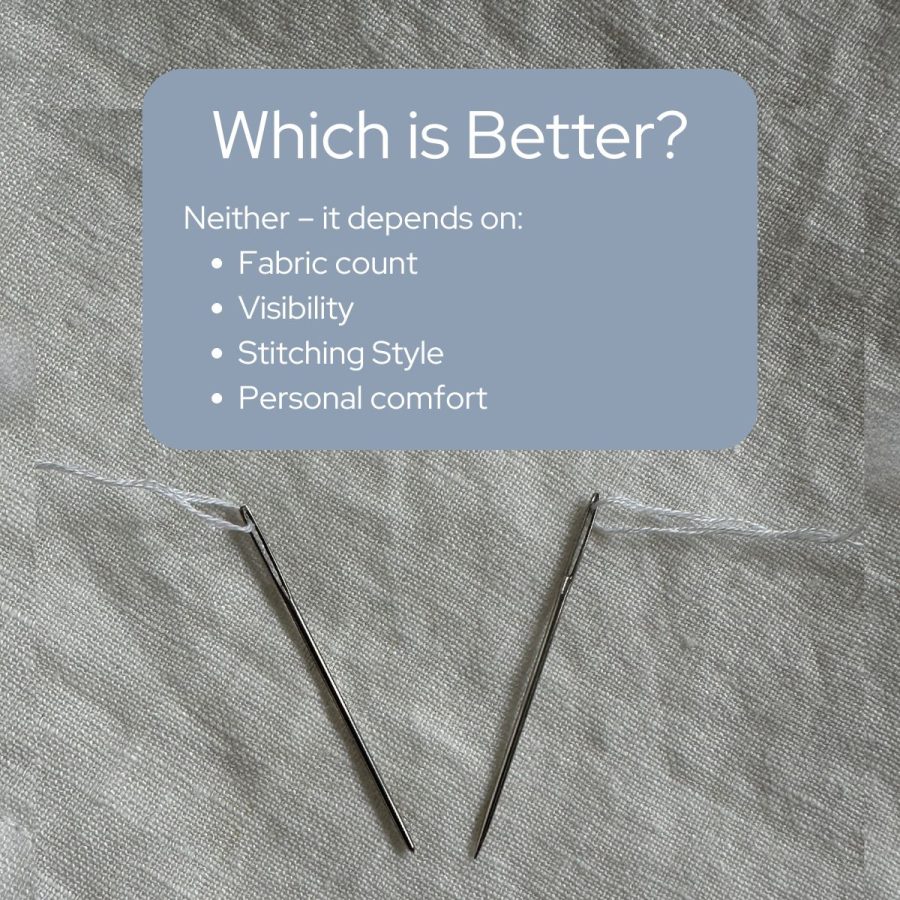
There’s no universal “best” needle—only the one that works best for you and your fabric.
Special Considerations for Higher-Count Fabrics
As fabric count increases:
- Needle size generally decreases
- Smaller eyes reduce bulk
- Finer needles help maintain fabric structure
Using a needle that’s too large can distort stitches and widen holes over time.
Reader Takeaway: Quick Checklist
When stitching on linen or evenweave:
✔ Point depends on preference, but try a blunt tapestry needle or sharp chenille when starting a new project
✔ Match needle size to fabric count
✔ Use finer needles for higher-count fabrics
✔ Avoid forcing the needle through the weave
Small adjustments create cleaner, more even stitches.
Looking Ahead
Next month in The Right Tool for the Stitch, we’ll explore needle choices for portable summer stitching and travel projects—because great stitching should go wherever you do.
Until then, enjoy the rhythm and precision that linen and evenweave bring to every stitch.