If April was all about texture and dimension, May is about softness, shading, and color blending.
The Long & Short Stitch is a classic embroidery technique used to create smooth transitions between colors and realistic, painterly effects in thread. From flower petals to animal fur, this stitch helps embroidery designs come to life with depth and movement.
While it may look advanced, learning the basics of long & short stitch opens the door to a whole new style of embroidery.
What Is Long & Short Stitch?
The long & short stitch is a filling stitch made by alternating stitches of different lengths. By layering rows of slightly uneven stitches and blending thread colors together, embroiderers can create gradual shading and soft transitions.
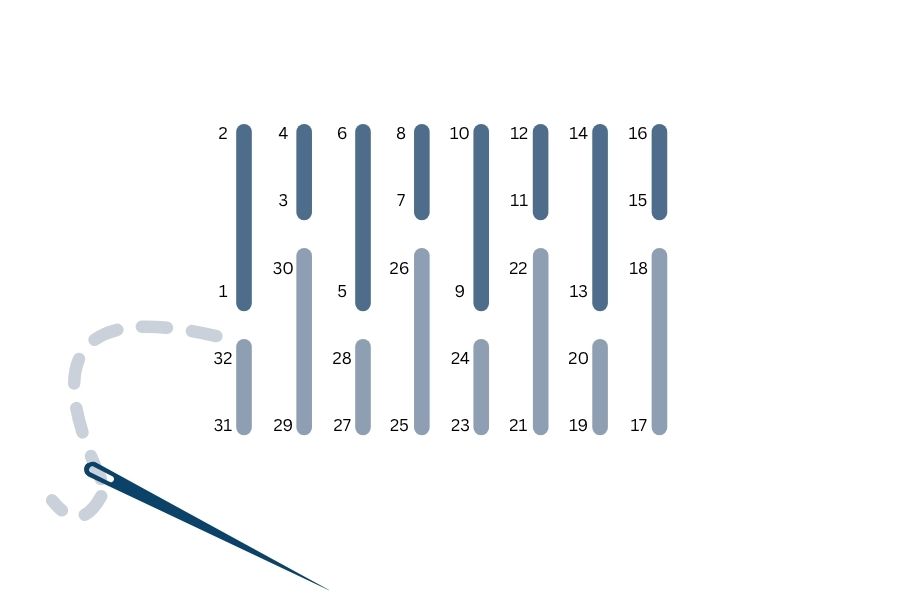
Rather than creating a perfectly uniform fill, the irregular stitch lengths help colors merge naturally — much like brushstrokes in painting.
When & How It’s Used
This stitch is ideal whenever you want embroidery to feel soft, dimensional, or realistic.
It’s best for:
- Floral petals and leaves
- Realistic embroidery designs
- Shading and color blending
- Animal fur or feathers
- Filled embroidery motifs
It’s one of the foundational stitches used in thread painting and advanced embroidery techniques.
What You’ll Need
- Embroidery or Crewel needle
- Embroidery floss (multiple shades work best)
- Fabric (cotton or linen recommended)
- Embroidery hoop (optional but helpful)
- Small Scissors
- Fabric transfer pen or pencil
Pro Tip: Choose thread colors that are close in tone for smoother blending.
How to Sew the Long & Short Stitch
- Step 1: Outline Your Shape – Transfer your design onto fabric and secure it in an embroidery hoop.
- Step 2: Start the First Row – Work a row of alternating long and short stitches along the edge of your shape.
- Step 3: Add the Next Color – Begin the second row by stitching into the first row, overlapping slightly to blend the colors.
- Step 4: Continue Layering – Repeat with additional rows, varying stitch length naturally as you fill the shape.
- Step 5: Blend as You Go – Mix shades gradually to create soft transitions and depth.
Tips for Smooth Shading
- Avoid making stitches too uniform
- Use thread shades that blend naturally together
- Keep stitches flowing in the direction of the shape
- Shorter stitches work well around curves
- Don’t rush — blending takes patience
The beauty of long & short stitch comes from its organic look, so perfection isn’t the goal.
Common Projects Using Long & Short Stitch
Long & short stitch is perfect for embroidery designs with movement and shading.
Try it for:
- Floral embroidery
- Botanical designs
- Birds and animals
- Monograms with shading
- Thread painting projects
It’s a wonderful stitch for adding artistry and realism to your embroidery.
Next Month:
We’ll switch from soft shading to strong structure with the practical and versatile Buttonhole Stitch.