Needle Know-How from Colonial Needle
There’s something satisfying about working with a substantial fabric.
Denim, canvas, upholstery fabrics, and other heavyweight textiles are durable, versatile, and often made for things we use every day. They’re the fabrics of favorite jeans, hardworking bags, sturdy jackets, and projects designed to last.
But anyone who’s tried to push a needle through several layers of denim knows that heavier materials can present a few challenges.
The good news? You don’t necessarily need more strength. Sometimes you just need a better-matched needle.
This month, we’re exploring how needle choice can make working with heavier fabrics easier, more comfortable, and more successful—whether you’re repairing a favorite pair of jeans or constructing something new.
The Stitching Scenario
Heavyweight fabrics appear in all kinds of projects:
- Denim repairs and visible mending
- Canvas totes and utility bags
- Jackets and workwear
- Upholstery and home décor
- Heavy fabric appliqué
- Decorative stitching on denim
- Projects with multiple layers, seams, or reinforced areas
These projects have something in common: the needle must work through material that can be thicker, denser, or more resistant than ordinary quilting cotton.
But not every heavyweight fabric behaves the same way.
Denim is generally a tightly woven twill. Canvas is often a sturdy plain-weave fabric. Their structure, weight, and finish can all influence how easily a needle passes through.
Understanding the material is the first step toward choosing the right tool.
The Common Challenges
When sewing heavier fabrics, you might encounter:
- Needles that are difficult to push through
- Bent or broken needles
- Thread fraying or breaking
- Uneven or skipped machine stitches
- Fabric puckering
- Difficulty stitching through bulky seams
- Hand fatigue
- Visible holes from oversized needles
These problems don’t always mean your technique is wrong.
Sometimes your needle is simply not well suited to the material, thread, or number of layers.
Why the Right Tool Matters
Start with the Point
When sewing tightly woven denim or canvas, the needle generally needs to pierce the fabric rather than pass between existing openings.
A sharp, appropriately sized needle helps penetrate the material with less unnecessary resistance.
For hand stitching, that may mean selecting a sturdy sharp-point needle suited to the thread and fabric.
For machine sewing, a purpose-designed jeans or denim needle is often an excellent starting point.
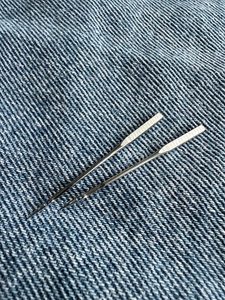
But remember: needle choice isn’t just about sharpness. The needle’s diameter, construction, and eye matter, too.
Consider the Needle’s Strength
A very fine needle may struggle with dense fabric or several layers, particularly at bulky seams.
Choosing a sufficiently sturdy needle can help reduce excessive flexing and breakage.
However, bigger isn’t automatically better.
An unnecessarily large needle can leave visible holes or damage the material. The goal is to choose the smallest needle that can comfortably and reliably handle the fabric and thread.
Don’t Forget the Thread
Heavy fabrics are often paired with heavier threads, particularly for topstitching, repairs, and decorative work.
The needle eye must accommodate that thread without excessive friction.
For hand stitching with perlé cotton or another heavier decorative thread, a chenille needle may be useful because it combines a sharp point with a generous eye.
For machine sewing with heavier topstitching thread, a suitable topstitch needle may sometimes be preferable to a standard jeans needle, depending on the thread and machine.
The right combination matters more than the label on the needle package.
Our Recommendation: Match the Needle to the Job
For Machine Sewing: Jeans Needles
Jeans machine needles like these from John James are designed for working with dense, tightly woven fabrics such as denim and canvas.
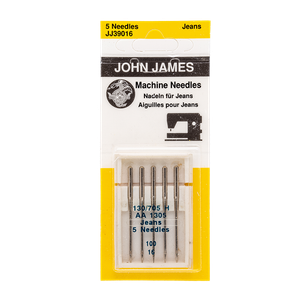
Their reinforced construction helps provide stability when penetrating heavier material.
They’re particularly useful for:
- Denim garment construction
- Jeans repairs
- Canvas bags
- Heavy seams
- Workwear projects
Needle size matters, too.
For many domestic sewing machines, sizes such as 90/14, 100/16, and 110/18 are commonly considered for medium-heavy to heavy materials, depending on the fabric, thread, and machine’s capabilities.
Always check your machine’s needle compatibility and recommended sizes.
Pro Tip: When approaching a bulky seam, slow down. Use a suitable presser-foot leveling tool if needed, and avoid forcing the fabric through the machine.
For Hand Sewing: Sturdy Sharps and Specialty Needles
Hand sewing heavy fabrics requires a slightly different approach.
A sharp-point needle that is strong enough for the fabric can help with repairs, construction, and finishing.
For especially dense materials, consider needles specifically intended for heavier hand-sewing applications.
A thimble can also make a significant difference by helping you push the needle without placing unnecessary pressure on your fingertips. These fingertip thimbles are especially great because you have access to different types for different projects.
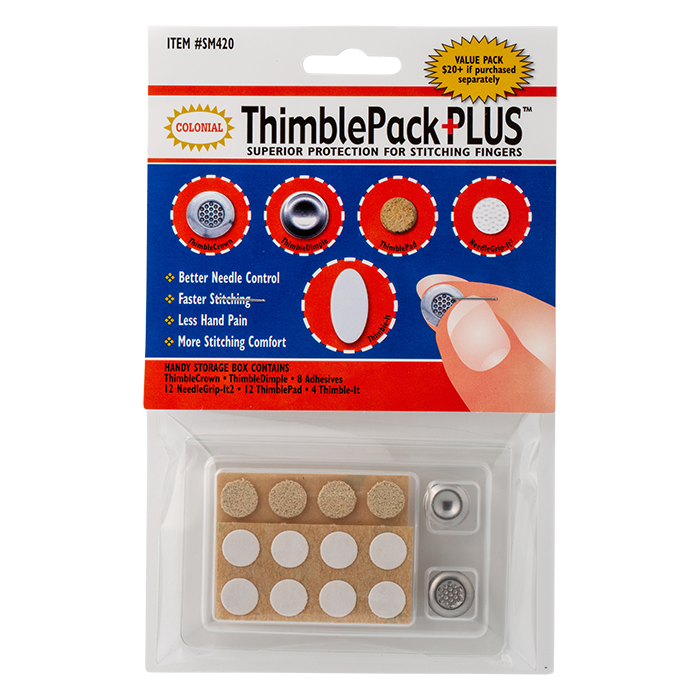
For difficult areas, a needle puller may help you grip and draw the needle through without excessive strain.
Never force a bending needle; stop and reconsider the needle, fabric, and number of layers.
For Decorative Stitching: Chenille Needles
If you’re adding embroidery, blanket stitch, or visible-mending details to denim or canvas, your thread may be considerably thicker than ordinary sewing thread.
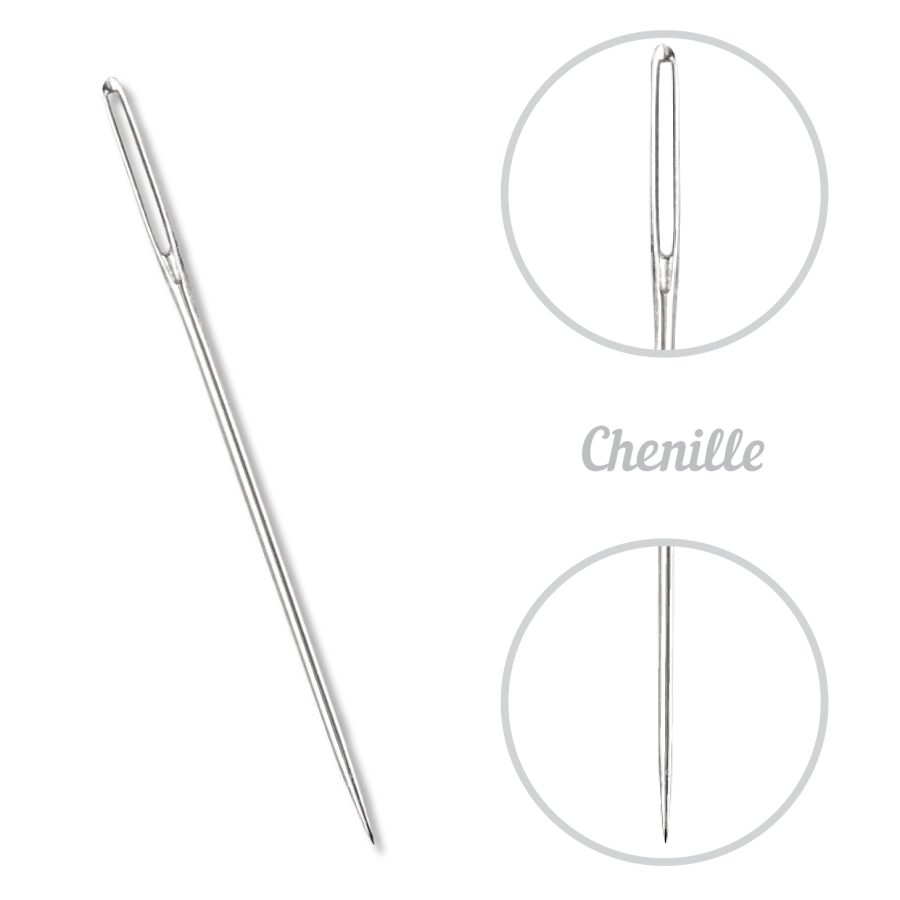
Chenille needles offer a useful combination:
- A sharp point for piercing woven fabric
- A larger eye for accommodating thicker decorative threads
- A range of sizes for different fabric and thread combinations
They’re worth considering for visible repairs using perlé cotton and other decorative fibers. You can shop them here.
Of course, the best size will depend on the specific material and thread.
Pro Tip: Test the Thickest Part First
Here’s a simple habit that can save a lot of frustration:
Don’t test your needle only on a single, flat layer of fabric.
If your project includes folded seams, patches, hems, or reinforced areas, make a sample that includes those layers.
A needle may work beautifully through one layer of denim but struggle where several layers overlap.
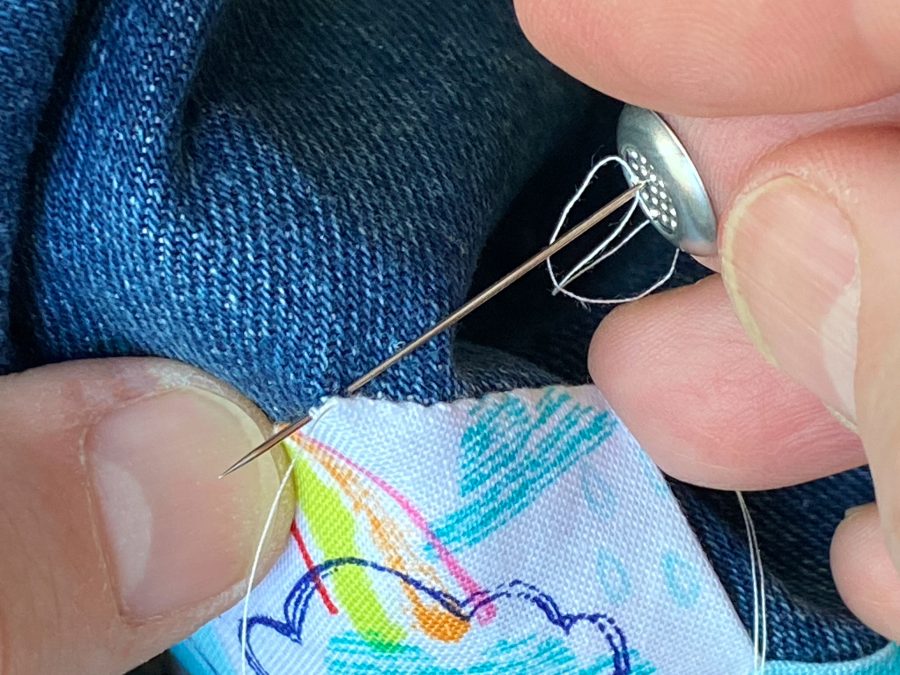
Testing the thickest area helps you identify potential problems before reaching that point in the finished project.
Pay attention to how the needle moves, how the thread behaves, and whether the fabric shows unwanted distortion.
When to Change Your Needle
Sometimes the right needle becomes the wrong needle simply because it’s worn.
Dense fabrics can be demanding on needles, especially during longer projects.
Consider replacing your needle if you notice:
- New difficulty penetrating the fabric
- Snagging or damaged threads
- A visibly bent needle
- A damaged or dull point
- Unexplained changes in machine stitch quality
A fresh needle is a small investment that can make a noticeable difference.
Reader Takeaway: Work Smarter, Not Harder
When working with denim, canvas, or other heavyweight fabrics:
✔ Choose a needle designed for the material and technique.
✔ Consider the fabric’s density, not just its thickness.
✔ Match the needle eye to your thread.
✔ Use a sturdy needle without automatically choosing the largest size.
✔ Test your needle through the thickest part of the project.
✔ Slow down around bulky seams and reinforced areas.
✔ Replace worn or damaged needles before they cause problems.
And remember:
If you’re fighting the fabric, reconsider the needle before applying more force.
The right tool won’t eliminate every challenge, but it can make heavyweight stitching much more enjoyable.
Looking Ahead
Next month in The Right Tool for the Stitch, we’ll turn our attention to handmade gifts and the tools that help bring thoughtful, personal projects to life.
Until then, don’t shy away from those sturdy fabrics. With the right tools and a little preparation, even challenging materials can become some of your most rewarding projects.